
SMA Coaxial Cable LTE Antenna Extension Kit
5.0Editor score
Dual-cable installation set
20-foot extension and jumper
SMA male-to-female connectors
Our guide compares the best coaxial cables for cell phone boosters by loss, length, connectors, durability, and installation flexibility to help you choose
Coaxial cables connect outdoor antennas, indoor antennas, splitters, and amplifiers within a cellular booster system. The right cable must preserve the signal over its entire run, resist the installation environment, and use connectors compatible with every device involved. Length, impedance, attenuation, shielding, and connector type all influence the result.
We compared ten coaxial cables for cell phone boosters using the specifications and customer ratings supplied for each product. The list covers 10-foot to 100-foot runs, 3D-FB and 5D-FB constructions, RG58 and RG8X alternatives, and N-to-N, N-to-SMA, and SMA-to-SMA configurations, with particular attention to low-loss design and practical routing.
Each review explains where the cable fits, highlights its most useful qualities, and identifies the trade-offs to consider before installation. The top selections represent distinct priorities: a compact installation kit, a versatile ultra-low-loss run, and a premium long cable. Product details and availability can change, so confirm connector types, system requirements, and current specifications before buying.
5.0Editor score

5.0Editor score
4.6Editor score
The comparison below organizes all ten cables by construction, length, connector configuration, and intended installation. These details make it easier to identify the right run for an outdoor antenna, indoor booster, repeater, or vehicle amplifier.
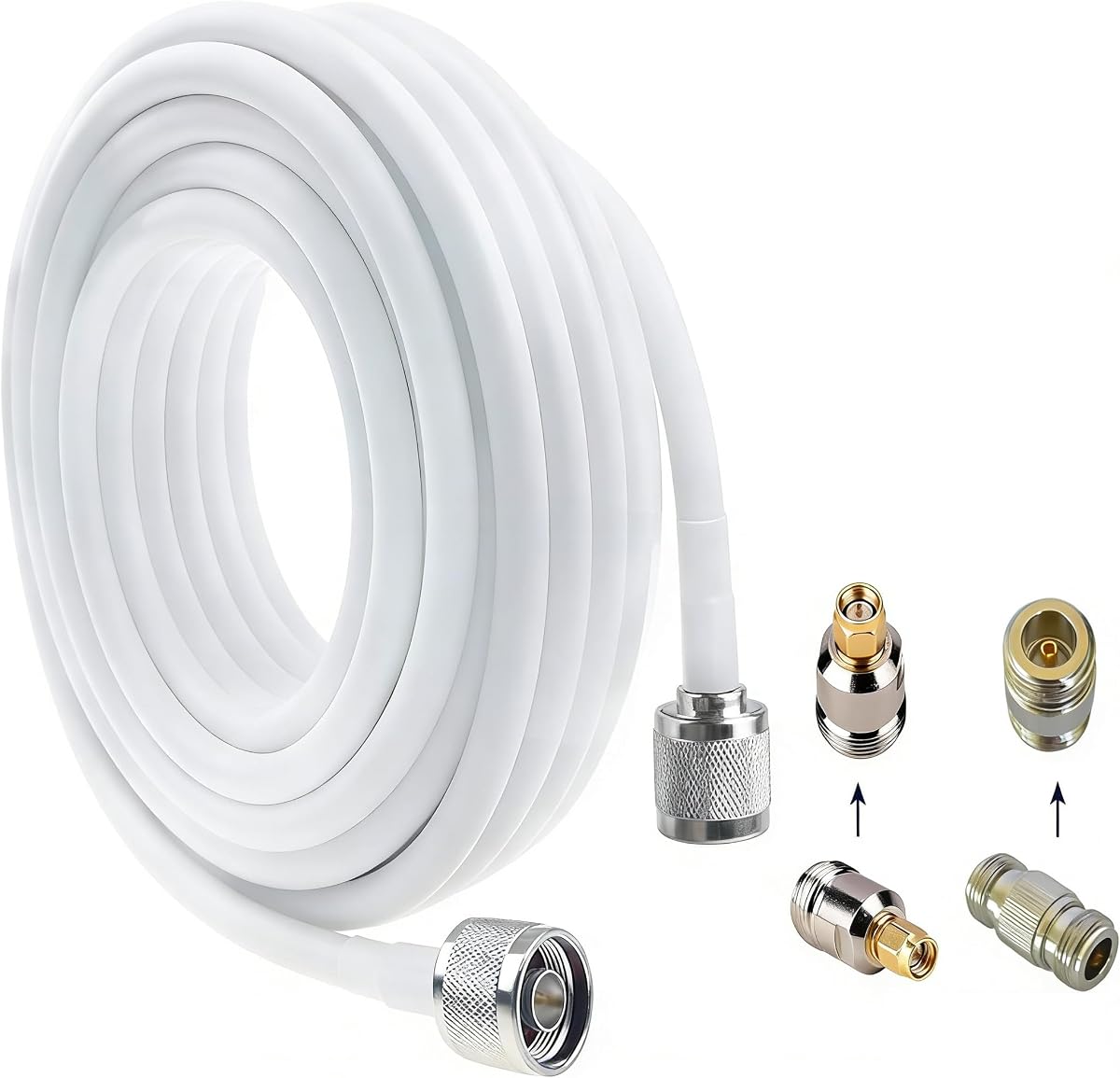
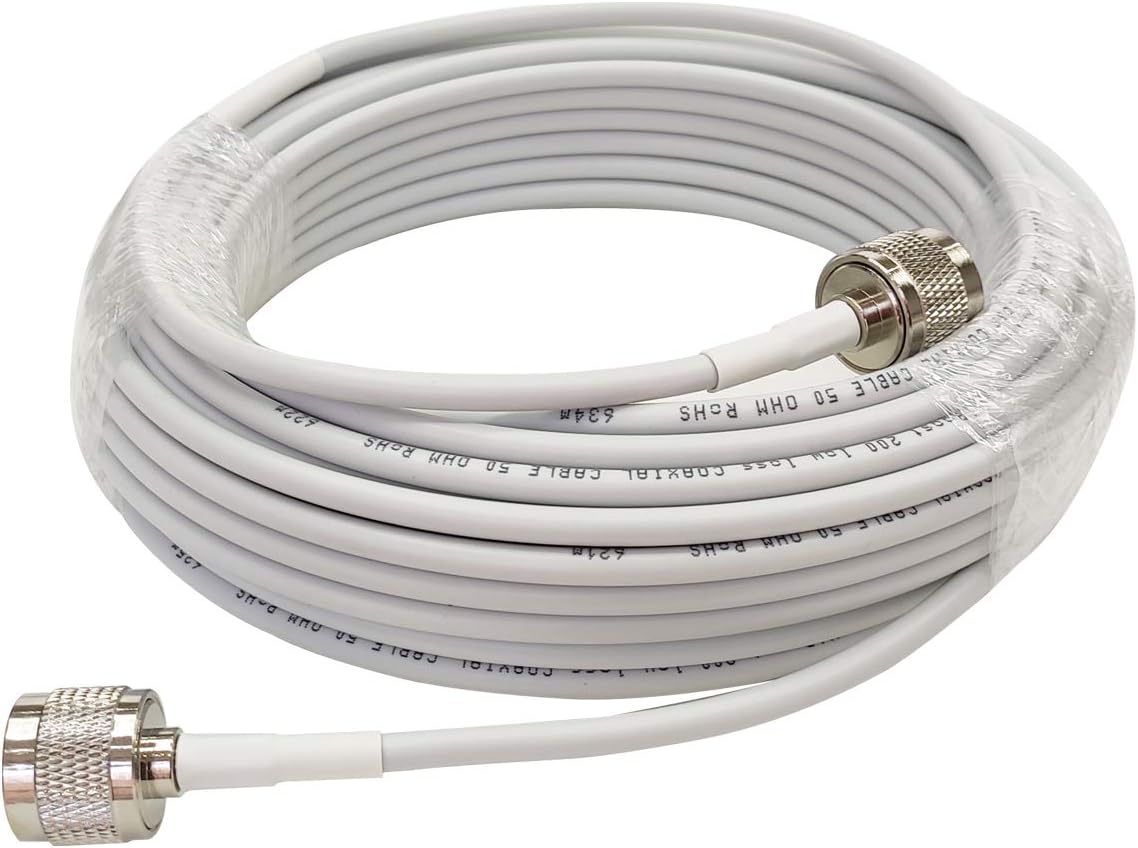



This 50-foot 3D-FB cable is designed primarily as an extension between cellular booster components, and it carries a 4.3 customer rating. Its most distinctive feature is the included adapter kit, which adds connection flexibility beyond the basic N-male-to-N-male cable format. That makes it useful for installers who want more than one possible way to join antennas, splitters, or booster hardware.
We may earn a commission when you buy through this link, at no additional cost to you.
The cable uses 50-ohm impedance and a CCA conductor, with the stated goal of maintaining stable signal transmission while limiting loss over the 50-foot run. Shielding and waterproof insulation are intended to protect the signal path and allow routing through walls, attics, basements, garages, or outdoor locations. The included N female-to-female coupler and N female-to-SMA male adapter can simplify repairs or accommodate mixed connector arrangements.
Its trade-offs are worth considering. CCA is not the same as solid copper, and the product description does not quote a specific attenuation figure, making it less transparent for buyers focused on the absolute lowest loss over long distances. The fixed 50-foot length also requires more careful path planning than a shorter or customizable cable. Even so, the included accessories reduce the need to source separate adapters.
This is a sensible choice for a 50-foot booster run when the system uses N connections or can use the supplied adapters. It works particularly well for residential and small office installations that cross rooms, travel through a basement, or connect an outdoor antenna to a compatible indoor system. Buyers prioritizing adapter convenience should consider it, while those requiring a 100-foot run may prefer a longer 5D-FB option.
The N female-to-female coupler and N female-to-SMA male adapter expand the ways this cable can be used. They are valuable when existing equipment uses mixed connector types or when a run must be joined without replacing the entire cable.
A 50-foot run provides enough distance for common indoor routes and many outdoor antenna installations. The described weather resistance and shielding also make the cable suitable for locations where moisture, sunlight, and temperature changes may occur.
We may earn a commission when you buy through this link, at no additional cost to you.
The HiBoost 50-foot ultra-low-loss cable carries a 4.3 customer rating and is purpose-built for cell phone booster installations. Its N-male-to-N-male configuration, 50-ohm impedance, and 3D-FB construction make it a familiar choice for connecting compatible boosters, splitters, and indoor or outdoor antennas. It is particularly straightforward for users who already know their system uses N-type connections.
We may earn a commission when you buy through this link, at no additional cost to you.
The outer jacket is described as durable, waterproof, and UV resistant, so it can be used indoors or outdoors without needing a separate cable for each environment. That durability is important because outdoor antenna leads often cross roofs, exterior walls, attic spaces, and other areas where moisture and sunlight can shorten the life of lesser cable. Its 50-foot length suits many common booster layouts without creating an unnecessarily long run.
Compared with the first 50-foot option, this cable offers a more focused proposition: a standard N-to-N run for systems that already use that connector. It does not include adapter accessories, so buyers with mixed connectors must confirm compatibility or purchase adapters separately. The product information also does not provide a specific attenuation number, which means the stated ultra-low-loss positioning should be considered alongside the construction and intended application.
The HiBoost cable is a strong fit for users connecting an outdoor antenna, indoor antenna, splitter, or signal booster over a moderate distance. It is less appealing for compact installations needing a short jumper, and it is not the natural choice for a 100-foot outdoor run where a 5D-FB cable may offer more flexibility. For compatible 50-foot N-to-N installations, however, it offers a straightforward and durable path.
The listed compatibility with boosters, indoor and outdoor antennas, taps, and splitters gives the cable broad relevance within a cellular system. Buyers should still verify that every participating device uses the appropriate N-type connection.
The waterproof, UV-resistant PVC jacket supports use in exposed and sheltered outdoor routes. It also remains practical for indoor runs through walls, ceilings, and equipment areas where a durable jacket is easier to route.
We may earn a commission when you buy through this link, at no additional cost to you.
This 100-foot 5D-FB cable has a 5.0 customer rating and stands out as a flexible long-run option for cellular booster systems. The larger center conductor and 50-ohm impedance are designed to reduce attenuation while supporting stable signal transfer between an outdoor antenna and an indoor amplifier. Its N-male-to-SMA-male ends are especially useful for installations that pair larger N-type hardware with a smaller SMA connection.
We may earn a commission when you buy through this link, at no additional cost to you.
Nickel-plated connectors are intended to provide secure, corrosion-resistant couplings, while the flexible, heat-resistant, and waterproof PVC jacket is designed to withstand rain, snow, UV exposure, and temperature variation. The stated applications include cell boosters, repeaters, antennas, taps, splitters, and surge protectors, giving the cable relevance across both cellular and other 50-ohm RF installations.
The main limitation is connector specificity. Users need an N-female connection at one end and an SMA-female connection at the other, and those sockets must be present on the equipment being linked. A 100-foot lead is also excessive for a short indoor replacement, where excess cable can make routing less tidy. Neither issue reduces its value for a substantial antenna run where long reach and low loss are priorities.
Choose this cable for a longer outdoor-to-indoor installation that requires an N connection on one side and SMA on the other. Its combination of 5D-FB construction, 50-ohm impedance, long reach, and environmental protection makes it the most broadly adaptable editor's choice in this guide. Verify both connector genders and plan the route before installation.
At 100 feet, the cable can link an outdoor antenna to an amplifier in a different part of a building, garage, or nearby structure. The low-loss design is intended to preserve signal quality across that extended distance.
Nickel-plated connector surfaces and a weather-resistant jacket help the installation withstand moisture and outdoor temperature changes. The flexible jacket also remains manageable when routed through walls, attics, and tight spaces.
We may earn a commission when you buy through this link, at no additional cost to you.
This dual-cable kit has a 5.0 customer rating and offers a different approach from the long 3D-FB and 5D-FB options. It includes a 20-foot low-loss extension and a 20-inch jumper, both with SMA male-to-female connectors. The combination gives an installer more routing choices than a single fixed cable while remaining compact enough for common indoor booster upgrades.
We may earn a commission when you buy through this link, at no additional cost to you.
The shorter jumper is designed for a small wall penetration, a narrow window gap, or a route where drilling is undesirable. This makes the kit relevant to finished homes, rentals, offices, garages, and recreational vehicles. The 20-foot extension can provide more reach between an antenna and booster, while the low-loss 3D-FB structure is intended to limit attenuation across the installation.
The obvious limitation is reach. Neither cable is intended to replace a 50-foot or 100-foot outdoor antenna run, and the standard SMA configuration will not connect directly to equipment with N-type sockets. A fixed 20-foot extension also cannot be shortened without affecting the connectorized ends. Nevertheless, the kit provides more flexibility than a single short jumper and avoids the need to buy two separate compatible cables.
This is an excellent budget-oriented choice for replacing or extending a short SMA booster connection, particularly where a compact jumper must pass through a window or small wall opening. It is less suitable for a remote outdoor antenna connected across a property. For compatible SMA systems, the combination of two useful lengths makes it a versatile installation kit.
The 20-inch jumper handles close connections, while the 20-foot extension covers a longer equipment gap. Using the appropriate cable for each section can reduce excess length and make a finished installation neater.
The compact jumper can pass through a tight window gap or a small wall opening. That makes the kit especially useful where the installation should avoid visible drilling or permanent modifications.
We may earn a commission when you buy through this link, at no additional cost to you.
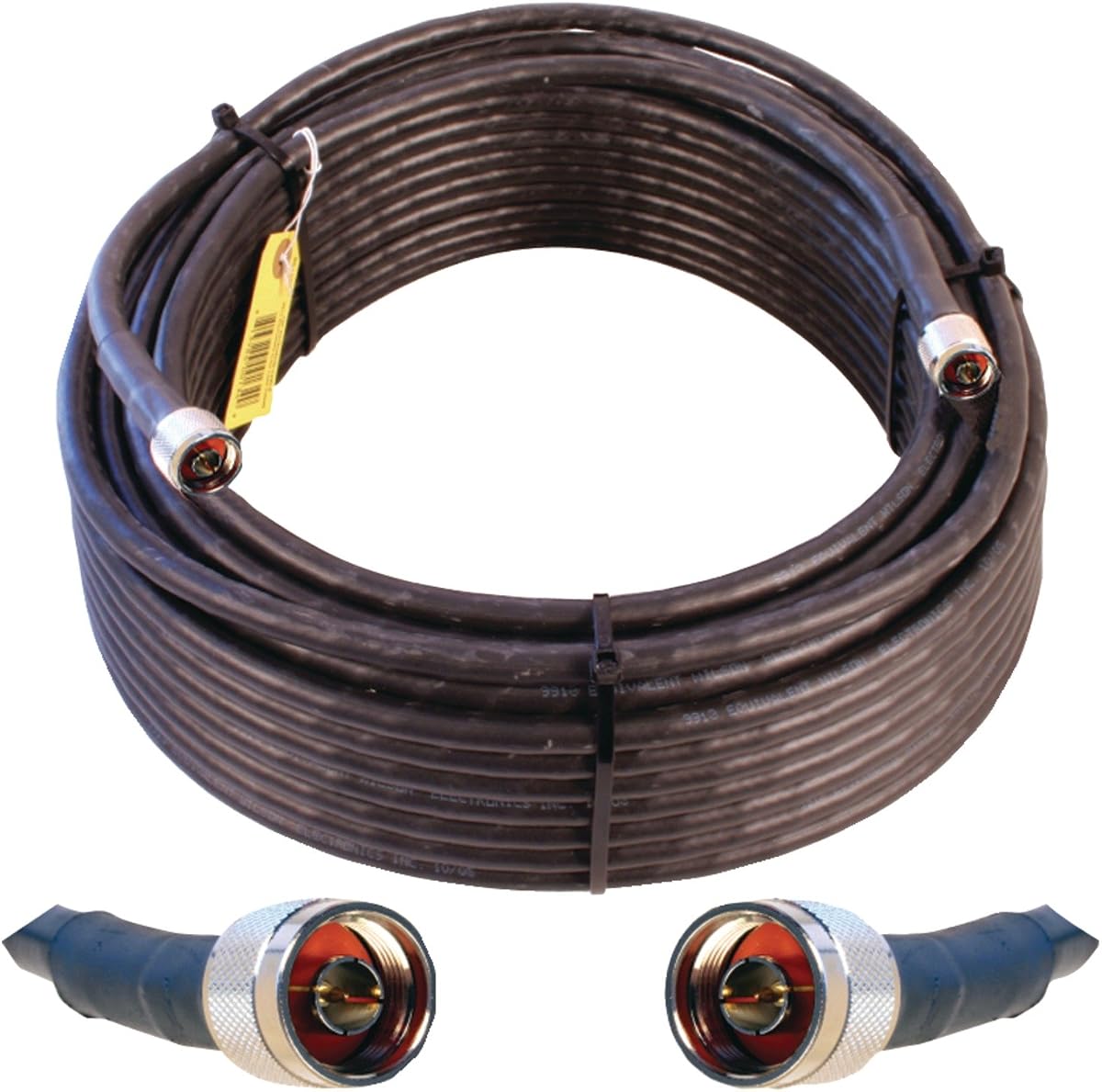
The Wilson Electronics WILSON-400 is a 100-foot ultra-low-loss coaxial cable with a 4.6 customer rating. It is designed for 50-ohm antennas, amplifiers, accessories, and weBoost in-building systems equipped with N connectors. That clear positioning makes it a premium option for users who want a long, known-brand cable for a substantial building or antenna installation.
We may earn a commission when you buy through this link, at no additional cost to you.
Its frequency range is listed as 30 to 5800 MHz, with a capacitance of 24 pF/m. The cable is described as CL3 rated, capable of carrying up to 300 volts, and manufactured with double-shielded twisted-pair and triple-shielded coaxial construction. A threaded, weatherproof N connector at each end supports secure connections and helps the cable serve as a long-distance run between compatible system components.
Premium positioning comes with trade-offs. The 100-foot length is excessive for compact booster hookups, and the N-to-N configuration will not fit SMA-only equipment without an adapter. Its CL3 and electrical specifications also extend beyond the needs of many basic home cellular installations. For a straightforward short extension, a more compact 3D-FB cable may be easier to route and more proportionate.
The WILSON-400 is best for buyers seeking a long, low-loss run between compatible 50-ohm booster hardware, especially where a broad frequency range and a stated manufacturer warranty provide additional confidence. It is particularly relevant to in-building amplifier installations using N-equipped equipment. Confirm connector genders and measure the full route before ordering.
The 100-foot length and matching N-male connectors allow a direct run between compatible equipment. That simplifies installation when the system already uses N connections and the antenna location is far from the amplifier.
A stated 30 to 5800 MHz frequency range supports use across cellular, Wi-Fi, and other compatible RF applications. The 50-ohm design also aligns with the equipment commonly used in booster installations.
We may earn a commission when you buy through this link, at no additional cost to you.
This 100-foot 5D-FB cable carries a 4.9 customer rating and combines a long reach with a low-loss 5D-FB design. Its N-male-to-SMA-male configuration is intended to bridge larger N-type connections and smaller SMA equipment, making it a practical option for cellular boosters, outdoor and indoor antennas, taps, and splitters.
We may earn a commission when you buy through this link, at no additional cost to you.
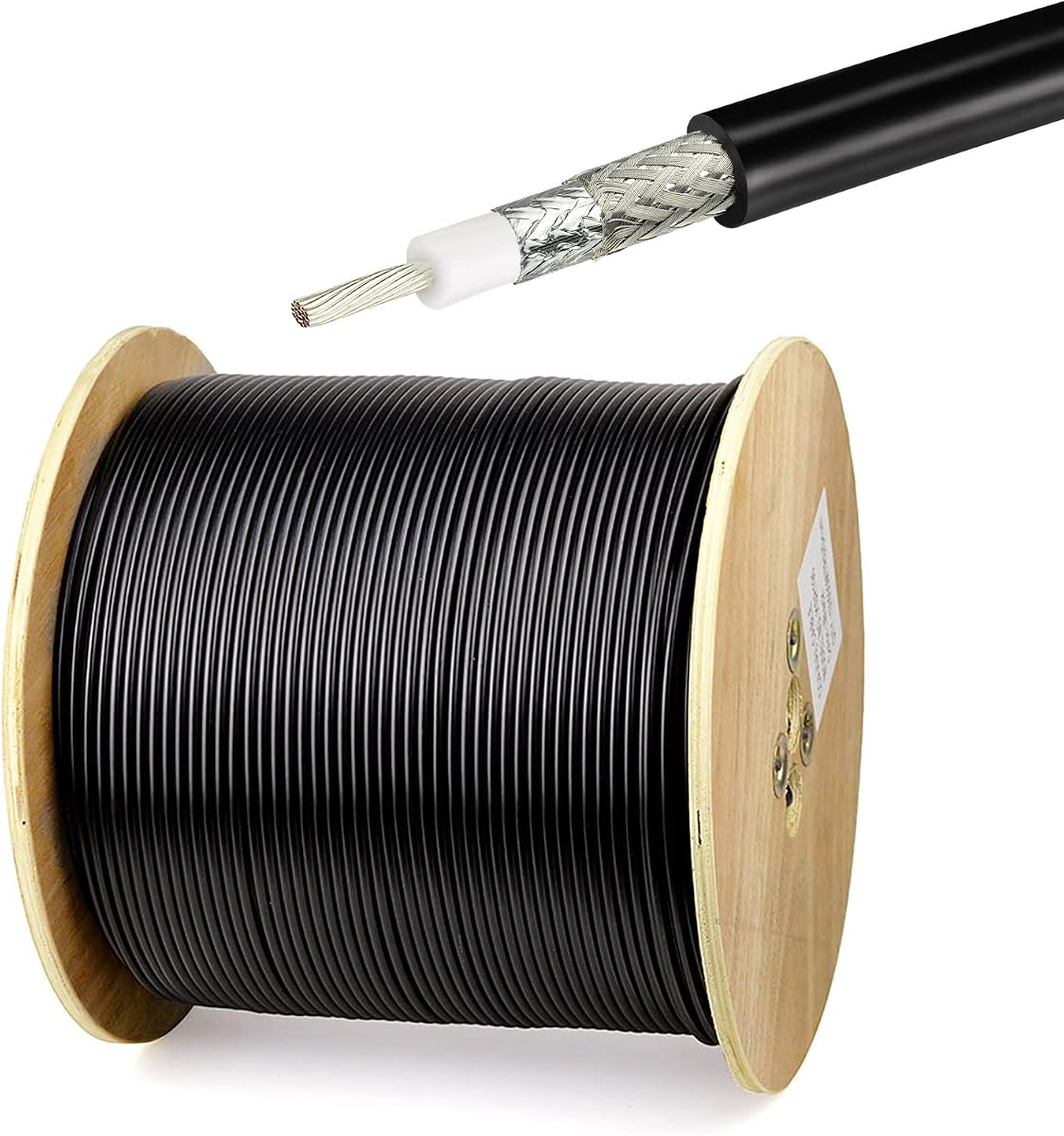
The copper-clad aluminum conductor and double-layer aluminum foil shielding are designed to support signal integrity, reduce external electromagnetic and radio-frequency interference, and limit signal leakage. A 50-ohm impedance match is intended to reduce reflections and maximize power transfer. The connector threads provide a secure mechanical and electrical coupling when matched with the correct female sockets.
The flexible PVC jacket offers moisture and UV resistance while remaining easy to route through attics, walls, and confined spaces. That combination makes the cable suitable for both outdoor antenna runs and indoor distribution paths. The main constraint is connector compatibility: the devices must provide an N-female connection and an SMA-female connection, with no other gender or type available in the planned route.
This cable is a strong choice for a long installation that uses one N-type and one SMA-type device. Its 4.9 rating, 5D-FB construction, and shielding details make it a compelling general long-run option. Buyers should measure the route carefully, since 100 feet is substantial and excess length can complicate routing in finished interiors.
The double-layer foil shield is intended to reduce interference entering the cable and signal leaking out. That makes the construction useful around other electrical equipment as well as in longer outdoor routes.
The jacket is described as tough, flexible, and resistant to moisture and UV exposure. It can be routed from an attic to a basement, between floors, or through equipment areas without requiring a bulkier cable jacket.
We may earn a commission when you buy through this link, at no additional cost to you.
This 100-foot 5D-FB cable has a 4.7 customer rating and focuses on direct N-to-N connectivity for cellular booster systems. It is intended for outdoor and indoor antennas, taps, splitters, and other 50-ohm RF equipment. The matching threaded connectors simplify the connection when both pieces of equipment use N-female ports.
We may earn a commission when you buy through this link, at no additional cost to you.
Its 5D-FB construction, copper-clad aluminum conductor, and double-layer foil shielding are designed to preserve signal integrity, limit external interference, and reduce signal leakage. The 50-ohm impedance is intended to minimize reflections and support efficient power transfer. A flexible, tough PVC jacket provides moisture and UV resistance while allowing the cable to be routed through attics, walls, and other confined areas.
The main trade-off is compatibility. This cable is for a uniform N-connection path and cannot fit SMA-only hardware without an adapter. It is also much longer than necessary for a nearby booster or indoor antenna. A buyer who expects a straight, uncomplicated 100-foot run can benefit from that simplicity, while a buyer with mixed connector requirements should choose a purpose-built N-to-SMA cable instead.
This is a strong selection for long installations whose entire signal path uses N-type connections. Its 4.7 rating, long reach, shielding, and flexible jacket make it a versatile option for extending cellular antennas, splitters, and compatible booster hardware across large spaces. Measure the installation and confirm both endpoints before purchase.
An N-male-to-N-male lead is easy to integrate when the antenna, amplifier, and other components already use N-type connectors. It avoids the need to change cables at both ends of the run.
The 5D-FB construction and 50-ohm impedance are intended to reduce attenuation and reflection over the 100-foot cable. This makes the product most relevant when signal quality must be maintained across a substantial installation.
We may earn a commission when you buy through this link, at no additional cost to you.
The Wilson Electronics 10-foot RG58 cable has a 4.6 customer rating and is a compact option for extending an amplifier connection. It is specifically mentioned for vehicle wireless amplifiers and small vehicle antennas, making it most relevant to mobile signal installations where the antenna and amplifier are separated by a short distance.
We may earn a commission when you buy through this link, at no additional cost to you.
The cable uses an SMA-male-to-SMA-female configuration and attenuates the signal by less than 2 dB. It is described as a low-loss extension cable intended to increase reach without a major signal penalty. A 10-foot length is short enough to route within a vehicle while still offering placement flexibility between an antenna, amplifier, and related components.
The limitations follow directly from that focused design. Ten feet is insufficient for most property-wide antenna runs, and RG58 is not the preferred choice when the objective is minimum attenuation over 50 or 100 feet. It also cannot connect directly to N-type booster equipment. A vehicle-oriented user should also ensure that the chosen amplifier accepts SMA connections and that the route does not require a longer lead.
Choose this cable for a compact vehicle amplifier installation, a short indoor jumper, or a system that explicitly requires an SMA-male-to-SMA-female lead. Its low attenuation over 10 feet and manageable length are meaningful advantages in those applications. For a full residential or outdoor cellular booster run, one of the 3D-FB or 5D-FB options is more appropriate.
The stated attenuation of less than 2 dB makes the cable suitable for short connections where the objective is to extend placement options without significantly degrading the signal.
Vehicle antennas and wireless amplifiers often need only a modest amount of separation. The 10-foot length provides that flexibility while remaining easier to conceal and route than a long cable.
We may earn a commission when you buy through this link, at no additional cost to you.
The Superbat 50-foot RG8X cable carries a 4.7 customer rating and is positioned as a low-loss alternative to RG58. It is suitable for 50-ohm RF systems that include cell boosters, Wi-Fi repeaters, CB and ham radio equipment, antenna analyzers, and SWR meters. That broad compatibility makes it interesting for mixed-purpose radio installations.
We may earn a commission when you buy through this link, at no additional cost to you.
Its stated SWR is below 1.15, and the product is described as supporting efficient signal transfer over longer distances and at higher frequencies than standard RG58. The waterproof PVC jacket is suitable for harsh outdoor environments and can be bent and strapped without inducing interference. The 50-foot length offers a practical middle ground between short jumpers and 100-foot antenna runs.
One purchasing detail deserves attention: the supplied product information does not state a specific connector configuration. It says the cable is compatible with PL259, SMA, BNC, TNC, UHF, and N connectors, but that statement should not be interpreted as meaning every one of those connector types is fitted to the cable. Buyers need to confirm the actual terminations required by their booster and antennas.
The Superbat RG8X is a good general RF cable when the installation needs 50 feet, a 50-ohm connection, and a low-loss construction outside a highly standardized cellular kit. It is especially useful when the same type of cable supports several radio functions. Before ordering, confirm the exact connectors and ensure the equipment uses a compatible 50-ohm system.
The product description positions RG8X as an upgrade over standard RG58, with lower loss and better support for longer runs and higher frequencies. That makes it a practical middle-length option for many RF systems.
The waterproof PVC jacket is designed for outdoor use and can be bent and secured without inducing signal interference. That flexibility is valuable when the route passes around corners, along walls, or between separate pieces of equipment.
We may earn a commission when you buy through this link, at no additional cost to you.
The MOOKEERF 100-foot RG8X cable has a 4.4 customer rating and provides a long general-purpose option for 50-ohm RF installations. It is described as a step up from RG58, with lower signal loss, SWR below 1.15, and support for higher-frequency use and longer distances. Cell phone boosters are one of the stated compatible applications.
We may earn a commission when you buy through this link, at no additional cost to you.
The waterproof PVC jacket is designed for harsh outdoor environments, while the cable can be bent and strapped without introducing interference. It can also serve Wi-Fi repeaters, CB and ham radio equipment, antenna analyzers, and other 50-ohm systems. This makes it a flexible option for installers who want one cable type across several kinds of radio equipment.
As with the Superbat model, the supplied information does not identify the precise connector fitted to this cable. Although it lists compatibility with TS9, SMA, BNC, TNC, UHF, and N connectors, the actual endpoint style must be confirmed before purchase. A long cable also needs a planned route that avoids sharp bends, unnecessary loops, and locations where it could be damaged.
Choose the MOOKEERF RG8X when a full 100-foot run is required and the installation uses compatible 50-ohm equipment. It offers a practical alternative to 5D-FB products and is especially relevant for broader RF work. Confirm the connector type, check the complete signal path, and route the cable securely for the best result.
RG8X is presented as a lower-loss alternative to RG58, and the 100-foot length extends that benefit across substantial runs. The low SWR helps support consistent signal transfer through the cable.
The waterproof jacket and bendable construction suit exposed routes and installations with multiple radio functions. The cable can be secured along walls, roofs, or other supports while maintaining its signal path.
We may earn a commission when you buy through this link, at no additional cost to you.
Choosing a booster cable involves balancing signal attenuation, cable length, connector compatibility, environmental durability, and the physical route. The most important starting point is to map the entire system and identify exactly which connector type and gender appears at every endpoint.
Connector type is the first hard requirement. Common cellular booster cables use N-type connectors for larger antenna and amplifier connections, while SMA connectors are often used for compact antennas, vehicle equipment, and shorter jumpers. Gender also matters because an N-male cable cannot connect directly to another N-male cable without an appropriate coupler. Review the endpoint markings on the outdoor antenna, indoor antenna, amplifier, taps, and splitters before choosing a lead.
Every extra foot can contribute some attenuation, and an overly long cable may also complicate routing. Measure the complete path rather than estimating only the straight-line distance between devices. Include turns, wall penetrations, service loops, and routing around structural features. A 10-foot cable may be ideal for a vehicle or nearby indoor antenna, while a 50-foot or 100-foot lead may be necessary when an outdoor antenna is mounted far from the amplifier.
Signal loss becomes increasingly important as the installation grows longer or as the incoming cellular signal is weak. 3D-FB and 5D-FB constructions are presented as low-loss options, while RG8X is described as an upgrade over RG58. The connector system also affects performance because mismatched or poorly coupled connectors can introduce loss or reflection. For a signal-sensitive installation, prioritize a purpose-built low-loss cable over a generic cable that is merely long enough.
Most cellular booster components in this guide are designed around 50-ohm equipment. A 50-ohm cable is the appropriate choice when it matches the antennas, amplifiers, splitters, taps, and surge protection in the same signal path. Using a cable with a different impedance can create reflections, reduce transfer efficiency, and make system behavior less predictable. The product's stated impedance should therefore be checked against the rest of the installation rather than viewed in isolation.
An outdoor cable needs protection from rain, sunlight, moisture, and temperature changes, while an indoor cable may be routed through attics, basements, garages, finished walls, or tight window openings. Look for a flexible, weather-resistant jacket and shielded construction. Also consider whether the cable must pass through a small opening without drilling, whether it will be strapped along a roofline, and whether UV exposure is likely during prolonged outdoor service.
A coupler or adapter can make a cable compatible with more than one type of equipment, but extra pieces also add connection points. The first cable in this guide includes an N female-to-female coupler and an N female-to-SMA male adapter. A dual-cable kit offers another form of flexibility by providing separate extension and jumper lengths. These options are valuable when the existing equipment cannot be replaced or when a route needs two different cable segments.
The supplied products use CCA, copper-clad aluminum, and other described low-loss constructions, with shielding intended to reduce electromagnetic and radio-frequency interference. For sensitive cellular installations, a larger center conductor and layered shielding can help preserve signal integrity. These specifications should be considered alongside connector quality and the physical condition of the cable. A well-made connector is especially important because a damaged or loosely fitted termination can undermine an otherwise capable cable.
A cable that cannot be routed without sharp bends, pinched sections, or awkward loops may be unsuitable even if its electrical specifications look good. Flexible jackets are easier to position in walls, attics, and around outdoor structures. For long-term use, plan supports that prevent movement, weather entry, and damage from doors, vehicles, landscaping, or ordinary maintenance. Leave only the service loops needed for installation and future servicing.
Before installation, identify the outdoor and indoor endpoints, confirm both connector genders, and trace the full cable path. If the route crosses a wall, attic, basement, or exterior area, plan penetrations and supports before connecting either end. Keep the cable away from sharp metal edges and avoid tightly coiling excess length, which can create unnecessary stress on the cable and connectors.
Connect the cable to powered-off equipment when practical, then tighten each threaded connector evenly by hand. Do not use a wrench that could crush or damage the connector body. After the system is connected, follow the booster manufacturer's startup instructions and confirm that every indicator operates normally. If the signal does not improve, check connector compatibility, antenna placement, cable damage, and whether an upstream device requires a different input.
For outdoor runs, secure the cable at regular intervals without crushing the jacket. Keep connectors elevated where water may collect and provide additional weather protection where permitted by the manufacturer's guidance. Periodically inspect exposed sections for cracking, looseness, corrosion, pinched insulation, or connector movement. Replace a cable that is visibly damaged rather than trying to repair compromised shielding or connector hardware with improvised materials.
It usually is, because many cellular antennas, amplifiers, splitters, and booster accessories are designed for 50-ohm systems. Check the specifications of every connected device and use a 50-ohm cable with matching N-type or SMA interfaces. A mismatch can reduce transfer efficiency and create unwanted reflections, so the cable should be treated as part of one coordinated signal path.
Choose based on the sockets on the antenna, amplifier, splitter, or other equipment at each end. An N-to-N cable makes sense when both endpoints require N-type connections, while an N-to-SMA cable bridges N-type and SMA-type hardware. Connector gender matters as well, so inspect the equipment rather than relying only on the connector diameter.
No. A longer cable adds installation complexity and can add attenuation, while extra unneeded length is difficult to route. Choose the shortest length that comfortably reaches both endpoints and includes realistic service loops. For long outdoor-to-indoor runs, prioritize a low-loss 3D-FB, 5D-FB, RG8X, or comparable cable rather than extending a smaller-diameter general-purpose lead.
The two constructions are both marketed as low-loss options, but the 5D-FB products in this guide are described with a larger center conductor and a 100-foot format. A larger conductor can support efficient signal transfer over longer distances, but the actual loss still depends on frequency, installation, and connector quality. Compare the stated construction and intended use rather than treating the labels alone as a guarantee.
Yes, provided the cable is described as outdoor-capable and its connectors are properly coupled. The weather-resistant, waterproof, and UV-resistant cables in this guide are intended for exposed or sheltered outdoor routes. Secure the cable, avoid crushing it, keep the connectors from collecting water, and follow any weather-sealing instructions supplied with the booster equipment.
Only if the connectors on your equipment do not match. Some systems use N connectors throughout, while others combine N and SMA connections. The first cable in this guide includes adapters, but every additional coupling creates another connection point that must be clean, secure, and correctly seated. Confirm all connector types before deciding whether an adapter is necessary.
In many cases, yes. The 20-inch jumper in the SMA LTE extension kit is specifically designed for a small wall opening or a narrow window gap. It should pass through cleanly without being pinched or sharply bent, and the connector ends should remain protected. Follow the equipment and building safety requirements that apply to the installation.
Inspect the jacket and connectors periodically, particularly after severe weather or nearby construction. Secure the cable so it cannot move, rub, or become trapped, and keep water from collecting around connection points. Do not sharply bend the cable or use improvised repairs on damaged shielding, insulation, or connectors; replace a compromised cable with an equivalent compatible model.
The SMA LTE Extension Kit is the most practical budget-oriented option for short installations that benefit from both a 20-foot extension and a 20-inch jumper. The 100-foot 5D-FB N-to-SMA cable is the editor's choice for a flexible long run, while the Wilson WILSON-400 stands out as the premium choice for compatible 50-ohm N-connector systems that need a long, specified low-loss cable.
For most other installations, start with compatibility rather than length. Match the cable's connector type and gender to every endpoint, confirm 50-ohm system compatibility, and then select the shortest practical run. If the outdoor antenna is far from the amplifier, favor a low-loss 5D-FB or RG8X option; if the equipment is only a short distance away, a compact SMA or 10-foot cable may be easier and more effective.
Finally, consider the jacket, shielding, conductor construction, and routing before making a decision. A technically capable cable can still underperform if it is pinched, sharply bent, poorly connected, or forced through an unsuitable route. Check the current product specifications and connector requirements, and confirm current availability before purchasing the cable that best fits your booster system.