
Tgeyd No-Waste Feeder and Waterer Set
3.8Editor score
Three-gallon water capacity
Fifteen-pound feeder capacity
Hanging or floor placement
Automatic chicken waterer and feeder options are compared for capacity, refill methods, cleanliness, installation, durability, and flock suitability.
Automatic chicken waterer and feeder systems can reduce daily refill trips while helping keep feed dry, drinking water cleaner, and coop floors less messy. The best option depends on flock size, climate, available space, installation preferences, and whether automatic hose refilling is practical.
We compared the ten products using their stated capacities, feeding and drinking methods, weather-related features, installation options, material details, and supplied ratings. The guide covers complete feeder-and-waterer sets as well as insulated standalone waterers that pair well with existing feeders.
Each review explains the standout benefits, practical compromises, and situations in which that model makes the most sense. Product ratings and availability can change, and prices fluctuate, so compare current listings and verify your flock's needs before purchasing.
3.8Editor score
4.6Editor score

3.9Editor score
This side-by-side comparison highlights capacity, refill method, installation flexibility, weather protection, and drinking options across all ten products, helping readers match a system to their flock and coop.


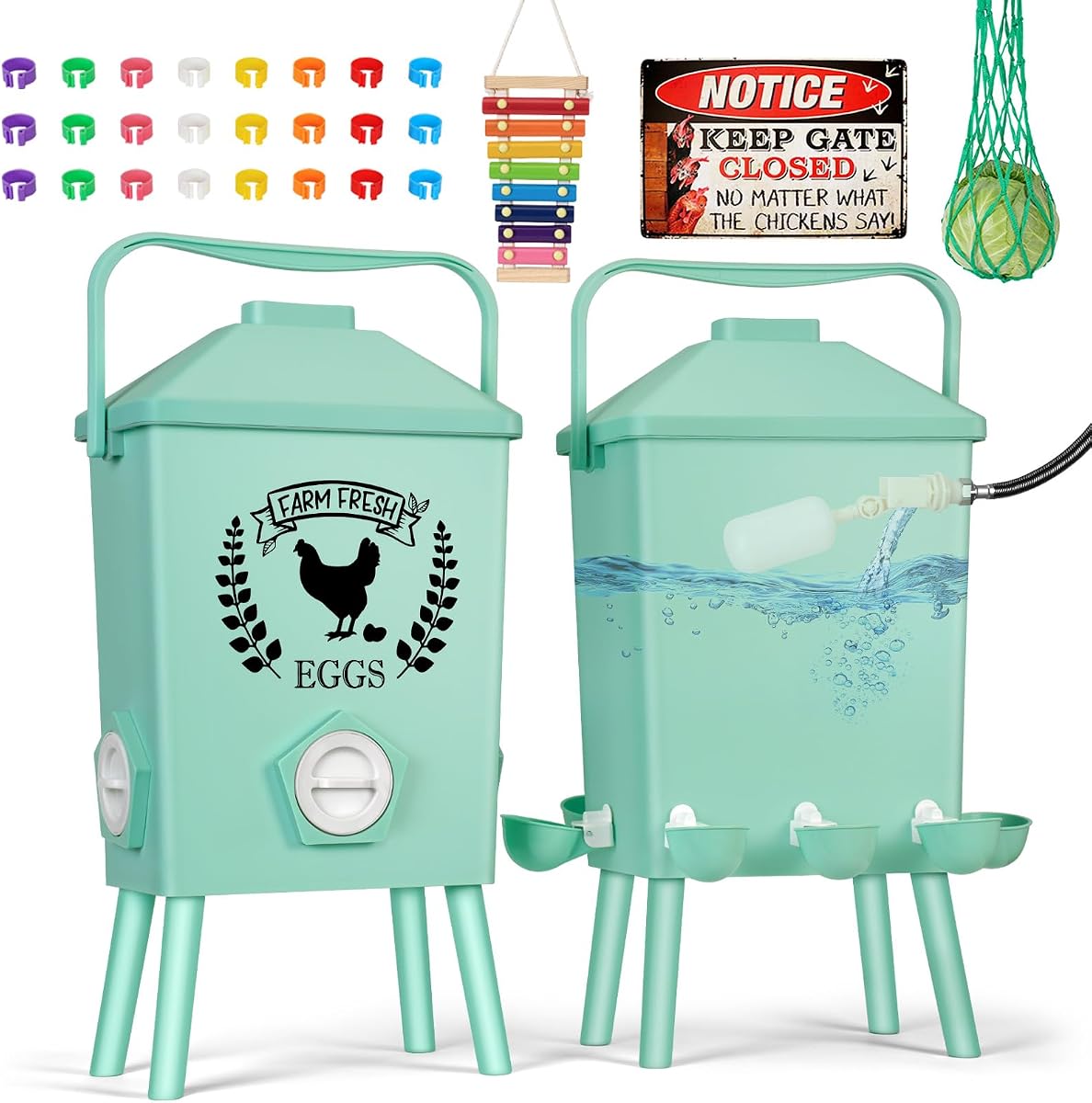


This Lilyang set offers a balanced combination of automatic water delivery, feed storage, waste-control features, and flexible placement. It carries a 4.1 rating and stands out because it addresses the central daily problem in chicken keeping: replenishing water without repeatedly carrying buckets to the coop. The included feet allow the system to stand on a level surface, while its hanging capability can save space and discourage chicks from tipping it.
We may earn a commission when you buy through this link, at no additional cost to you.
The water side connects to a faucet and uses a float valve to replenish cups only as needed. That arrangement is especially useful for keepers with a reliable outdoor water source who want fewer manual refills. The feeder includes protected ports intended to reduce scratching and spillage, while the anti-roost lid and elevated legs help limit contamination from droppings. A stated Japanese spring valve and industrial-grade seals add confidence in the automatic mechanism, although users still need to inspect connections regularly.
There are practical trade-offs. A hose-fed system cannot operate continuously if the faucet is unavailable, and freezing temperatures may require additional protection for exposed plumbing. The description says the three-gallon reservoir and feeder can provide up to a week of care for five chickens, but actual intervals depend on weather, feed type, bird size, and consumption. The system also requires enough clearance around the ports for multiple birds to feed without crowding one another.
This is a strong candidate for a small backyard flock seeking a complete, flexible system without relying on a standalone feeder. Choose it when reliable faucet access is available and reduced refill frequency is a priority. Verify thread compatibility and placement dimensions before purchase, and inspect the float valve and hose connections during routine maintenance.
The float-valve design responds to falling cup levels, so water is replenished as birds drink. Automatic refilling is most effective when the connected faucet has reliable pressure and the hose remains protected from chewing, freezing, and debris.
Elevated legs, a removable anti-roost lid, and protected feeding ports are designed to keep feed away from bedding and discourage messy perching. These features can reduce cleanup, although the surrounding coop still needs routine inspection.
We may earn a commission when you buy through this link, at no additional cost to you.
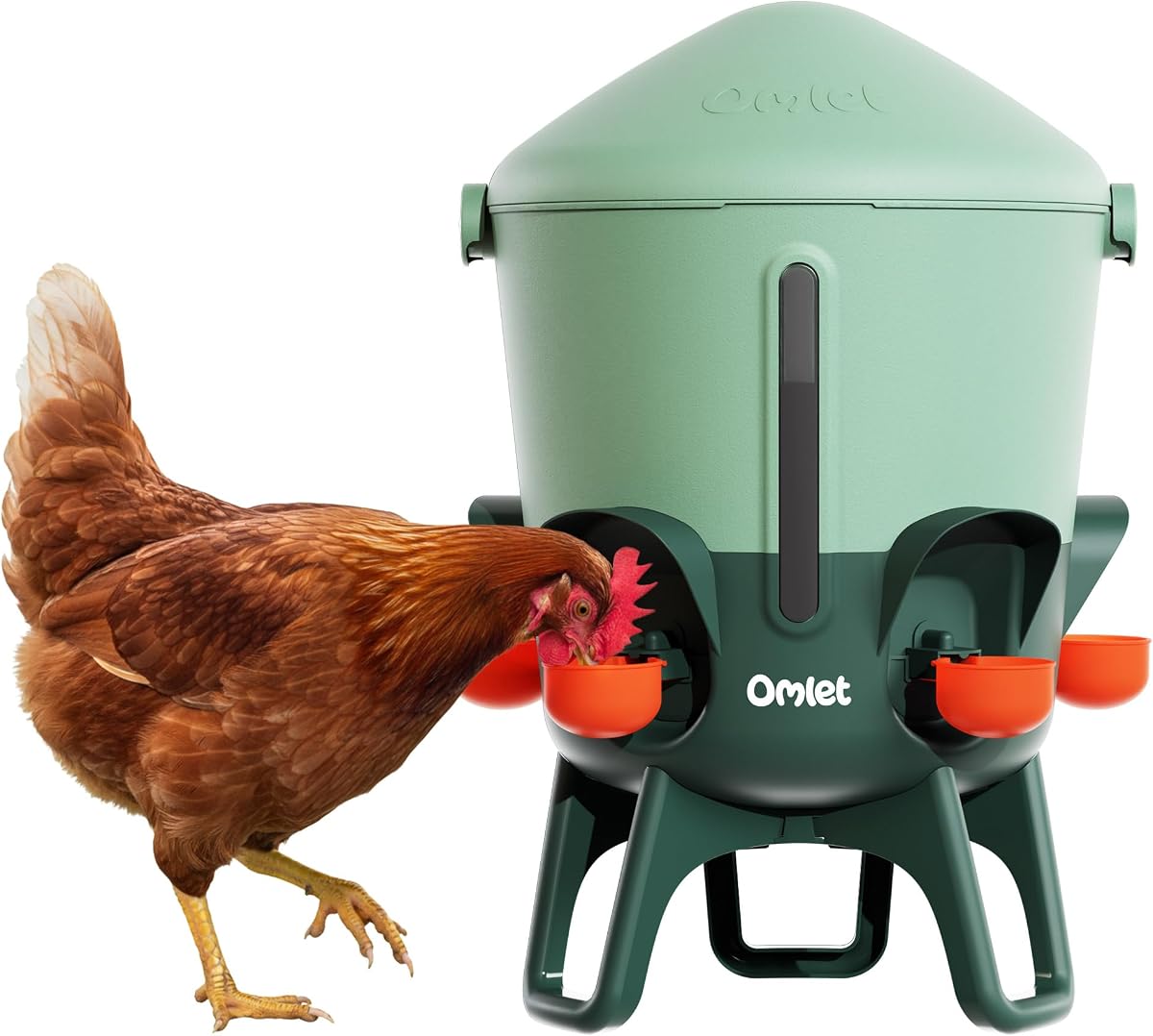
This Omlet insulated waterer earns a 4.6 rating, the highest listed rating among the products in this guide. Its principal strength is clean, temperature-conscious water storage in a three-gallon reservoir. The unit blocks 99 percent of light, which helps limit algae and green coloration while preserving cooler water in summer and offering some protection against freezing in winter.
We may earn a commission when you buy through this link, at no additional cost to you.
Unlike hose-connected models, this is a standalone waterer that must be filled manually. That tradeoff may appeal to keepers who do not want plumbing in the coop or who prefer full control over how much water is carried at once. Five cups and five nipples are included, allowing the owner to switch between open-cup and nipple drinking styles. That versatility is useful when birds have different preferences or when a younger flock needs a particular access method.
The supplied description also mentions suitability for pellets, crumble, and scratch, but the pictured product is a water dispenser rather than a complete feeder-and-waterer bundle. Buyers should not treat that wording as evidence that feed is stored in this unit. The anti-roost lid is a useful cleanliness feature, while the included legs raise the reservoir from the ground. Hanging is another option, which can reduce interference from bedding and small animals.
This is an excellent choice for a backyard flock that already owns a suitable feeder or wants to customize feeding and drinking stations separately. Choose it when water clarity, insulation, and drinking-style options matter more than automatic hose refilling. Confirm that the included cups or nipples suit your coop's dimensions and that the unit can remain shaded in hot weather.
Blocking 99 percent of light limits the conditions that encourage green water and slimy buildup. A removable or cleanable reservoir also makes regular sanitation practical, helping maintain a more consistently appealing drinking supply.
Including both styles makes the waterer adaptable to different flock behaviors. Cups provide visible access to the water level, while nipples can offer another drinking arrangement, subject to correct positioning and cleaning.
We may earn a commission when you buy through this link, at no additional cost to you.
The INNOLAND set combines a 26.5-pound feeder with a three-gallon waterer and a 4.0 rating. It is aimed at keepers who want substantial feed storage alongside multiple drinking ports. The stated supply of food and water for up to 12 chickens for a week makes the set attractive for small flocks seeking fewer refill intervals, though actual consumption varies with bird age, weather, and feed type.
We may earn a commission when you buy through this link, at no additional cost to you.
Installation flexibility is a major selling point. Pre-drilled buckets can be suspended with S-hooks, mounted to a wall with nails, or supported by riser legs on the ground. Four bonus long legs allow height adjustment as chicks grow, helping the feeding ports remain accessible. The enlarged feeding openings allow several birds to eat at once, and the wider support legs improve stability compared with a narrow base.
The feeder includes protective caps with rubber-secured lids intended to discourage small animals, a rainproof top, and downward ports intended to limit feed spillage. The water side uses anti-drip cups with smooth interiors. Heat-resistant, BPA-free polypropylene is used for both containers, and the smooth feeding openings should be relatively easy to rinse. Buyers should still allow all plastic components to dry thoroughly after washing.
This set is well suited to a mixed flock or a coop with flexible mounting points, particularly when hanging and wall-mounted placement are preferable to ground placement. It may be less attractive for someone who needs confirmed automatic hose refilling, because the supplied information does not describe that function. Confirm the dimensions, available wall strength, and desired leg height before ordering.
The extra long legs allow the feeding and drinking areas to be raised as the flock develops. Correct height keeps younger birds from struggling while also reducing access to spilled feed and wet bedding around the containers.
Rubber-secured protective caps are intended to block access by small animals while the birds feed. Their effectiveness depends on a tight fit, stable mounting, and regular inspection for displaced lids.
We may earn a commission when you buy through this link, at no additional cost to you.
This three-gallon feeder and waterer set has a 4.2 rating and emphasizes simple maintenance, reduced feed waste, and flexible placement. The supplied information says the reservoir can nourish 8 to 10 adult chickens for about a week, making it a reasonable middle ground for small backyard flocks. Capacity claims should be treated as planning estimates rather than guarantees because hot weather and active laying birds increase consumption.
We may earn a commission when you buy through this link, at no additional cost to you.
The feeding ports are designed to discourage scratching and spillage, while the water cups automatically refill to maintain a consistent supply. The stated port measurements are intended to accommodate different chicken breeds and ducks, making the system more versatile than one built around very small openings. A removable lid, elevated stand, and weather-resistant polypropylene construction help protect feed and support outdoor use.
The product can stand on its included legs or be hung from coop rafters, giving owners flexibility where floor space is limited. Assembly is described as tool-free. One uncertainty is the exact water connection method: although the cups refill automatically, the supplied information does not clearly explain how the reservoir is connected to a continuous water source. Buyers should verify that detail in the listing and confirm that a suitable connection is available at the installation point.
This set is a good fit for mixed-breed flocks that need a complete system and want their birds to have room to eat and drink together. Choose it when straightforward maintenance and adaptable ports matter most. Before ordering, confirm the reservoir connection, measure the available hanging height, and inspect the unit regularly for damaged seals or accumulated feed.
The listed feeder openings and drinking cups are intended to suit multiple breeds and ducks. Wider access can reduce crowding, but the flock also needs enough space around the unit for birds to approach without creating a bottleneck.
Waterproof polypropylene and a removable lid help protect the feed container from sun and rain. Outdoor installations should still provide shade where possible and check the lids, joints, and feet for wear over time.
We may earn a commission when you buy through this link, at no additional cost to you.
The Tgeyd set combines a three-gallon waterer with a 15-pound feeder and earns a 3.8 rating. Its visual design is a major point of distinction: soft farmhouse-inspired colors and a minimalist appearance are intended to blend into a backyard coop rather than look purely utilitarian. For a small flock, the combined feed and water format also reduces the number of separate containers that need arranging.
We may earn a commission when you buy through this link, at no additional cost to you.
The feeding system uses gravity to dispense feed, and the no-waste design is intended to reduce scattered pellets or crumbles. The waterer has the same nominal three-gallon capacity as several larger sets, allowing more interval between refills while preserving a relatively compact footprint. Carry handles make the units easier to move, refill, or hang when cleaning or reorganizing the coop.
The listing provides less technical detail than several competitors. It mentions automatic daily feeding and automatic water, but does not clearly identify a hose connection, float-valve construction, specific included ports, or material composition. That makes it harder to compare the waterer's refill mechanism and cleanability with products that document those details. The lower rating also suggests that some buyers may have found aspects of the setup less satisfactory.
This set is best for a small backyard flock whose keeper values appearance, compact organization, and straightforward gravity feeding. It can work either freestanding or hanging, depending on the coop. Buyers should confirm the water refill method, included components, and cleaning access before buying, particularly if automatic hose refilling is essential.
The muted colors and clean styling are intended for owners who want functional equipment to blend into a carefully arranged backyard run. Appearance should remain secondary to checking capacity, drinking access, and refill operation.
Pairing a three-gallon waterer with a fifteen-pound feeder creates a manageable system for a small flock. Hanging the units can also keep containers away from damp ground and make service more convenient.
We may earn a commission when you buy through this link, at no additional cost to you.
This Lilyang five-gallon set is built around capacity and stability. Its stated coverage for as many as 20 chickens makes it the strongest option in the list for a larger backyard flock or a keeper hoping to move from daily checks to weekly refills. The large reservoir and feed storage reduce service frequency, although birds in hot weather can consume water quickly enough to shorten any estimated interval.
We may earn a commission when you buy through this link, at no additional cost to you.
Thick, UV-stabilized plastic is paired with a square weighted base to resist tipping. The cups use industrial seals and a precision spring valve, while the elevated legs and anti-perch lid help protect the feeding area from dirt and droppings. A dust-proof lid and a pre-cut heater cord notch provide useful seasonal considerations, allowing a protected heat source to be added without drilling directly into the reservoir.
The trade-off is size. A five-gallon reservoir requires enough clearance and a stable base to avoid strain on fittings. Its automatic mechanism also depends on correct assembly and dependable water pressure. Although the product is presented for outdoor longevity, plastic fittings and valves remain vulnerable to impact, UV exposure, and freezing if not protected. The stated 3.5-inch feeding port and deep drinking cup are designed for varied breeds and ducks.
This set is most appropriate for larger flocks that can use the high capacity and need fewer refill trips. It is also attractive for owners who plan for weekend travel and can maintain a reliable water connection. Choose it when capacity and stability outweigh the desire for a compact unit, and protect exposed plumbing and electrical components during severe weather.
The five-gallon reservoir is the largest water capacity represented in this guide. It gives larger flocks more operating margin between service visits, especially when daily consumption rises during warm weather.
The weighted square base and broad footprint help limit tipping when birds crowd the ports. Users should still level the installation and avoid placing the unit where runoff can undermine its legs.
A dust-proof lid and pre-cut heater-cord notch show attention to year-round conditions. Any heater used with the notch must be installed according to its instructions and protected from moisture and poultry contact.
We may earn a commission when you buy through this link, at no additional cost to you.
The TGEYD set carries a 4.3 rating and focuses on flexible elevated installation. It can hang from a handle on wire mesh or be mounted to a wall, keeping the three-gallon waterer and 21-pound feeder away from dirt, bedding, and ground debris. That positioning can improve cleanliness and reduce the chance that young birds disturb the containers.
We may earn a commission when you buy through this link, at no additional cost to you.
Automatic water refilling works through a connection to a standard three-quarter-inch garden hose. An internal float valve replenishes water as the level falls, reducing manual service. The downward-extending feeder ports keep feed nearer the eating area and are designed to reduce spillage during pecking. Together, the large capacities and automatic water function make this a practical option for owners who want fewer refill tasks.
Secure installation is essential. Wire mesh, rafters, and walls must be strong enough to carry the loaded containers, and the hose connection must remain leak-free without creating a trip or entanglement hazard. The set also requires access to a hose connection, so it is less useful in remote runs unless an appropriate line can be safely routed. Seasonal freezing may affect the supply line if it is not protected.
This set is well suited to a backyard coop with strong mounting points and dependable hose access. It may be especially useful for keepers who dislike dirty, ground-level feeding stations. Before installation, check the wall condition, hose diameter, total loaded weight, and clearance required by the birds.
The float valve replenishes consumed water through a standard garden-hose connection. A stable connection and adequate pressure help maintain a consistent level while reducing the need to carry water to the coop.
Hanging or wall mounting lifts feed and water away from damp bedding and loose soil. Proper fasteners and regular checks are essential because loaded containers place continuing stress on the mounting point.
We may earn a commission when you buy through this link, at no additional cost to you.
This set combines a two-gallon automatic waterer with a 26.5-pound feeder and has a 3.4 rating. Its most notable strength is the contrast between substantial feed storage and a relatively compact water reservoir. The gravity-based feeder is intended to reduce waste while holding enough feed for up to 10 chickens for a week, according to the supplied description.
We may earn a commission when you buy through this link, at no additional cost to you.
The water unit uses an automatic level-adjustment design and float valve to refill as the level drops and stop at the set height. A sloped, rainproof feeder top helps divert standing water, while an integrated screen filters debris. Heat-resistant, BPA-free polypropylene is used for durability, and the anti-peck surface is intended to withstand daily contact from chickens, ducks, geese, quails, and other poultry.
Installation is unusually flexible: the set may hang, stand on included supporting feet, or attach to a wall using pre-drilled holes. The trade-off is that the two-gallon reservoir may require more frequent water checks than three- or five-gallon alternatives, particularly in hot climates. The description does not make the external water connection method clear, so buyers should verify whether a hose, float assembly, or another connection is required.
This product suits a mixed poultry yard with flexible mounting needs and a preference for large feed storage over maximum water capacity. It may work especially well when water consumption is modest and the waterer can be positioned in shade. Because its rating is the lowest among the listed products, buyers should inspect included parts and understand the refill configuration carefully before ordering.
The sloped top helps reduce standing water and dirt accumulation, while the integrated screen catches larger debris before it reaches the feed. Keeping these parts clean preserves airflow around the feed and makes refilling easier.
Standing, hanging, and wall-mounted options suit coops, runs, and mixed poultry spaces. Whichever method is used, the attachment must remain stable and should keep the feed ports at a comfortable height.
We may earn a commission when you buy through this link, at no additional cost to you.
This Lilyang set combines a three-gallon reservoir and feeder with a 4.1 rating. Its stated capability covers 10 adult chickens or 15 eight-week-old chicks for approximately a week, making it a versatile middle-size option for both established layers and growing birds. The adjustable or elevated stand helps keep the feeding ports accessible while reducing contact with dirty bedding.
We may earn a commission when you buy through this link, at no additional cost to you.
The feeder ports are designed to limit scratching and spillage. A rainproof lid and sealed construction protect feed from rain and small animals, while the drinking cups automatically refill to maintain the stated water level. The removable lid is angled to discourage chickens from perching on top, a practical concern because perched birds can leave droppings directly above the feed.
The set can be placed on sturdy legs or hung from wire or coop rafters, making it suitable for different coop layouts. The water refill mechanism is less clearly described than the automatic float systems in several competing products. Buyers should confirm how the reservoir receives water, whether a hose connection is included, and how the float assembly is installed. Consumption can also exceed the stated weekly interval during hot weather.
This model is a good general choice for a backyard flock seeking a complete system with decent capacity and a cleanable, elevated design. Choose it when waste reduction and keeping feed dry are priorities. Verify the water connection, confirm that birds can comfortably reach the ports, and include the removable lid in the weekly cleaning routine.
The sealed feed container, rainproof lid, and protected ports reduce exposure to weather and small animals. A correctly closed lid is important because gaps can let moisture or pests enter the feed.
The listed flock guidance covers adult chickens as well as eight-week-old chicks. Because young birds need easier access, verify port height and make any necessary adjustment before relying on the stated capacity.
We may earn a commission when you buy through this link, at no additional cost to you.
The Eglu Green Omlet waterer shares the strengths of the Sage version, including a 4.6 rating, a three-gallon insulated reservoir, and both cups and nipples. Its domed anti-roost lid is intended to discourage birds from settling on top, helping keep the lid free of droppings and reducing the chance that contaminants reach the water.
We may earn a commission when you buy through this link, at no additional cost to you.
Insulation helps keep water cooler in summer and can reduce freezing in winter. Blocking 99 percent of light supports cleaner-looking water by limiting the environmental conditions that encourage green coloration and slimy buildup. The UV-stable, BPA-free plastic is designed for regular outdoor exposure, while the raised legs separate the reservoir from the ground and offer the option to hang the unit.
This is a water dispenser rather than a complete feeder-and-waterer set. It must also be refilled manually rather than connected to an automatic hose supply. Those limitations make it more suitable for keepers who already have a feeder and prefer to control water quality and quantities closely. Cups give birds a visible water level, while nipples provide a separate drinking method that some owners may find easier to protect from bedding debris.
Choose this model for a backyard coop that values clean water, insulated storage, and flexible drinking arrangements. It works particularly well as a dedicated water station paired with a gravity feeder mounted elsewhere. Confirm that five drinking points suit the flock, place the unit in shade during hot weather, and clean the reservoir and cups routinely for reliable performance.
Insulation moderates the temperature of stored water, helping it remain cooler in warm weather and reducing freezing pressure in cold conditions. Extreme weather can still affect exposed units, so seasonal protection remains sensible.
The anti-roost dome discourages birds from standing on the lid. That helps limit droppings on the waterer and keeps the drinking reservoir cleaner, especially in a densely occupied coop.
We may earn a commission when you buy through this link, at no additional cost to you.
A useful system must match flock size, feeding behavior, climate, and the amount of maintenance you want. Capacity alone is not enough: refill method, port access, mounting security, cleanability, and weather protection deserve equal attention.
Start with the number and age of the birds, then add a reasonable margin for days when consumption rises because of heat, stress, or unusually active birds. A three-gallon reservoir is common for small backyard flocks, while four- to five-gallon options offer more operating time for larger groups. Feed capacity matters independently because birds may eat a different amount of pellets, crumbles, or scratch feed each day.
Manufacturer flock estimates are useful planning guides, not fixed guarantees. Young chicks, laying hens, and large breeds consume differently, and a week-long interval may shorten considerably during warm weather. Choose capacity based on the busiest expected conditions rather than the quietest.
Automatic hose-connected systems use a float valve to replenish cups or nipples as water is consumed. They reduce manual work but require a dependable water source, suitable hose diameter, secure fittings, and protection from freezing or impact. Manually filled insulated reservoirs offer more control and are easier to relocate, but they still require someone to carry water and inspect the level regularly.
For automatic models, check whether the required connector and float mechanism are included. Look for clear instructions and leak-resistant fittings. Never assume a listing means the unit can refill from a reservoir or bucket unless the supplied information specifically explains that arrangement.
Insulation and light-blocking construction can help maintain cooler, clearer water. Products that block 99 percent of light may also reduce the conditions associated with green water and slimy buildup. Cups make the water level visible, while nipples can reduce contact with litter but require the birds to learn the drinking method. Both styles need routine cleaning.
Anti-roost lids and domed covers help prevent droppings from reaching the reservoir. Check whether the lid is removable and whether the drinking cups can be washed without disassembly. Wide mouths and smooth interiors generally make routine sanitation easier.
Protected feeding ports, downward extensions, and no-waste designs attempt to keep feed closer to the eating area instead of allowing birds to scratch it onto the floor. The best results depend on correct height and enough space around the feeder. If the container is too low or the ports are poorly aligned, feed can still spill.
Anti-roost lids also matter because birds perched on top can leave droppings in feed. Look for removable lids that can be washed, along with elevated stands or hanging hardware that keep the main container away from wet bedding.
Feet, risers, hanging hooks, S-hooks, and wall-mounting holes make it easier to adapt a system to the available space. Hanging and wall-mounted installations keep feed and water farther from soil and damp ground, but they require strong, secure supports. Ground placement is convenient but may require a level surface and regular correction of shifting legs.
Measure the loaded dimensions before buying and leave room for birds to access every port. For growing flocks, confirm that risers or legs can adjust the feeding height. Pre-drilled holes and tool-free assembly are useful, but clear instructions are equally important.
Look for UV-stable, weather-resistant plastic, sealed feed lids, sloped tops, and drainage that prevents standing water. In winter, consider whether a heater-cord notch exists and whether the hose connection can be protected from freezing. In summer, place the waterer in shade and inspect it more often because heat accelerates water use and can affect water quality.
No plastic system is entirely maintenance-free. Sun, rain, frost, and physical impacts can degrade lids, seals, legs, and fittings. Position the unit away from runoff, secure the hose, and check structural parts at the start of each season.
BPA-free polypropylene is common among the listed products and is generally practical for poultry equipment. Smooth interiors, removable lids, easy-rinse ports, and accessible cups make regular cleaning faster. Avoid structures with deep, inaccessible cavities where feed and water can stagnate.
A cleanable design saves time but still requires a routine. Empty the feeder when it becomes damp or contaminated, wash the drinking components on a regular schedule, and allow everything to dry before reassembly. Check seals and valves while washing rather than waiting for a leak to appear.
Some chickens prefer cups because they can see and reach the water, while others adapt quickly to nipples. Mixed flocks may benefit from having both styles available. Larger breeds need openings and cups that accommodate their head shape without creating a dirty bottleneck. Ducks and other poultry may have different habits and should be observed to ensure they can use the selected setup.
Avoid positioning multiple feeding stations so closely that dominant birds block access. Leave enough room around the set, especially when it has only three feeding ports or a small number of cups. Stable placement matters because tipping can spill feed and create a rapid loss of sanitation.
Before assembly, inspect every part and compare the container dimensions with the coop's available space. Wash the feeder, reservoir, cups, and nipples according to the product instructions, then let all food-contact surfaces dry completely. If installing an automatic waterer, confirm that the hose fits the specified connection and that the valve will remain accessible for cleaning and inspection.
Place the feeder on a level, stable surface or use the supplied hanging and mounting hardware in a strong location. Raise the feeding ports to a height the birds can comfortably reach, and position the water container in shade when possible. Connect the water source slowly, check every fitting for leaks, and confirm that the float valve shuts off at the intended water level before relying on automatic refilling.
Establish a cleaning schedule based on weather, flock size, and visible contamination. Refill the feeder with fresh, dry feed, wipe away droppings, and wash water cups regularly. Inspect the valve, hose, lids, seals, legs, and fasteners each week; after severe weather or a substantial flock change, perform a more detailed check and dry all washed components before reassembly.
The interval depends on reservoir capacity, flock size, bird age, feed type, and weather. Three-gallon systems are generally aimed at small backyard flocks, while four- and five-gallon models offer more margin for larger groups. Hot weather and laying hens can increase consumption, so check the containers daily even when the advertised estimate suggests weekly service.
No. They work best where a dependable faucet or water line can be safely connected without creating leaks, trip hazards, or damage from poultry. The correct hose diameter and connection method must also match the product. In freezing locations, protect exposed lines and consider whether an indoor connection or manual insulated waterer is safer.
Cups are easy for birds to see and can make water levels more obvious, but they can collect bedding debris. Nipples offer a different drinking method and may help keep water surfaces cleaner when installed correctly. Some keepers provide both styles when possible, allowing the flock to use whichever it prefers.
It can if the openings, cups, and overall capacity suit every species and size in the flock. Wide feeding ports and deeper cups are more accommodating for large breeds and ducks, while smaller birds may need suitably low access. Observe the flock after installation to make sure no birds are excluded or forced to compete for a single access point.
Hanging or wall mounting generally keeps feed and water away from damp bedding, soil, and droppings, which can improve cleanliness. It also saves floor space. The supports must be strong enough for the fully loaded containers and should be checked frequently for looseness, wear, or movement.
An anti-roost lid or domed cover discourages birds from sitting on top of the reservoir. The lid should also be positioned so it does not create a comfortable flat perch. Keeping the unit elevated and providing nearby alternatives can also redirect perching behavior, although normal periodic cleaning remains necessary.
Inspect cups, nipples, feed ports, and lids at least weekly and clean them whenever feed becomes damp or droppings accumulate. Water containers need more frequent checks in hot weather, while outdoor systems should receive extra attention after rain, dust, or freezing conditions. Wash components with an appropriate poultry-safe cleaner according to its directions and allow them to dry fully.
A properly functioning automatic system can reduce the need for daily manual service, but capacity and reliable refilling are essential. A backup water container is prudent for hot weather or extended trips. Before leaving, test the automatic valve, secure all connections, confirm that feed is available, and ask a trusted person to check the flock if local conditions could disrupt the setup.
The Omlet insulated waterers stand out for clean water storage, insulation, and the flexibility to provide cups or nipples. The Lilyang automatic three-gallon set is a versatile complete option with hose refilling, while the Tgeyd set offers a compact, farmhouse-style configuration for smaller flocks. The Lilyang five-gallon model is the strongest capacity-focused choice for larger groups.
Prioritize the details that match your actual environment: flock size, water source, climate, mounting space, and willingness to clean. Automatic refilling can reduce chores, but it is not a substitute for inspection. Secure fittings, dry feed, comfortable port height, protected water, and regular sanitation will determine whether a system remains convenient and reliable.
Ratings, feature sets, and prices can change, so review the current product listing before buying. Confirm dimensions, included accessories, connection requirements, and the latest care instructions. Choosing the right automatic chicken waterer and feeder for your coop can make routine care simpler while supporting a cleaner feeding area.