
Android Quick Service Ordering Software
Bring-your-own-kiosk design
Android 6.1 compatibility
Ninety-day software license
Self ordering kiosks for restaurants can improve order intake, reduce counter congestion, and give customers more control over menu selections. A useful kiosk must be responsive, easy to navigate, appropriately sized, and capable of running the software required for your ordering workflow. Hardware alone, however, does not create a complete restaurant ordering system.
This guide compares ten products using the supplied specifications, including display size, operating system, installation requirements, stand design, connectivity, and stated operational benefits. The list covers compact countertop kiosks, floor-standing displays, software bundles, Android systems, Windows systems, and a supporting order and pickup sign set. Compatibility with your existing menu and payment workflow remains essential.
The first three selections represent the strongest all-around options based on the available product information, while the remaining reviews explore larger displays, flexible software, and lower-cost configuration ideas. One listing is an order-pickup sign rather than an electronic kiosk, so it is included as a workflow accessory. Product availability, features, and prices can change, making current listing checks important.


As an Amazon Associate we earn from qualifying purchases.
This side-by-side overview compares each listing by format, display, operating system, and practical restaurant use, helping buyers distinguish complete hardware from software bundles, general-purpose displays, and workflow accessories.


The 15-inch self-service ordering kiosk is a purpose-built option for restaurants that want to add a dedicated order point without dedicating substantial floor space. No customer rating is currently listed, so the strongest evidence comes from its stated design rather than a numerical review history. Its integrated touchscreen and countertop format make it a straightforward choice for cafés, quick-service restaurants, food-service counters, and retail environments.
We may earn a commission when you buy through this link, at no additional cost to you.
The most appealing feature is the combination of a 15-inch display and a compact enclosure. That size offers enough room for menu browsing and touch selection without making the kiosk look oversized at a service counter. The integrated interface is designed for customer ordering and check-in, while the stated goal of reducing lines and improving ordering efficiency aligns closely with the operational reasons restaurants adopt self-service systems.
There are some important information gaps. The supplied specifications do not identify the operating system, processor, memory, connectivity options, payment capabilities, or compatibility with a particular point-of-sale platform. They also do not state whether restaurant software is included. Buyers should therefore treat this as a hardware-focused listing and verify the exact software, payment reader, networking, and installation requirements before purchasing.
This kiosk is best for operators who have already selected their ordering and payment platform and need a compact, countertop-friendly display. It is also a practical option for a small restaurant testing self-ordering without occupying a high-traffic lobby with a full-size floor unit. Given its focused form factor, it is our strongest general recommendation for a space-conscious restaurant kiosk.
The compact countertop design makes this product especially relevant to restaurants with limited counter depth or narrow customer queues. A smaller enclosure can also make it easier to place multiple ordering points, seat signs, or a separate pickup screen without redesigning the entire service area.
Unlike a general-purpose display that must be fully configured from the beginning, this unit is described around an integrated ordering interface. That focus may shorten initial setup, although buyers should still confirm how the interface connects to menus, kitchen tickets, inventory, and payment processing.
We may earn a commission when you buy through this link, at no additional cost to you.
This bring-your-own-kiosk software is designed specifically for quick-service restaurants that may already own compatible Android hardware. No rating is listed, but the product's core proposition is clear: it aims to improve labor efficiency by shifting routine ordering into a self-service format. Portrait mode is particularly appropriate for tall vertical screens placed near a counter or ordering lane.
We may earn a commission when you buy through this link, at no additional cost to you.
Its flexibility is the leading benefit. Rather than requiring a complete bundled terminal, the software can be added to a compatible Android 6.1-or-later device, which may allow a restaurant to reuse suitable equipment. The easy-installation claim and 90-day license also make this a practical way for an operator to evaluate a new ordering workflow before making a larger hardware commitment.
The software-license duration is the clearest limitation. A restaurant intending to use the system beyond the initial 90 days would need to verify renewal terms, future pricing, support coverage, and what happens to the configuration when a license period ends. Compatibility is also limited to Android devices, and the listing does not provide detailed information about payment processing, menu management, or integration with a specific point-of-sale system.
This is the best budget-oriented option for a quick-service restaurant with an existing Android kiosk that meets the stated minimum version, or for a buyer who wants a software-first test. It is less suitable for operators seeking a plug-and-play terminal with clearly specified screen, processor, payment reader, and support. For those needs, a complete hardware listing may provide more certainty.
The bring-your-own-kiosk approach can reduce the need to replace working displays and enclosures. Before choosing this software, confirm the device's Android version, screen resolution, touchscreen behavior, network connection, and ability to run the required ordering applications in kiosk mode.
Portrait presentation is useful for menu lists, modifiers, and vertically arranged action buttons. It can also make a narrow kiosk easier to place at the front of a counter, provided the installed display and mounting system are designed for that orientation.
We may earn a commission when you buy through this link, at no additional cost to you.
The 43-inch Windows 11 kiosk is the most visually expansive option in the roundup and offers broad flexibility for restaurants, retail locations, malls, and corporate environments. No customer rating is provided, but its specification sheet is unusually complete for a general-purpose kiosk: it includes Windows 11, 8GB of RAM, 128GB of storage, a Full HD multi-touch display, and both online and offline operation.
We may earn a commission when you buy through this link, at no additional cost to you.
The preinstalled operating system is the main differentiator. Buyers can install business applications, open browser-based tools, and run digital signage without relying on an external computer. That makes the unit suitable not only for self-ordering but also for menus, directories, catalogs, promotions, wayfinding, and branded content. Content can be updated by drag-and-drop workflows through USB or Wi-Fi, according to the supplied information.
Its size is also its main compromise. A 43-inch display can improve visibility across a busy restaurant, but the floor-standing format requires adequate customer traffic space, stable placement, and a suitable power and network connection. Windows administration, app compatibility, security updates, and ongoing menu management may also be more involved than a tightly controlled Android-based ordering system.
This kiosk is a strong choice for operators who want a large, flexible display and may use the same hardware for ordering, advertising, directories, or promotions. It works especially well for restaurants with open sightlines, substantial traffic, or a desire to present menus in a visually prominent format. For smaller counter areas, one of the more compact units may be easier to incorporate.
Windows 11 and the included 8GB of RAM create a more conventional computing environment than a locked-down signage appliance. That flexibility can help a restaurant run browser-based ordering tools, local business applications, and digital content while avoiding the need for a separate host computer.
The 43-inch Full HD multi-touch screen is easy to notice across a room and gives customers room to browse detailed menus, promotional pages, and wayfinding content. Restaurant operators should still evaluate viewing distance, screen height, and whether the larger format creates a bottleneck in a compact ordering queue.
We may earn a commission when you buy through this link, at no additional cost to you.
The second 43-inch Windows 11 listing offers a comparable large-screen commercial platform, with Windows 11 preinstalled, 8GB of RAM, 128GB of storage, and a responsive multi-touch Full HD display. No customer rating is listed. It is described for self-ordering as well as mall directories, product showcases, advertising, wayfinding, and information displays.
We may earn a commission when you buy through this link, at no additional cost to you.
Its appeal lies in versatility. A restaurant could use it for an interactive menu, while the same category of hardware can support a lobby directory, retail catalog, promotional video display, or exhibition information point. Windows allows business applications and browser access without a separate computer, while USB and Wi-Fi content management make menu or promotional updates more accessible to nontechnical staff.
The listing does not provide many details beyond the screen and stand. There is no stated information about processor performance, payment-reader support, network standard, warranty, audio, accessibility features, or the breadth of restaurant-specific software. It also closely mirrors the other 43-inch Windows listing, so buyers should compare the current listing details carefully to identify any meaningful difference in included components or support.
This product is best for a restaurant that values a large, general-purpose touchscreen and may need the hardware to serve several functions over its lifetime. It is a sensible option for high-visibility locations where the floor-standing K-style design does not crowd the customer path. Restaurants seeking a more narrowly integrated countertop system should compare the compact ordering kiosk and Android software alternatives.
A single commercial screen can often handle ordering during busy periods and act as a branded information or advertising display at quieter times. This flexible deployment can improve utilization, although each role should be configured to avoid distracting customers or exposing sensitive restaurant data.
The supplied information highlights drag-and-drop publishing through USB or Wi-Fi. That can be useful for restaurant teams that need to change menus, promotions, or presentations quickly without advanced programming, provided the chosen ordering software also supports a practical content-management workflow.
We may earn a commission when you buy through this link, at no additional cost to you.
This Android tablet-based point-of-sale kiosk is aimed at quick-service restaurants and retail businesses that want self-ordering and POS functions in a compact package. No rating is supplied, but software inclusion is an important distinguishing feature. The stated benefits include increasing order size, improving labor efficiency, accelerating customer service, reducing revenue loss, and improving the consumer experience.
We may earn a commission when you buy through this link, at no additional cost to you.
A tablet format can be attractive for restaurants with limited counter space or a flexible deployment strategy. Because software is included, the package may reduce the number of separate components a buyer has to identify during initial research. It could also be easier to reposition than a large floor-standing display, which is useful for changing queue layouts, seasonal promotions, or mobile ordering stations.
The supplied details do not specify screen size, enclosure, operating system version, processor, memory, payment hardware, screen rotation, or supported peripherals. Those omissions make it difficult to judge durability and ergonomics in a real restaurant. The broad performance claims should also be considered potential goals rather than guaranteed outcomes, since results depend on menu design, staffing, customer behavior, and the rest of the ordering system.
This system is best for a buyer who values a software-inclusive tablet solution and can use a relatively compact form factor. It is especially relevant to quick-service and retail concepts where the ordering flow can be adapted to a tablet interface. Before buying, restaurant operators should confirm that it can connect to their required payment processor, printer, kitchen system, and existing inventory or accounting tools.
Bundling the point-of-sale software can make the initial equipment list more cohesive. It does not eliminate integration work, however, so confirm which hardware the software expects and whether existing restaurant systems can exchange orders, payments, and item data.
The tablet-based approach can suit businesses that need to adjust the order station or add temporary kiosks. A durable mount, managed charging arrangement, screen timeout settings, and a secure enclosure may be needed to move beyond a basic demonstration setup.
We may earn a commission when you buy through this link, at no additional cost to you.
This floor-standing Android 13 kiosk offers a broad set of connectivity and signage functions for self-service ordering, information lookup, product selection, navigation, and advertising. No rating is listed. Its supplied description emphasizes a large Full HD, 60Hz display with 450-nit brightness, a capacitive touchscreen, adjustable angle, mobile wheels, and support for HDMI, Wi-Fi, USB, Ethernet, and Bluetooth.
We may earn a commission when you buy through this link, at no additional cost to you.
The connectivity breadth is the standout feature. Restaurant operators can potentially connect external storage, a player, or other peripherals, while Android app installation provides more flexibility than a fixed-function display. Screen mirroring, scheduled seven-day playback, timed on and off behavior, and two 5W speakers also make the unit useful for promotional content when it is not being used for an order.
There is a notable inconsistency in the listing. Its title refers to a 43-inch display, while the supplied feature description calls it a 32-inch digital signage display with 1920×1080 resolution. A restaurant buyer should verify the actual panel size before ordering. The stated 4GB RAM and 32GB storage also suggest general signage and app capability rather than high-end processing, so demanding applications should be tested for performance.
This is a compelling option for operators who want a freestanding Android unit with movable construction, flexible connections, and advertising potential. It may suit airports, malls, large restaurants, hotels, and stores where the kiosk can serve several functions. For a tighter quick-service lane, the 21.5-inch version offers a more manageable footprint, while dedicated ordering software remains essential for a complete restaurant workflow.
HDMI, Wi-Fi, USB, Ethernet, and Bluetooth provide several ways to connect content and peripherals. Android app support broadens the possible use cases, but restaurants should install and test the exact ordering, payment, and monitoring applications before committing to the unit.
Wheels and an adjustable viewing angle make the kiosk easier to reposition, which is valuable when a restaurant wants to adjust traffic flow or temporarily clear an area. The floor-standing construction still needs to be stable, and cables must be managed to prevent a trip or disconnection hazard.
We may earn a commission when you buy through this link, at no additional cost to you.
The 21.5-inch Android 13 kiosk combines a freestanding form with a more compact display than the larger models in this roundup. No customer rating is available, but the supplied details are clear about the core display: Full HD resolution, 60Hz refresh rate, 450-nit brightness, and a wide 178-degree viewing angle. It is designed for self-service inquiries, ordering, wayfinding, and advertising.
We may earn a commission when you buy through this link, at no additional cost to you.
Its relatively compact size is the key benefit for many restaurants. A smaller floor-standing unit can provide a self-service option without the visual and physical bulk of a large display, making it useful in medium-volume quick-service locations, food courts, cafés, and retail environments. The bright screen and broad viewing angle support readability in active commercial spaces.
Like the larger Android listing, this kiosk is presented as a general-purpose commercial platform rather than a complete restaurant system. The supplied information covers Android 13, capacitive gestures, screen mirroring, HDMI, Wi-Fi, USB, Ethernet, Bluetooth, app installation, scheduled playback, and two 5W speakers. It does not identify the processor, RAM, storage, payment-reader support, or specific ordering-software compatibility, so those details require verification.
This is an attractive middle ground for restaurants that want a floor-standing screen but do not need a 43-inch display. It may fit better in a compact ordering zone while still offering enough room for a clear menu and touch controls. Operators should choose it when Android applications, moderate screen size, and flexible connectivity matter more than the widest possible menu presentation.
At 21.5 inches, the display offers a more space-conscious alternative to a large floor unit while retaining Full HD resolution. Restaurant operators should compare the screen against their menu density, expected viewing distance, and the amount of room available for customer movement.
Capacitive touch, gesture controls, screen mirroring, and built-in speakers broaden the unit's usefulness beyond basic order selection. These features can support promotions or information content during quieter periods, although the operating system and permissions should be managed to prevent accidental changes to the ordering interface.
We may earn a commission when you buy through this link, at no additional cost to you.
This Android self-ordering point-of-sale kiosk is positioned as an integrated solution for quick-service restaurants and retail businesses. No customer rating is listed, and the supplied specifications focus on business outcomes rather than detailed hardware. Its stated benefits include improving labor efficiency, increasing purchase size, improving the consumer experience, reducing revenue loss, and shortening customer wait times.
We may earn a commission when you buy through this link, at no additional cost to you.
The software-included format is the central appeal. A restaurant can evaluate how a self-service flow affects order size, queue management, and staff workload without treating the display and ordering application as completely separate purchases. Android is a familiar operating environment for many businesses and can support a broad software ecosystem, depending on the specific applications and accessories included.
The listing does not specify screen size, processor, memory, connectivity, payment-reader configuration, enclosure, or warranty. That makes direct comparison with other Android products difficult, and it also leaves important restaurant integration questions unanswered. Claims about revenue loss prevention, labor efficiency, and larger purchases should be treated as potential benefits that vary by menu, pricing, staff training, and customer behavior.
This product is most appropriate for a quick-service operator seeking a combined Android kiosk and point-of-sale solution. It may be especially useful for retailers and restaurants that want a recognized ordering workflow rather than a general-purpose digital signage screen. Buyers should confirm the display size, included peripherals, software activation terms, support, and compatibility with their current payment and kitchen systems.
Bundling software with a kiosk can make customer ordering, payment, and operational processes feel more cohesive. The key question is whether the included point-of-sale workflow integrates with the restaurant's inventory, receipts, kitchen tickets, reporting, and existing customer data.
The product description focuses on labor efficiency, wait times, purchase size, loss prevention, and customer experience. These are meaningful measures for any self-ordering investment, so restaurant owners should establish baseline results before installation and track the same metrics after launch.
We may earn a commission when you buy through this link, at no additional cost to you.
This set is not an electronic self-ordering terminal; it is a supporting workflow accessory for restaurants that want customers to distinguish between places where they place orders and where they collect completed purchases. It holds a 4.6 customer rating, making it the only product in this roundup with a listed numerical score. Four double-sided PVC signs and a length of twine are included.
We may earn a commission when you buy through this link, at no additional cost to you.
The signs use a black-and-gold design with prominent lettering intended to remain noticeable. Each sign measures 7.87 by 11.81 inches, or 20 by 30 centimeters, and includes a hanging hole. The double-sided construction allows each piece to communicate order guidance and pickup guidance depending on its orientation, while pre-drilled holes make installation on hooks, nails, or handles quick.
Its limitations are inherent to the product category. It cannot display a menu, accept touch input, connect to a point-of-sale system, or process payment. The PVC material is described as resistant to cracking and bending and less prone to fading, but exposed outdoor use will still expose the signs to weather and UV degradation over time. Actual visibility also depends on placement and competing signage.
These signs are best for a restaurant introducing self-ordering that needs clear customer guidance at the front desk, cashier, or pickup counter. They can reduce confusion and unnecessary inquiries while the digital kiosk handles the actual order. Restaurants can use them as a temporary launch aid, a pickup-area guide, or a wayfinding layer that complements a more sophisticated digital system.
The bold dual-sided design helps customers understand where to begin and where to wait for completed orders. In a busy quick-service restaurant, that visual separation can reduce staff questions and keep customer movement more predictable.
Pre-drilled holes and included twine make the signs easy to position on hooks, nails, or handles. Adjustable suspension allows restaurant teams to account for different mounting heights, though the signs should be secured so they cannot fall into a customer or staff area.
We may earn a commission when you buy through this link, at no additional cost to you.
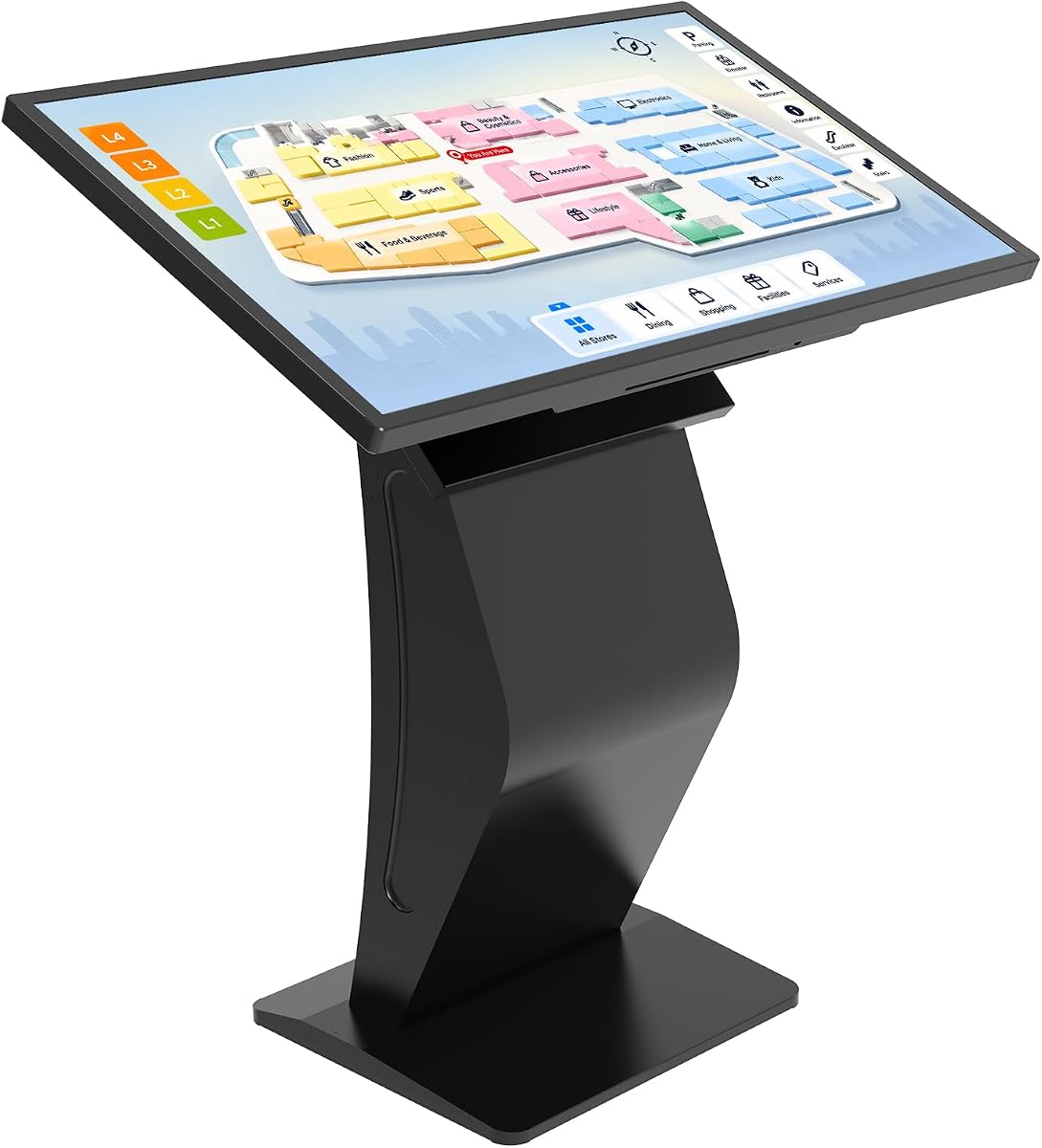
The 43-inch Windows kiosk is a general-purpose interactive display intended for self-ordering, digital signage, point-of-sale applications, directories, and retail information. No rating is listed. Its supplied description identifies Windows 11, 8GB of RAM, 128GB of storage, a Full HD multi-touch display, browser access, application installation, and a K-style floor stand.
We may earn a commission when you buy through this link, at no additional cost to you.
Direct access to business applications and websites without an external computer makes this a versatile platform. A restaurant could install its ordering system, open a browser-based menu, or schedule promotional media, depending on software support. The large display provides enough room for detailed menus and interactive content, while the modern floor stand gives the unit a commercial presentation.
The listing contains a discrepancy: its title refers to a 43-inch touchscreen, while the opening feature description calls it a 32-inch Windows touchscreen. The later specification again identifies a 43-inch Full HD display. Buyers should confirm the physical screen size, supported resolution, and included stand before ordering. The description also provides limited information about processor, connectivity, payment hardware, and restaurant-specific support.
This kiosk is best for a restaurant that wants a large Windows-based display with broad software potential. It can suit locations where ordering, promotional content, and information presentation need to share the same hardware. Buyers who want a dedicated, tightly controlled ordering experience may prefer an Android system, while operators with a very small counter may find the floor format unnecessarily imposing.
Built-in Windows capabilities reduce the number of components required to deploy an interactive display. A restaurant can run supported applications and browser content directly on the kiosk, although updates, security, and kiosk-mode behavior will still require administration.
The K-style stand and large interactive screen are suitable for restaurants, malls, retail stores, exhibitions, and hotels. A restaurant can use the same platform for ordering during peak periods and branded information during quieter times, making careful content scheduling beneficial.
We may earn a commission when you buy through this link, at no additional cost to you.
The right self-ordering kiosk depends on your service volume, available space, menu complexity, payment system, staff workflow, and technical ability. Compare complete ordering experiences separately from general-purpose touchscreen hardware, and verify every integration point before purchasing.
Countertop units work well behind a register, on a small ledge, or near a narrow ordering point. They preserve floor space and may feel appropriate for a café or compact quick-service restaurant, but a smaller screen can limit complex menus or accessibility for taller customers. Floor-standing kiosks are easier for customers to approach from the front and can provide a larger display, but they require clear traffic space, secure cabling, and careful placement to avoid creating a new queue.
Choose the format that matches the physical ordering path rather than display size alone. Measure the counter, queue width, viewing distance, and available power before selecting a model.
A screen is not a complete ordering system. The restaurant needs menu management, modifier rules, inventory deductions, order routing, receipts, reporting, and a stable connection to its payment processor. Some listings in this roundup explicitly include software, while others describe a general-purpose display that can run browser or installed applications. Confirm whether the required ordering application is included, whether a license is required, and whether the vendor supports the restaurant's point-of-sale system.
Prioritize a product that can exchange order and payment data with existing kitchen, inventory, and accounting tools. A polished interface is less valuable if it creates manual work elsewhere.
Android systems are common in dedicated restaurant kiosks because they can run a tightly controlled ordering app in kiosk mode. Windows offers broader application and browser flexibility, which can be useful when the same display also handles directories, advertising, or back-office tools. The software listing included here requires Android 6.1 or later, while several hardware options use Android 13 or Windows 11. Check current operating-system support, update policy, and compatibility with the exact application you intend to run.
Choose the platform your selected software supports best. Avoid choosing hardware solely for its operating-system label before confirming app availability, permissions, and long-term maintenance.
The products in this guide range from a compact 15-inch countertop model to 43-inch floor units, with a 21.5-inch option between them. Larger displays can make menu items easier to scan from a distance, while smaller screens can reduce visual clutter and fit better into a restricted service area. Look for Full HD resolution, adequate brightness, wide viewing angles, and responsive multi-touch as well as the stated diagonal size.
Test the interface with the intended menu, especially small text, long item names, and repeated modifier selections. The screen should be readable without leaning forward and comfortable for a broad range of customer heights.
Self-service ordering usually involves a customer-facing payment method, receipt printer, card reader, cash-handling option, and sometimes a kitchen printer or status display. The supplied listings do not consistently identify these accessories, so buyers should ask whether they are included and which models are supported. Also consider whether a restaurant needs cash acceptance, tip selection, refunds, gift cards, loyalty tools, or kitchen integration.
Do not assume that a touchscreen can accept payments. Verify the complete peripheral path, mounting, cable management, and whether each device shares a single reliable network and power source.
A dependable internet connection is essential for live menus, payment authorization, and order synchronization, but a brief outage should not leave customers with a frozen screen. Several options in this roundup support Wi-Fi, Ethernet, USB, HDMI, or Bluetooth, and one Windows listing explicitly states that it supports online and offline operation. Determine what the restaurant's ordering software can do offline, whether orders are queued safely, and how menu availability and pricing are synchronized after reconnection.
Favor a wired network for a fixed kiosk when possible. If Wi-Fi is necessary, place the access point to provide a strong signal and plan how staff will update prices or pause the device if connectivity fails.
Restaurant kiosks encounter spills, grease, dust, constant touching, and frequent cleaning. A sturdy enclosure, secure mount, lockable access, and cable protection are valuable even when the interior components are capable. Android and Windows devices should be placed in kiosk mode, given restricted administrator access, and configured with automatic updates, screen timeouts, and a secure connection to restaurant systems. The wheeled Android models offer easier relocation, but stability still matters.
Include cleaning access, replacement parts, remote support, and warranty coverage in the decision. A lower-cost unit that is difficult to service can become more expensive over time than a better-supported system.
The best interface places the most common orders first, uses large touch targets, clearly explains modifiers, and provides a straightforward path to payment and pickup confirmation. It should support multiple languages or at least avoid assumptions that narrow the customer base. Low-height controls, readable contrast, and voice or tactile support may matter in a restaurant serving seniors or guests with disabilities. Every extra tap can slow the queue, but overly complicated prompts can also overwhelm customers.
Run a practical menu test with representative customers. Measure completion time, abandonment, payment errors, and staff interventions before making the kiosk the primary ordering channel.
Begin by defining the role of the kiosk. It may serve as the only ordering point, an optional express lane, a menu display, or a complementary self-service station. Connect it to the restaurant's approved ordering software, install required updates, and enable kiosk mode so customers cannot alter system settings, close the application, or browse the device's file system. Confirm the menu, prices, modifiers, taxes, tips, available items, and pickup or dining choices before inviting customers to use it.
Place the unit where a customer can read and reach the screen without blocking a walkway. Use a stable mount, conceal or protect cables, secure the power connection, and position any card reader where it can be reached comfortably. Test Wi-Fi or Ethernet, printer output, payment authorization, kitchen routing, and receipt delivery at the start of each shift. If the system supports offline operation, verify the queueing and synchronization process before relying on it during busy periods.
Clean the touchscreen and surrounding surfaces with a method approved for the display and enclosure, avoiding harsh liquids or abrasive materials. Inspect cables, mounts, wheels, reader attachments, and vents for wear, and keep liquids away from openings. Update the operating system and restaurant application on a controlled schedule, review kiosk logs for errors, and keep a backup ordering path available. When menus or prices change, update both the live menu and any offline content so customers always receive accurate information.
A self ordering kiosk is a customer-facing touchscreen that lets guests browse a menu, select items and modifiers, choose fulfillment options, and proceed through payment without a cashier handling each step. The complete system may combine hardware, ordering software, a payment reader, a receipt printer, and connections to restaurant systems such as kitchen, inventory, and reporting. A general-purpose interactive display is not automatically a complete self-ordering system.
Android is often well suited to dedicated ordering because it can run a controlled restaurant application in kiosk mode and offers a broad selection of commercial apps. Windows provides greater flexibility for browser access, local business software, digital signage, and mixed-use deployments. The better choice depends on the exact ordering application, payment peripherals, update requirements, and how much additional functionality the restaurant needs.
A 15-inch countertop screen can work well in a restricted service area, while a 21.5-inch floor unit offers a balance between visibility and footprint. A 43-inch display is most appropriate when customers need to see detailed menus from farther away or when the device will also serve advertising and wayfinding. Screen size should be evaluated alongside viewing distance, counter space, menu complexity, accessibility, and the amount of customer traffic.
Some hardware and ordering systems can continue functioning offline and synchronize later, but this capability must be supported by the specific software. Without connectivity, the kiosk may need to use cached menus, limit payment methods, or queue transactions for later authorization. Restaurants should test outage procedures, maintain approved payment safeguards, and retain a staffed or conventional ordering option for service interruptions.
Not necessarily. The listings in this guide do not consistently identify the included card readers, cash modules, receipt printers, or other payment accessories. A restaurant should confirm which peripherals are included, which processors are supported, how tips and refunds are handled, and whether the customer interface can securely connect to the payment device. The display hardware and the payment solution should be evaluated as separate but tightly connected parts of the system.
Useful measures include order completion time, queue length, order size, payment errors, abandoned transactions, staff interruptions, customer satisfaction, and labor hours per order. Establish a baseline before installation and compare results over comparable periods. The advertised benefits of faster service and larger orders are not automatic, because menu design, pricing, staffing, customer demographics, and implementation quality all influence the outcome.
Use a soft cloth and a cleaning agent approved for the screen and housing, and avoid spraying liquid directly onto the kiosk. Clean touch surfaces frequently, inspect the mount and cables, and keep food, drink, and moisture away from vents and openings. Install software updates on a controlled schedule, verify that printers and payment devices remain connected, and keep a backup way to take orders if a kiosk requires service.
A complete ordering system is usually easier for teams that want a single coordinated workflow, while hardware can offer more flexibility or allow reuse of an existing device. Software-included listings still require verification of screen size, payment hardware, printer support, license terms, and integration with the restaurant's point-of-sale system. Compare the full operating workflow rather than choosing only by the apparent cost of the initial component.
The 15-inch countertop kiosk is the most practical overall recommendation for a restaurant seeking a focused, space-efficient ordering station. The Android quick-service software is a budget-friendly choice for operators with compatible hardware, while the 43-inch Windows 11 kiosk leads the premium side with a large display, general-purpose application support, and flexible content options. Each serves a different operating model, so the most important distinction is the intended workflow rather than simply the screen size.
Before purchasing, prioritize payment integration, menu and kitchen connectivity, hardware support, offline behavior, and ease of cleaning. A restaurant should also test its actual menu with real customers and determine how the kiosk will function during outages or maintenance. For more specialized requirements, the 21.5-inch Android model may offer a better footprint, while the order and pickup signs can improve customer guidance around the digital station.
Product features, availability, licensing, and prices can change, so check the current listing and confirm the manufacturer's latest specifications before making a final decision. Comparing the complete customer journey—from menu selection through payment and pickup—is the best way to select a self ordering kiosk that supports staff and customers rather than creating another operational bottleneck.
