
Optimus 3.0 GPS Tracker Bundle
4.3Editor score
Up to two-month battery life
Custom instant text and email alerts
Updates as frequent as ten seconds
Magnetic protective case included
This guide compares the best satellite based asset tracker for equipment, including tracking range, battery life, durability, alerts, and installation needs.
Protecting machinery, trailers, generators, containers, and other valuable equipment requires tracking that continues through rough terrain, remote job sites, and changing cellular coverage. A satellite based asset tracker for equipment can reveal where an asset is, reduce response time after theft, and help operators understand how equipment is being used.
The products in this guide use GPS, cellular, Wi-Fi positioning, or satellite transmission in different combinations. We compared their tracking methods, update options, battery strategies, environmental protection, alert features, installation requirements, and supported regions, while also identifying important differences between true satellite devices and trackers that still depend on cellular networks.
Each review explains the strongest use case for its tracker, from long-term equipment monitoring to real-time fleet oversight and off-grid recovery. Ratings reflect the supplied customer feedback, while practical details come from manufacturer descriptions and product details. Plan options, availability, and retailer pricing can change, so confirm current terms before purchasing.
4.3Editor score

4.1Editor score

4.0Editor score
This comparison covers ten asset trackers with different approaches to positioning, communications, power, and installation. The most important distinction is whether a device transmits by cellular networks, Wi-Fi-assisted positioning, or a satellite service designed to function without ordinary mobile coverage.




The LandAirSea Overdrive GPS Tracker is a strong all-around choice for equipment owners who want frequent location updates, flexible monitoring tools, and a simple installation. It carries a supplied customer rating of 4.1 and supports international tracking across more than 155 countries. The combination of a magnetic, IP67-rated enclosure and motion-aware battery management makes it especially practical for trailers, construction equipment, vehicles, and other mobile assets.
We may earn a commission when you buy through this link, at no additional cost to you.
Its standout feature is the ability to refresh location as often as every three seconds. Users can view the tracker through web-based software or the SilverCloud app, consult Google Maps, review historical playback for up to a year, establish geofences, and share locations. The 4240 mAh battery is designed to last three to four times longer than the LandAirSea 54, while motion activation lets the device sleep when equipment remains stationary.
There are important trade-offs. This is a GPS and cellular tracker rather than a self-contained satellite messenger, so a subscription is required and cellular service must be available in the operating region. A hardwire kit is optional but not included for continuous operation. The supplied rating of 4.1 is positive but not exceptional, so buyers should still evaluate the service plan and cellular coverage where their equipment operates.
This is an excellent recommendation for operators seeking a balance of real-time responsiveness, portability, historical visibility, and rugged construction. Install it where it can receive both GNSS and cellular signals, confirm the subscription before activation, and test it under the reporting mode you intend to use. For users who need true satellite transmission without cellular coverage, the SPOT Trace is the more appropriate option.
Three-second updates are useful when equipment is moving, shared across a rental yard, or considered at elevated theft risk. For parked assets, a less aggressive mode can preserve battery life without removing access to the location history and geofence tools.
The internal magnetic mounting and IP67 housing simplify installation on steel surfaces. The enclosure is designed for wet and dusty outdoor conditions, although proper placement away from metal obstructions can help maintain a clearer satellite view.
We may earn a commission when you buy through this link, at no additional cost to you.
The Optimus 3.0 GPS Tracker Bundle combines a 4.3 customer rating with flexible update intervals and a battery that can operate for up to two months when reporting at the default one-minute interval. It is a particularly compelling value for tracking vehicles, machinery, valuables, and other assets across the United States, Canada, and Mexico.
We may earn a commission when you buy through this link, at no additional cost to you.
Location updates can be customized to occur as frequently as every ten seconds. Users can create instant text or email alerts and follow assets live through an easy-to-use tracking platform. The powerful magnetic case provides a straightforward way to attach the tracker to suitable metal surfaces, while the reported two-month battery life offers more flexibility than a typical short-duration rechargeable tracker.
The main limitation is geographic. Coverage is stated for the United States, Canada, and Mexico, so this is not the appropriate product for international equipment fleets. It also requires a monthly subscription. Frequent ten-second reporting will consume more power than the default one-minute mode, which means operators should balance update speed against battery expectations and alert requirements.
For owners of machinery or vehicles operating across the covered region, the Optimus 3.0 is a strong budget-minded selection. It is particularly helpful for users who want more frequent position data than basic once-a-day monitors without moving into a wired installation. Verify that the asset remains within the supported countries and select a reporting frequency that reflects how often you genuinely need to check its position.
Custom text and email alerts help teams react promptly to unexpected movement, boundary crossings, or other configured events. Notifications are especially useful for equipment left overnight at a job site or customer location where continuous visual monitoring is impractical.
The reported two-month operating period gives the tracker more flexibility than many compact alternatives. It is best suited to mixed-use assets that alternate between movement and rest, with lower-frequency reporting used when preserving power becomes more important.
We may earn a commission when you buy through this link, at no additional cost to you.
The Five-Year GPS Asset Tracker is built around a clear need: monitoring trailers and equipment that do not have a reliable power source. Its supplied 4.1 rating, claimed battery life of up to five years, and wireless installation make it an interesting option for long-term construction, rental, logistics, and yard monitoring.
We may earn a commission when you buy through this link, at no additional cost to you.
The tracker can be installed without wiring, drilling, or electrical connections, making deployment especially convenient for generators, containers, trailers, and heavy equipment. Web and mobile applications provide access to location history and movement tracking, which can support theft recovery assistance, asset-utilization analysis, and proof that equipment remained at a specified location.
The principal distinction from a real-time fleet tracker is its focus on historical and lower-complexity monitoring rather than continuous live updates. That focus supports the extended battery proposition. It may therefore be less suitable for dispatchers who require a location refresh every few seconds, motion-based recovery commands, or detailed tamper telemetry. A subscription is also required for each device.
This tracker is well suited to organizations that need to know where stationary or intermittently used equipment was without installing power or placing a daily charging routine on staff. It is less compelling for fleet dispatch or immediate theft response. Confirm the reporting configuration and subscription before installation, then test the device at the intended site to ensure that it can acquire a useful position.
The wireless format is the central advantage for unpowered assets. A generator, trailer, or container can be monitored without modifying its wiring, which also makes the device easier to transfer when equipment changes jobs or rental customers.
Location history can help demonstrate utilization and support theft-recovery investigations. For the most reliable records, establish a consistent reporting routine and retain the relevant records before rotating the tracker to another asset.
We may earn a commission when you buy through this link, at no additional cost to you.
The LandAirSea 54 GPS Tracker offers a compact, discreet way to monitor vehicles, ATVs, golf carts, trailers, and other critical assets. It has a supplied rating of 4.1 and shares several useful capabilities with the Overdrive, including global positioning, real-time alerts, geofencing, three-second updates, and historical playback for up to one year.
We may earn a commission when you buy through this link, at no additional cost to you.
The strongest reason to choose this model is its small magnetic format. The internal magnet makes installation fast and unobtrusive, which is useful when a tracker needs to be placed beneath a vehicle, inside a trailer cavity, or on another asset with limited mounting space. It also sleeps when no motion is detected, helping preserve battery life during idle periods.
Users should not mistake the international location support for independent satellite messaging. The tracker depends on cellular connectivity, and a subscription is required. Its smaller design may also offer less battery capacity than the Overdrive, making power-conscious operating modes especially relevant for assets that spend long periods parked.
The LandAirSea 54 is a sensible choice for owners who prioritize size, discretion, and familiar LandAirSea software over maximum battery capacity. It works well for mobile equipment that receives regular use and can remain within cellular coverage. Select a reporting schedule that balances the need for rapid location information with the desire to preserve the internal battery.
The ultra-compact housing and internal magnet reduce installation time and visual prominence. This makes the tracker practical for equipment where a large control box would be inconvenient or where concealed placement is desirable.
Geofencing, real-time notifications, Google Maps integration, and one-year playback create a useful monitoring package. These tools allow operators to combine immediate alerts with a longer account of where the asset has been.
We may earn a commission when you buy through this link, at no additional cost to you.
The Trak-4 GPS Tracker is a rugged, rechargeable option for vehicles, assets, and equipment that cannot be wired permanently. Its supplied 4.1 rating and internal LiPo battery, which can deliver 12 to 18 months of operation at one daily report, make it especially interesting for mixed fleets and infrequently serviced machines.
We may earn a commission when you buy through this link, at no additional cost to you.
Tracking combines GPS with Wi-Fi-based location technology. That Wi-Fi fallback can provide useful positioning when a conventional GNSS signal is blocked inside a building, while 4G LTE connectivity supports wide-area reporting. The product description also mentions 2G fallback, which can improve continuity in regions where newer cellular bands are limited.
Its limitations are mostly about power strategy and network dependence. The battery must be recharged, although the long reporting interval greatly reduces maintenance when compared with a high-frequency tracker. It still requires a service subscription and cellular coverage. While the phrase global tracking is broad, users should verify current network support in the specific countries where the equipment travels.
The Trak-4 is a strong recommendation for operators seeking a rugged, no-wiring tracker with long battery endurance and better indoor positioning options. It is less appropriate for immediate, high-frequency dispatch or genuinely off-grid assets that need a satellite messaging service. Select a reporting interval appropriate to the asset's activity and recharge the device before long periods in the field.
The internal battery can support extended operation when the tracker reports daily. That interval is well suited to equipment parked for long stretches, while more active fleets can use higher frequencies and recharge between routine maintenance windows.
Wi-Fi-assisted location adds a useful layer when GNSS reception is obstructed indoors. It does not replace cellular service, but it can provide a more useful position than waiting for a clear satellite view in a basement, garage, or storage building.
We may earn a commission when you buy through this link, at no additional cost to you.
The SPOT Trace Satellite Tracking Device is the clearest true satellite option in this comparison. It uses Globalstar satellite technology to send GPS coordinates, making it suited to remote equipment, boats, trucks, luggage, and other assets that may be beyond ordinary cellular coverage. It carries a supplied rating of 4.0.
We may earn a commission when you buy through this link, at no additional cost to you.
Unlike most GPS trackers in the guide, it does not depend on a cellular network to transmit its position. Users can preprogram status messages at waypoints, notify friends, family, or emergency services, and track moving assets through the associated service. The box includes the tracker, four AAA lithium batteries, a USB power cable, and a quick-start guide.
The trade-off is that the SPOT Trace is primarily a satellite messaging and location-sharing device rather than a conventional live fleet-management terminal. It may not provide the same high-frequency map refresh, detailed utilization reports, or automated geofence workflows found in cellular trackers. A subscription is required, and users must activate the device with an appropriate service plan.
Choose the SPOT Trace when dependable communication outside cellular coverage is more important than fleet-scale live mapping. It is particularly relevant to isolated equipment, long-distance transport, and recovery-oriented tracking. For a yard full of connected vehicles where operators need continuous dashboards and frequent position updates, a cellular tracker will usually be the more natural choice.
Satellite transmission allows location messages to travel where ordinary mobile networks are unavailable. This makes the device useful for equipment moving through remote terrain, offshore locations, or other areas with limited infrastructure.
The ability to send GPS coordinates and preprogrammed waypoint messages supports recovery coordination and travel communication. The included lithium batteries keep the core experience uncomplicated for occasional as well as continuous use.
We may earn a commission when you buy through this link, at no additional cost to you.
The Lonestar Tracking Barra GPS Tracker is built for demanding fleet and asset-security applications. Its supplied 4.0 rating is supported by an IP68 and IK07-rated housing, multi-GNSS positioning, 4G and 5G connectivity, user-replaceable batteries, and alerts for movement, tampering, impacts, and boundary violations.
We may earn a commission when you buy through this link, at no additional cost to you.
Positioning can use GPS, GLONASS, Galileo, and BeiDou, with cell-tower backup when a satellite signal is unavailable. Onboard flash memory stores location records if the tracker goes out of range, then uploads them after connectivity returns. This is a useful feature for equipment that regularly travels beyond reliable coverage and for audit trails that cannot afford missing intervals.
The battery configuration is notable. Two batteries are included, and the stated endurance can reach eight years with daily updates, three years with movement-based tracking, or two years with hourly reporting. The exact result depends on those reporting modes, and replacing batteries avoids returning the entire unit to a service center. Coverage is specified for the United States, Canada, and Mexico, and a service plan is needed.
The Barra is a compelling choice for operations that need rugged hardware, detailed security events, and flexible power management. It suits vehicles, trailers, boats, and equipment requiring strong tamper resistance. It is less suitable for international assets or users seeking independent satellite communication, but its encrypted platform and stored records make it a sophisticated cellular tracking solution.
Alerts for geofence breaches, impacts, run hours, tip detection, power disconnection, and tampering provide a richer view of asset activity. These event types help distinguish ordinary movement from potentially harmful interference.
Onboard memory can retain records while the tracker is outside network coverage and upload them after service returns. This reduces gaps in utilization and security records for equipment that regularly crosses weak-signal areas.
We may earn a commission when you buy through this link, at no additional cost to you.
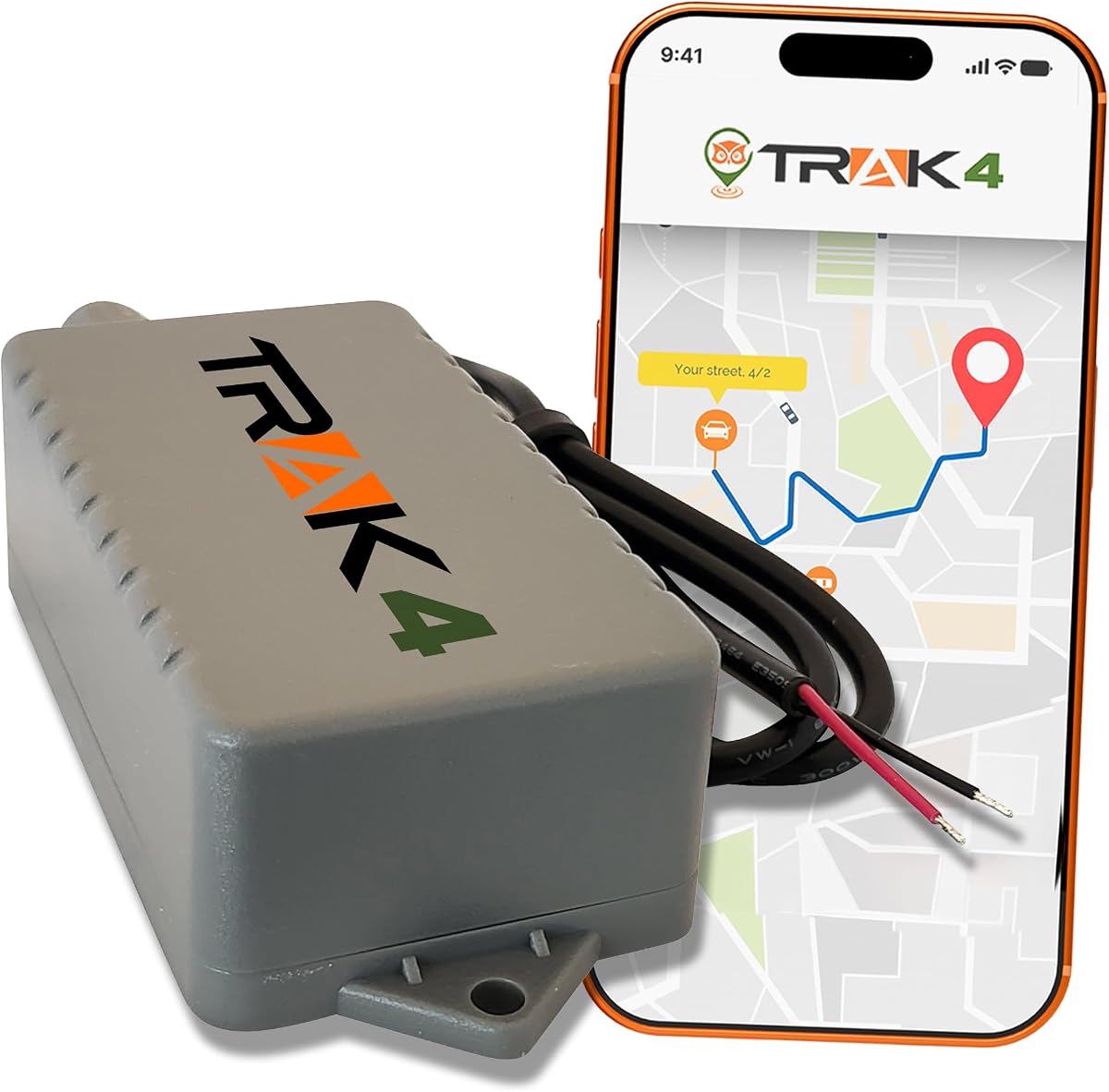
The Trak-4 12V Hardwired GPS Tracker is designed for equipment that can receive a permanent two-wire power connection. Its supplied 4.1 rating, always-on power approach, and 12-to-18-month internal battery make it a practical choice for trailers, vehicles, construction machines, and fleet assets used in demanding daily operations.
We may earn a commission when you buy through this link, at no additional cost to you.
The harness trickle-charges the internal battery, eliminating routine charging after installation. If the asset disconnects from 12-volt power, the backup battery can continue reporting for 12 to 18 months at a daily interval. Users can select updates from every 30 seconds while moving to hourly and receive SMS or email alerts for geofence crossings, speed, motion, power disconnection, and low battery.
The installation tradeoff is meaningful. A hardwired tracker is less convenient than a magnetic model and may require basic electrical knowledge, correct fuse placement, or professional installation. It also remains dependent on cellular service rather than using an independent satellite link. On the positive side, powered operation supports more frequent reporting and removes battery management from the daily workflow.
This is a strong option for fleet managers who install trackers once and want them to remain operational without repeated charging. It is less suitable for unpowered equipment, short-term rentals, or owners who require a tool-free installation. Confirm safe electrical routing, protect the wiring from moving parts and abrasion, and test both external power and backup operation.
A two-wire connection provides a stable power source on compatible equipment. Once installed, the tracker can use frequent reporting modes without competing with the vehicle's primary electrical demands or requiring regular charging.
Alerts for speed, motion, geofences, power disconnection, and low battery make the tracker more than a moving dot on a map. These functions support both theft response and everyday fleet-management review.
We may earn a commission when you buy through this link, at no additional cost to you.
The Trak-4 Solar GPS Tracker provides an attractive solution for outdoor trailers, containers, boats, and equipment that are not connected to a power source. Its built-in solar panel keeps the battery charged without wiring or plug-in charging, while its supplied rating of 3.8 makes it the lowest-rated product in this comparison.
We may earn a commission when you buy through this link, at no additional cost to you.
The device reports through its own LTE-M cellular connection, so a phone does not need to be nearby. It offers geofence entry and exit alerts, low-battery notifications, and daily check-ins or movement-start and movement-stop reports. Available mounting options include screws, double-sided tape, built-in slots for straps or zip ties, and an optional magnet kit for steel surfaces.
Solar charging is the central strength and the central limitation. The manufacturer recommends at least 20 hours of good sunlight per week, so the tracker is best suited to outdoor assets with dependable exposure. Containers, enclosed trailers, and shaded machinery may not receive enough energy, and the device remains dependent on cellular coverage for its data connection.
For customers with exposed, sunlit equipment and a need for low-maintenance installation, the Solar model is practical. It is less suitable for assets stored in shade, for locations with inconsistent service plans, or for owners seeking very high-frequency real-time updates. The included mounting flexibility helps compensate for the lack of hardwired power, while the lifetime warranty offered while subscribed adds reassurance.
The integrated solar panel removes the need to connect the tracker to an electrical system. This simplifies deployment on trailers, containers, boats, and mobile equipment where modifying the asset would be inconvenient.
Screw, tape, strap, zip-tie, and optional magnetic mounting allow the tracker to move between equipment with different surfaces. This flexibility is useful for rental fleets and seasonal assets that do not justify permanent installation.
We may earn a commission when you buy through this link, at no additional cost to you.
The Brickhouse Security EON Odyssey GPS Tracker combines a strong supplied rating of 5.0 with flexible installation and long-duration monitoring. It is designed for vehicles, trailers, equipment, and other valuable assets, using an integrated high-strength magnet or strap loops for quick deployment.
We may earn a commission when you buy through this link, at no additional cost to you.
Its rechargeable battery can reportedly run for up to 45 days with one-minute reporting during one hour of daily driving. In a low-activity configuration, it can operate for up to 16 months with one location ping per day. Users can monitor the tracker through a secure platform on a phone, tablet, or computer and receive movement, speed, and geofence notifications.
A useful distinguishing feature is the built-in light sensor, which detects movement or removal and sends an alert. That can reveal when someone removes the tracker from an asset even if the device does not begin moving. The tracker is also described as rugged and weather resistant for outdoor exposure. A subscription is required, and the cellular communication method means it is not a replacement for a satellite-only recovery device.
The EON Odyssey is a compelling option for owners who want fast magnetic placement, flexible reporting, and a simple platform across phones and computers. It is particularly useful for assets with regular but intermittent activity. For high-frequency fleet dispatch, verify that the selected plan supports the necessary update speed, and for completely remote equipment, consider a tracker with independent satellite transmission.
The integrated magnet makes installation quick and avoids permanent modification of the equipment. Strap loops offer an alternative for surfaces that are not magnetic or where a more secure attachment is preferred.
Movement, speed, geofence, and light-sensor notifications create a practical security picture. Together, they can indicate where an asset is, how it is being used, and whether the tracker itself has been disturbed.
We may earn a commission when you buy through this link, at no additional cost to you.
The right tracker depends on where the equipment operates, how often it moves, what level of visibility is required, and whether a permanent power connection is available. These factors determine whether a cellular GPS unit, hybrid positioning tracker, or independent satellite device will deliver the most useful results.
Most GPS trackers determine a position with satellite signals, but they then transmit that position over a cellular network. This distinction is critical for equipment traveling through rural areas, remote job sites, or locations with unreliable mobile service. The SPOT Trace is the independent satellite option in this group, while the other products use cellular reporting, with several adding Wi-Fi or cell-tower positioning to improve location estimates. A cellular tracker is usually better for routine fleet visibility because it can offer frequent updates, interactive maps, geofences, and stored history. A satellite messenger is generally better for emergency location sharing and remote recovery. Buyers should map the actual operating area before deciding, rather than assuming every GPS tracker is a satellite-based tracker.
Battery endurance is directly affected by how often the tracker reports, how strongly it uses its cellular connection, and whether movement activation is supported. A tracker reporting every ten to thirty seconds is useful for an active fleet but consumes more power than one reporting every hour or once per day. Standalone battery devices are convenient for trailers and equipment without electrical access, while hardwired models are better suited to powered machines. Solar charging can extend deployment on exposed outdoor assets, provided they receive adequate sunlight. Compare the stated battery life at the update interval you actually plan to use, because headline endurance figures may correspond to infrequent reporting rather than real-time tracking.
Construction equipment, rental trailers, and outdoor machinery are exposed to rain, dust, impact, vibration, and temperature changes. A waterproof or water-resistant enclosure is important, but protection ratings also indicate how the housing is likely to withstand dust and mechanical stress. The Lonestar Barra has the most explicit combination of IP68 and IK07 protection, while several other products are described as waterproof without offering equally detailed impact specifications. Magnetic housings should be checked for movement because a loose tracker can produce noisy alerts. Any exposed installation should also protect wiring and maintain an unobstructed view of the sky where GNSS reception matters.
Installation requirements can determine whether a tracker suits a short-term rental, a company fleet, or a piece of heavy equipment. Magnetic and adhesive devices can be deployed quickly but may be easier to remove. A hardwired tracker provides continuous power and supports active monitoring, yet it requires access to a safe 12-volt connection and may need professional work. Wireless devices are ideal for unpowered trailers, generators, and containers, while solar trackers reduce charging work for assets with dependable sun exposure. Consider whether the tracker must be moved frequently, whether the manufacturer permits adhesive mounting on the asset's finish, and whether electrical modification is acceptable.
A location on a map is only one part of asset protection. Useful alerts include geofence entry and exit, movement, speed, low battery, power disconnection, impact, tip detection, and device tampering. The EON Odyssey adds a light sensor for removal detection, while the Barra offers a broad set of vehicle and security events. Notifications are most useful when they are specific enough to prompt a timely response but not so frequent that operators become conditioned to ignore them. Before activation, establish geofences around job sites, storage yards, and customer locations, then test the notification channel. Email, text, and in-app alerts may all be available, but the selected service plan must support the features you need.
The products in this guide do not all cover the same geography. The Optimus and Lonestar trackers specify the United States, Canada, and Mexico, while several LandAirSea and Trak-4 models advertise wider international or worldwide reach. The SPOT Trace uses a satellite service intended to support communication beyond conventional cellular networks. Coverage should be checked at the country and subregional level, especially for equipment moving through remote areas or across borders. Confirm that the service supports the relevant network technology, that roaming or international activation is available, and that the tracking platform remains accessible from the devices your team uses.
Nearly every tracker in this group requires an ongoing service plan for mapping, alerts, or data transmission. Plans may change the permitted reporting frequency, data retention, alert types, roaming, or number of devices, so the initial hardware cost is only part of the ownership decision. Review the plan terms for the actual use case rather than focusing solely on the advertised device capability. A one-time trip may need a simple satellite service, while a rental company may need multi-device management and historical records. Also consider whether a smartphone, tablet, or browser-based platform is required and whether the interface supports the people responsible for responding to alerts.
Historical location records can reveal idle time, route patterns, jobsite use, and whether equipment is being used as intended. The LandAirSea models support playback for up to a year, the long-duration tracker emphasizes location history, and the Barra stores records offline for later upload. Longer retention can support audits, rental billing, utilization analysis, and theft investigations. However, more frequent reporting consumes more power and may create larger data volumes. Decide which evidence is genuinely useful, establish a clear retention policy, and ensure that responsible personnel can export or access records before an asset moves to another customer or job.
Begin by deciding what the tracker must accomplish, such as theft recovery, dispatch visibility, utilization reporting, or basic location checks. Activate the required service, select an appropriate reporting interval, configure geofences, and confirm the recipients for text or email alerts before attaching the device to the equipment. For hardwired models, use a safe 12-volt connection and correct circuit protection; for magnetic or adhesive models, clean and dry the mounting surface before attachment.
Mount the tracker where it can acquire a clear GNSS signal and where cellular or satellite antennas are not completely blocked. Metal roofs, concrete walls, dense foliage, and enclosed compartments can weaken positioning. Place it away from heat sources, moving machinery, sharp edges, and wiring that could chafe. For a solar tracker, select a location receiving the recommended amount of direct sunlight. Test the unit while the equipment is parked and then again while it is moving to confirm that position, speed, and event alerts behave as expected.
Care for the tracker by checking battery condition, cleaning the enclosure, and inspecting the mount after severe weather or heavy work. Keep the charging contacts and solar surface free of mud, metal dust, and salt when applicable. Review location history and alert settings periodically, remove old trackers from retired equipment, and deactivate service when a device is sold or permanently retired. Never rely on a tracker as the only control for a vehicle or machine; follow safe shutdown and load-securing procedures even when remote monitoring is active.
No. Most devices use satellite signals to determine a position but transmit that position through a cellular network. A true satellite tracker sends location information through a satellite communications service, making it useful where cellular coverage is absent. Buyers should check the communications method as carefully as the location accuracy.
The best choice depends on the location and reporting requirements. The SPOT Trace offers independent satellite communication for genuinely remote areas, while several cellular trackers suit equipment with reliable service. A long-battery or solar tracker is useful when the priority is periodic location history rather than continuous dispatch updates.
Most trackers in this comparison require an active service plan for maps, alerts, or data transmission. Plans can affect update speed, roaming, retention, and advanced features. Purchase the hardware and activate only after reviewing the current service terms for the intended number of devices and operating regions.
It depends on the product and installation method. Magnetic, adhesive, strap, and solar trackers can be moved more easily, although each asset may need its own account or profile for clean reporting. Hardwired trackers are better suited to permanent fleet installations, while a portable tracker can be transferred after the old device is removed and the new location is verified.
GPS reception can be weak inside dense buildings and metal structures. The Trak-4 can use Wi-Fi-assisted positioning when a clear GNSS signal is unavailable, and the Barra can use cell-tower backup and store records for later upload. These features can improve continuity, but they do not create satellite messaging or eliminate every possible coverage gap.
Fast reporting is most useful for moving vehicles, high-risk machinery, and dispatch operations. Slower reporting preserves battery life and works well for parked or intermittently used assets. Choose a schedule based on the decisions the location data must support, then confirm the selected service plan supports that interval.
Water-resistant or waterproof housings are designed for outdoor exposure, but the enclosure is not the only consideration. Secure the mount, protect exposed wiring, and check that the tracker can still receive cellular or satellite signals after installation. Periodic inspection is especially important after severe weather, pressure washing, or impact.
It can provide valuable location information and timely alerts, increasing the chance that a recovery team responds while the asset is still identifiable. No tracker guarantees recovery, and signal outages, disabled devices, or delayed reporting can limit results. Combine tracking with conventional security measures, documented serial numbers, insurance, and clear incident procedures.
The LandAirSea Overdrive is the most balanced overall recommendation, combining frequent updates, global cellular tracking, historical playback, geofencing, a magnetic mount, and motion-aware battery management. The Optimus 3.0 stands out as the best budget-oriented option because of its supplied 4.3 rating, flexible ten-second updates, and useful battery life, while the SPOT Trace is the best premium and true satellite selection for locations without dependable cellular coverage.
Prioritize the operating environment before focusing on the smallest possible tracker. Equipment on remote roads may require independent satellite transmission, while connected fleets often benefit more from frequent cellular updates, offline record storage, and rich security alerts. Battery life, mounting method, reporting interval, and subscription features should be evaluated together because each product performs differently under real operating conditions.
Finally, check the current service terms, coverage, hardware availability, and retailer pricing before ordering. Prices and plan structures can change, and customer feedback may evolve. Use the comparisons in this guide to identify the right category of tracker, then verify the latest product details and subscription requirements for the specific assets and regions where it will be used.