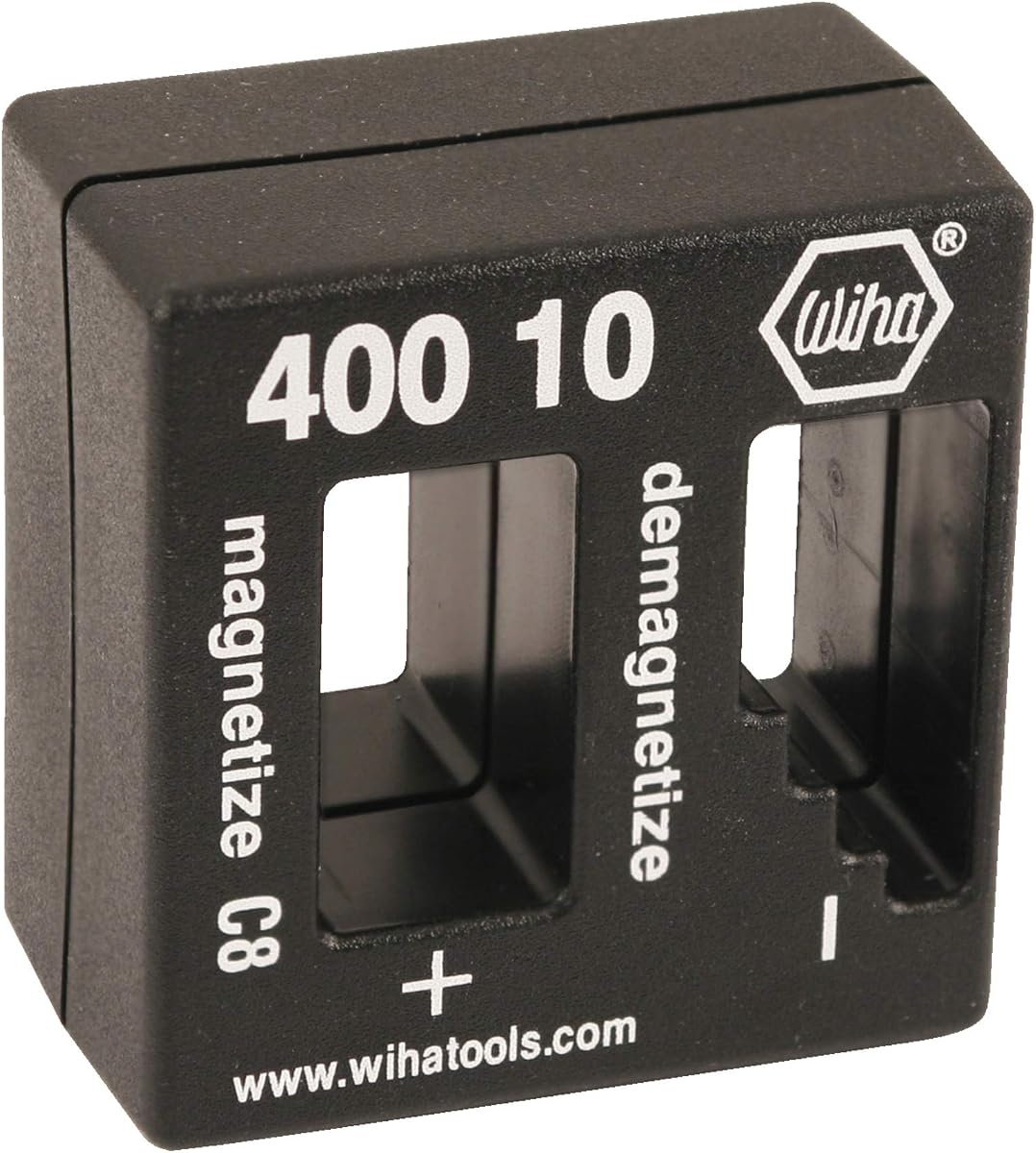
Wiha 40010 Magnetizer Demagnetizer
4.5Editor score
Pocket-sized manual operation
Works with compatible steel tools
No batteries or electrical power
Explore the best Magnetizer Demagnetizer Tools, comparing 10 expert picks for ease of use, tool compatibility, portability, magnetic control, and performance.
Magnetizer demagnetizer tools give screwdrivers, bits, and small fasteners a controlled magnetic boost or remove residual magnetism when it could interfere. A useful model should be easy to operate, compatible with the tools you use, compact enough to carry, and capable of producing consistent results without batteries or complicated setup.
The products in this guide were compared using the supplied specifications, including magnet technology, tool compatibility, operating method, portability, construction, and intended applications. The list includes compact blocks, pocket-sized units, multi-piece sets, and products designed for both general repair work and sensitive electronics.
Each review explains the standout benefits, practical limitations, and most suitable users for every model. Rankings reflect the information available in October 2026 rather than laboratory testing. Product availability, ratings, and prices can change, so readers should confirm current details and compare the included features before purchasing.
4.5Editor score
4.7Editor score

4.4Editor score
This side-by-side comparison evaluates all ten tools across magnetic control, supported equipment, power requirements, portability, and practical features. It is designed to help technicians, electricians, mechanics, electronics repairers, and DIY users identify the option that best matches their workflow.



The Wiha 40010 is a compact magnetizer and demagnetizer with a 4.5 rating, two C8 permanent industrial ceramic magnets, and a pocket-sized body. Its appeal comes from straightforward operation: the user can quickly add or remove magnetic force from compatible steel tools without batteries, charging, or an electrical connection.
We may earn a commission when you buy through this link, at no additional cost to you.
One of its most useful qualities is its balance of portability and capability. The tool is designed to handle items over 1.35 inches long and 1/8 inch, or 3 millimeters, in diameter. That makes it relevant to small screwdrivers, narrow bits, and compact steel parts. Its two-inch-square proportions are easy to place in a pocket, pouch, or toolbox.
The limitations are worth considering. The stated minimum length means very short bits may not pass through the working area properly, and the basic housing does not offer the directional controls or indicator graphics found on some newer designs. It also appears aimed at steel tools rather than every ferrous material, so compatibility should be checked before use.
This is a strong choice for a technician, electrician, or DIYer who wants a dependable pocket tool without extra accessories. It handles the two essential jobs—magnetizing and demagnetizing—without unnecessary complexity. For users seeking a simple, portable solution, the Wiha 40010 is easy to recommend.
The inclusion of two C8 industrial ceramic magnets provides meaningful holding power without turning the unit into a bulky bench device. This makes the Wiha especially useful when a screwdriver needs to retain a small screw while the user works in a confined area.
Because it needs no battery or electrical power, the tool can be carried to a job site and used immediately. Its two-by-two-by-one-and-eighth-inch size supports convenient storage, while the shatter-resistant plastic housing is suited to mobile use.
We may earn a commission when you buy through this link, at no additional cost to you.
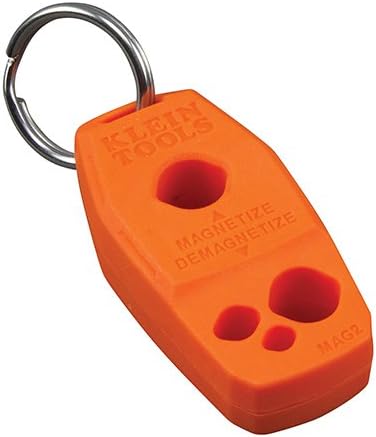
The Klein Tools MAG2 combines rare-earth magnets with an unusually clear operating method and holds a 4.7 rating, the highest among the listed products. It is designed primarily for screwdriver bits and tips, allowing users to add magnetism to hold screws or reduce magnetism for delicate work.
We may earn a commission when you buy through this link, at no additional cost to you.
Its defining feature is the single-swipe design. Rather than requiring a prolonged insertion or an unfamiliar multi-position procedure, the tool is intended to magnetize or demagnetize a screwdriver through a quick movement. The product data specifically advises inserting the screwdriver fully into the slot and avoiding shaft rotation while withdrawing it slowly.
Compatibility is broad for a focused tool. The MAG2 is listed for precision screwdrivers, 1/4-inch slotted drivers, and #2 and #3 Phillips screwdrivers. A stainless steel key ring makes it easy to attach to a tool bag or backpack, so the magnetic control function remains available when it is needed away from a workbench.
This is an especially attractive option for electricians, technicians, and serious DIY users who switch between fastening and sensitive work. Its limitations are its screwdriver-centered design and lack of a multi-unit package, but the refined operation and strong rating make the MAG2 the most well-rounded single-unit recommendation.
A quick swipe is particularly valuable when the same screwdriver must first carry a small fastener and later work near electronics or other components where magnetic attraction is unwanted. The straightforward movement reduces hesitation and makes repeated changes easier.
The included stainless steel key ring adds useful carrying convenience without introducing batteries. Attaching the MAG2 to a tool bag or backpack helps ensure that magnetic control is available even when the user is not at a dedicated work area.
We may earn a commission when you buy through this link, at no additional cost to you.
The JPT Screwdriver Magnetizer and Demagnetizer is a compact, bidirectional magnetic block with a 4.4 rating. It is positioned for electricians, electronics technicians, computer repair workers, mobile repair shops, and car workshops, making its two-way design particularly relevant to work that shifts between magnetic and nonmagnetic requirements.
We may earn a commission when you buy through this link, at no additional cost to you.
The core benefit is explicit control in both directions. Users can magnetize a screwdriver tip so a screw remains attached during installation, then demagnetize the tip when working around electronic parts, delicate components, or areas where clinging metal could create a problem. A marked slot guides the screwdriver through the tool.
The supplied information repeats the no-battery message twice, but that emphasis reflects a legitimate convenience. The block requires no electricity, charging, or power connection, and its small size is intended to fit into toolboxes, pockets, and workshop kits. That makes it practical for mobile work rather than only stationary benches.
The main uncertainty is that the product data does not state a precise range of compatible shaft diameters, so users with unusual precision tools should check fit before committing. Even so, the combination of compact construction, straightforward two-way operation, and a clear sensitive-repair use case makes this one of the strongest premium picks in the roundup.
Electricians and repair technicians regularly move between tasks where a screw should stay on the driver and tasks where magnetic attraction should be minimized. The JPT's bi-directional approach addresses both needs without changing the tool or relying on a separate demagnetizing accessory.
Because it works entirely through manual movement, the block avoids battery management and electrical access. Its portable format is appropriate for mobile technicians who may need to control magnetism at a customer location, in a vehicle, or away from a permanent bench.
We may earn a commission when you buy through this link, at no additional cost to you.
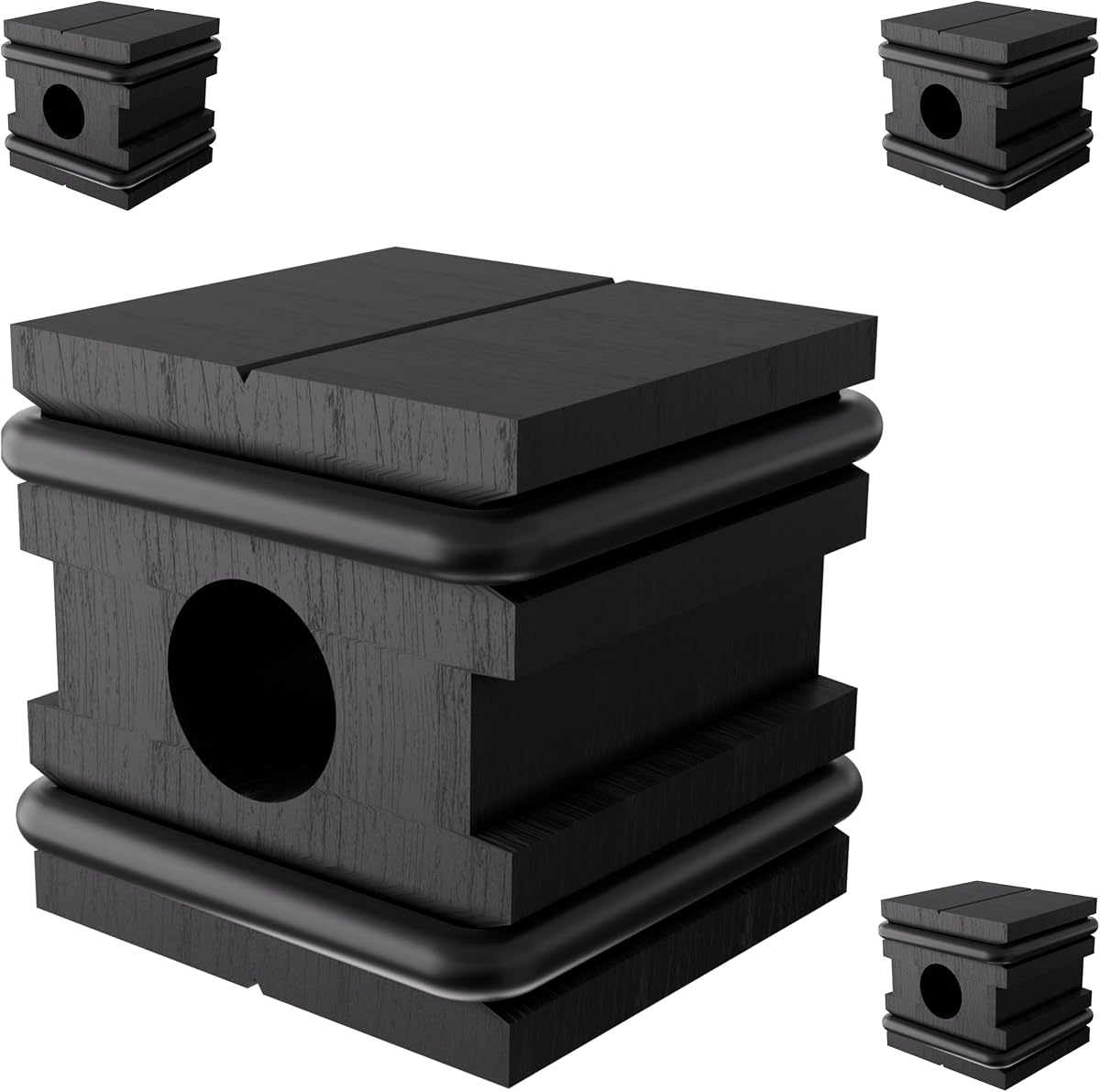
The Master Magnetics Screwdriver Magnetizer Demagnetizer four-pack has a 4.1 rating and centers its design on distinct operating channels. The center hole is used to magnetize small tools, while exterior channels help remove magnetic charge from surfaces that need to remain clean.
We may earn a commission when you buy through this link, at no additional cost to you.
This arrangement gives the product a useful visual logic once the user learns it. Sliding a screwdriver or small metal item through the center provides greater control during handling, while passing it through an outer channel prepares the tool for work where unwanted magnetism could be problematic. The product can also hold itself to a steel toolbox.
The four-pack format is its strongest practical advantage. Mechanics and DIYers can place a unit in the workshop, vehicle, service bag, or another frequently used location instead of carrying a single tool between every task. Bonded rubber construction and permanent magnets remove the need for batteries and electrical power.
Its 4.1 rating is lower than those of the leading products, and the multi-channel design may require more attention than a single-swipe model. Nevertheless, it is highly practical for shops that want multiple units available. Choose it when availability at several work locations matters more than a minimalist interface.
Four units can be distributed among a primary toolbox, a vehicle, a service kit, and a household drawer. This is more useful for some users than owning a single model, because the magnetic-control tool is always close at hand when a small fastener needs to be retained or removed from a driver.
Using the center hole for magnetization and the exterior channels for demagnetization gives the tool a functional geometry. Once familiar, the distinct paths make it possible to switch quickly between magnetic and nonmagnetic working conditions.
We may earn a commission when you buy through this link, at no additional cost to you.
The Master Magnetics Blue four-pack combines a 4.4 rating with a broad claim of compatibility across screwdriver tips, bits, small and large tools, screws, drill bits, sockets, nuts, bolts, nails, and other ferrous objects. That makes it a general-purpose addition to a busy tool collection.
We may earn a commission when you buy through this link, at no additional cost to you.
Four individual units are included, and each is described as two inches by two inches by one inch. Users can distribute them around a shop or toolbox without needing to move one unit between locations. The permanent-magnet design requires no batteries or electricity, which also keeps the operating process uncomplicated.
The information supplied does not explain a highly specialized directional system for this particular set. Its advantage appears to be accessibility, placement flexibility, and support for a wide assortment of metal fasteners. Users who work regularly with many types of steel tools may appreciate that broad approach more than a screwdriver-specific design.
This four-pack is a sensible choice for DIYers, mechanics, and maintenance personnel who want several units ready around the workspace. It falls short of a more specialized product for delicate electronics, but for general ferrous hardware, its flexibility and straightforward operation are compelling. Its multiple-unit format is especially valuable for shared shops.
The stated compatibility extends beyond screwdrivers to drill bits, sockets, nuts, bolts, and nails. This makes the set relevant to users whose work changes from one fastener category to another, provided each item is made from a compatible ferrous material.
The multi-unit package solves a practical problem for active users: a magnetic tool left in one toolbox may be unavailable when work begins elsewhere. Keeping units in separate kits reduces that friction without adding charging or power-management requirements.
We may earn a commission when you buy through this link, at no additional cost to you.
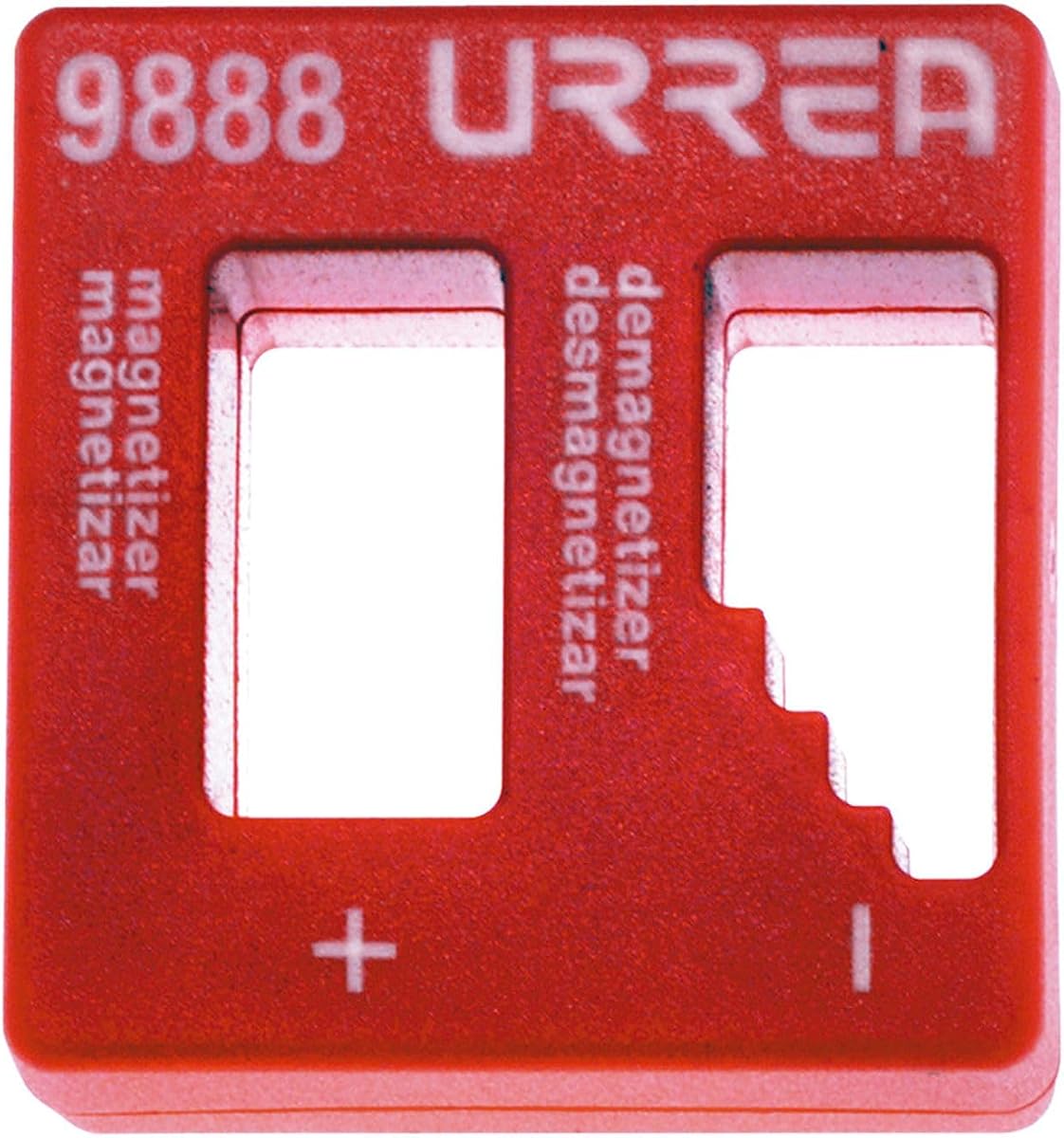
The URREA 9888 is a focused magnetizer and demagnetizer with a 4.5 rating. Its clearest attribute is the pair of operating cavities: the positive terminal cavity is intended for magnetizing a screwdriver tip, while the negative terminal cavity is used when a demagnetized tool is needed.
We may earn a commission when you buy through this link, at no additional cost to you.
This positive-versus-negative arrangement makes the product easy to understand. Instead of relying on subtle differences in magnetic strength, the user selects the function by choosing the appropriate cavity. That is particularly helpful for technicians who move between holding fasteners and working on electronic parts that should not attract loose metal.
The model is designed around screwdriver tips, so it is not presented as a universal magnetizing solution for every tool category. The supplied information also gives no exact dimensions or size limitations. Those omissions are worth acknowledging because a user with unusually broad or narrow bits should confirm that the tip fits the intended cavity.
The URREA 9888 is a good choice for repair professionals who value explicit function labels and a minimal operating process. Its 4.5 rating supports its place on this list, while the terminal-cavity design makes it more approachable for occasional users than a less obvious channel or swipe system.
The separate cavities turn magnetism control into a simple choice. A technician can place the tip in the positive cavity when a screw must remain attached, then use the negative cavity when working on electronic parts requires a nonmagnetic surface.
Many technical jobs involve both fastening and sensitive component work. Providing both functions in one dedicated screwdriver-tip tool makes it more versatile than a one-direction magnetizer while remaining more focused than a general-purpose block.
We may earn a commission when you buy through this link, at no additional cost to you.
The Bosch Magnetizer/Demagne has a 4.5 rating and is backed by one of the more specific descriptions in the roundup. It uses two ferrite magnets with a minimum field strength of 90mT, while weighing only 80 grams and using self-explanatory icons to guide operation.
We may earn a commission when you buy through this link, at no additional cost to you.
The stated field strength makes this product easier to assess for users who want more than a general promise of strong magnetization. It is intended to help screws adhere to magnetized screwdrivers, improving control in confined spaces, and to remove magnetism when a nonmagnetic working surface is needed.
Its compact, lightweight format supports regular carrying, and the icon-based interface should reduce the learning curve. The trade-off is that ferrite magnets can be more vulnerable to cracking or chipping than flexible neodymium magnets if the housing receives a hard impact. As a result, sensible storage matters even though the product itself is light.
This Bosch model is well suited to electricians, installers, mechanics, and DIYers who want a lightweight, purpose-built tool with a specified magnetic output. It balances useful technical information with a simple interface. For buyers who value a compact professional format and defined field strength, it is a strong option.
A minimum field strength of 90mT gives shoppers a more concrete indicator than an unsupported strength claim. For a screwdriver accessory, that level of specification helps frame the tool as a practical fastening aid rather than a novelty magnetic block.
At 80 grams, the unit is easy to handle and carry without adding meaningful bulk. Intuitive icons reduce the amount of instruction needed, helping users move between magnetizing and demagnetizing tasks with less guesswork.
We may earn a commission when you buy through this link, at no additional cost to you.
The Master Magnetics 07524 is a straightforward magnetizer and demagnetizer designed for small tools, DIY projects, mechanics, and electricians. Its 4.0 rating places it at the lower end of this group, but the product remains relevant for users seeking a small, uncomplicated magnetic accessory.
We may earn a commission when you buy through this link, at no additional cost to you.
The listed features emphasize the two central functions without introducing batteries, powered mechanisms, or a complicated interface. For routine tasks, the tool can add magnetic holding power to a small steel item and remove magnetism when a clean, nonmagnetic working surface is necessary. Its simplicity is a legitimate advantage for occasional users.
The main limitation is the scarcity of detailed specifications. Unlike products that identify field strength, magnet type, dimensions, or explicit operating channels, the supplied information for this model does not explain the precise procedure or compatibility range. Buyers may need to rely on general familiarity with magnetic blocks.
It is best for someone who wants an uncomplicated magnetizer and demagnetizer for small tools without a large accessory package. It is also a practical option for existing Master Magnetics users because the same brand offers more specialized and multi-unit alternatives. Confirm current fit and operation details before using it with precision bits.
The tool's basic premise is easy to understand: move a compatible small steel tool through the magnetic block to change its condition. That makes it suitable for occasional users who do not need indicators, powered charging, or configurable magnetic strength.
Small-tool magnetizers can be useful in crowded toolbags because they address a specific problem without requiring a large dedicated case. Users who already know the manual technique may find this model provides the right amount of functionality.
We may earn a commission when you buy through this link, at no additional cost to you.
The VESSEL NMC-1PB has a 4.3 rating and takes a different approach from block-style tools. It can be attached to a bit or driver, where its magnetic force secures fasteners—including long threaded components—and remains even after the device is removed from the bit.
We may earn a commission when you buy through this link, at no additional cost to you.
That retained force is a notable feature. Instead of requiring the user to slide a screwdriver through a slot at the moment of use, the unit can be brought directly to the working bit. It is therefore especially relevant to technicians who repeatedly handle small screws in confined spaces and need reliable retention.
The demagnetizing function addresses the corresponding problem: chips and metal debris can cling to a magnetized bit. Passing the unit through the relevant procedure reduces that attraction, allowing the bit to be used again in a cleaner working environment. The tool is thus relevant to drilling and driving as well as conventional fastening.
The attachment-based format is the main consideration. It may not be as convenient for bulky hand tools or for users who prefer a universal bench block, and exact dimensions are not supplied. For bit-focused work, however, the direct attachment, retained force, and chip-control capability make this a distinctive and practical recommendation.
Because the magnetic force remains after the device is removed from the bit, the tool can prepare a bit before approaching the work area. This is particularly useful when the user needs the bit to carry a screw through a confined opening before the final fastening position is reached.
Metal chips on a bit can interfere with the task and create a messy working area. The demagnetizing function helps clear that unwanted attraction, allowing a previously prepared bit to be returned to service without the same level of clinging debris.
We may earn a commission when you buy through this link, at no additional cost to you.
The Multi-Function Powerful Magnetizer ULTRA is a red, bit-mounted magnetic accessory with a 4.4 rating. It supports standard quarter-inch, or 6.35-millimeter, bits and offers a dual-sided design that can apply full magnetization or reduce magnetic force according to the task.
We may earn a commission when you buy through this link, at no additional cost to you.
Its front side provides maximum holding power for screws, while the back side offers a weaker setting for stages where reduced attraction is preferable. This graduated approach is more versatile than a simple on-or-off block. A user can retain a screw firmly at the beginning of a job and moderate the magnetic effect as work progresses.
The product also offers two unusual maintenance methods. Touching its back side to another E-ZEN magnetizer can remove stuck iron powder, while sliding the unit's side along the bit provides full demagnetization. These techniques address the small metallic debris that commonly collects around magnetic bits and can contaminate a work area.
The main constraint is compatibility: the description specifically calls out standard quarter-inch bits, so users with other shaft sizes or unusual tools should verify fit. The product is also newer than many alternatives, meaning long-term user history may be limited. Even so, its adjustable force and debris-management features make it a distinctive option for professional and advanced DIY bit users.
The dual-sided design allows users to choose between strong retention and reduced magnetism. That flexibility is useful when a screw needs to stay securely attached during positioning but a lower level of attraction is better later in the fastening process.
Magnetically held drill and screwdriver bits can collect fine iron particles. The included removal method provides a practical way to clean the bit, while the side-sliding method offers a way to fully remove magnetic charge when required.
We may earn a commission when you buy through this link, at no additional cost to you.
The most useful magnetizer demagnetizer tool depends on the tools you own, the materials involved, and whether you need simple on-or-off control or adjustable magnetic force. These factors help narrow the options before comparing construction, portability, and workflow.
Summary: Choose a control method that matches your workflow and desired level of magnetic adjustment.
Summary: Verify shaft diameter, length, and tool type against the manufacturer's stated limits.
Summary: Favor strong, well-protected magnets and protect ceramic or ferrite models from hard impacts.
Summary: All options are power-free, so learn the correct manual movement to achieve consistent results.
Summary: Consider both unit size and the number of locations where you need access.
Summary: Choose a protective, suitably sized housing that can withstand normal toolbag impacts.
Summary: Match two-way control and reduced-force options to mixed fastening and sensitive repair work.
Summary: Choose one portable unit for occasional use or a multi-pack for broad, distributed access.
Begin by identifying the material and geometry of the tool you want to change. Steel screwdrivers, bits, screws, and many other ferrous parts are typical candidates, while non-ferrous metals will not respond in the same way. Check the model's compatibility information, then use the designated magnetizing area. Some products require the full shaft to enter a slot, while the Klein MAG2 specifically calls for drawing the screwdriver out slowly without rotating it during removal.
To remove magnetism, use the demagnetizing position or procedure supplied for your chosen product. The Master Magnetics set uses exterior channels, the URREA uses a negative terminal cavity, and the Multi-Function ULTRA uses a side-sliding technique. Work slowly and consistently until the tool behaves as required. Test retention with a small compatible fastener and confirm that a nonmagnetic area no longer attracts loose chips or metal particles.
For care, store the unit in a protected location away from hard impacts, moisture, and other magnetized tools that could press against the housing. Do not pry apart a sealed magnetic block, and avoid striking the magnet or dropping a brittle ceramic or ferrite unit. Periodically remove iron powder and other debris from bits and tool slots, especially when using the Multi-Function ULTRA's dedicated removal method or any model intended for repeated drilling work.
A magnetizer gives compatible steel tools a controlled magnetic charge, helping small screws and other fasteners remain attached to a screwdriver or bit. A demagnetizer reduces or removes that charge when a nonmagnetic working surface is needed. The two functions are particularly useful for technicians who move between fastening and sensitive electronics work.
None of the ten products in this guide requires batteries or electrical power. They use permanent magnets and manual movement to alter the magnetic condition of compatible tools. This makes them convenient for mobile work, although users still need to follow the correct motion to obtain consistent results.
Ordinary permanent-magnet tools generally affect ferromagnetic materials such as steel, not aluminum, brass, copper, or many other non-ferrous metals. The Master Magnetics four-pack is described broadly in terms of ferrous objects, so that category is the appropriate expectation. Always confirm the material of a tool before applying it.
A magnetized screwdriver can attract small metal fragments, chips, or nearby ferrous components. Those particles may make the work area less clean and can interfere with delicate electronic work. The JPT, URREA, Klein MAG2, and other bidirectional models provide a way to reduce magnetic attraction when that condition is required.
Potentially, loose ferromagnetic debris near sensitive electronics can be problematic, so demagnetizing is a sensible precaution. The concern is usually contamination or interference from attracted particles rather than magnetic fields from ordinary small tools. Keep the working area clean and use the product's designated demagnetizing procedure before delicate work.
No. Strong magnetic attraction is useful for retaining small screws, but it can be excessive during sensitive work or when handling tiny parts. Products with separate magnetizing and demagnetizing functions, a weaker side, or adjustable behavior provide more control. Choose strength based on the fasteners and working environment rather than on power alone.
A single unit is suitable for a portable kit or occasional use, while a four-pack is helpful for a shared shop, vehicle, or several toolbags. Multi-packs are particularly practical for mechanics and DIYers who work in different locations and do not want to carry one magnetic accessory back and forth.
Keep it in a protected compartment where it cannot be struck by metal tools, and do not open or modify the magnetic housing. Remove accumulated iron powder and clean the slots or cavities periodically. Hard impacts are especially worth avoiding for products using ceramic or ferrite magnets, which can chip or crack more easily than protected flexible magnet assemblies.
The Wiha 40010 stands out as a compact, uncomplicated choice for users who need a pocketable magnetic accessory, while the Klein Tools MAG2 offers the strongest listed rating and a particularly clear single-swipe method. The JPT bi-directional block stands out for compact, power-free control in both general repair and sensitive electronics environments. Each fills a different part of the category rather than serving exactly the same workflow.
Before buying, prioritize compatibility with the screwdriver or bit sizes you actually use, the clarity of the operating method, and whether the tool offers a practical way to remove magnetism. Add portability, magnet construction, and package size only after those core requirements are met. For active shops, a four-piece Master Magnetics set may offer better placement flexibility than any single unit.
Ratings, availability, product details, and prices can change, so confirm the current listing and specifications before making a final purchase. The right magnetizer demagnetizer tool is the one that fits your tools, supports both tasks when needed, and is convenient enough to remain in your everyday workflow.