
Soraco Universal Sustain Pedal
4.5Editor score
Switchable normally open contact
Stainless steel pedal construction
Anti-slip rubber base
Discover the best sustain pedal for keyboard options, comparing compatibility, build, pedal action, stability, cable length, and key features for musicians.
A sustain pedal can transform an electronic keyboard from a basic practice instrument into a more expressive performance setup. The right pedal should react smoothly, remain stable underfoot, connect without guesswork, and suit the way you play. A polarity switch, durable construction, and an appropriately sized cable can make a substantial difference during long sessions.
This guide compares ten sustain pedals for keyboards and digital pianos using the information supplied for each product. The evaluation focuses on compatibility, construction, response, floor grip, cable length, special functions, and practical suitability for practice, teaching, stage use, and studio work. Brand-specific and universal models are both represented so readers can narrow the field according to their instrument.
Each review explains the pedal's strongest attributes, practical limitations, and likely audience. The top selections provide quick recommendations, while the detailed sections show how universal options differ from pedals designed around a particular manufacturer. Product availability, configurations, and prices can change, so confirm current specifications and compatibility with your keyboard before purchasing.
4.5Editor score

4.7Editor score

4.7Editor score
The following comparison places all ten pedals side by side, focusing on connection method, compatibility, construction, stability, and distinguishing features that matter to keyboard players.



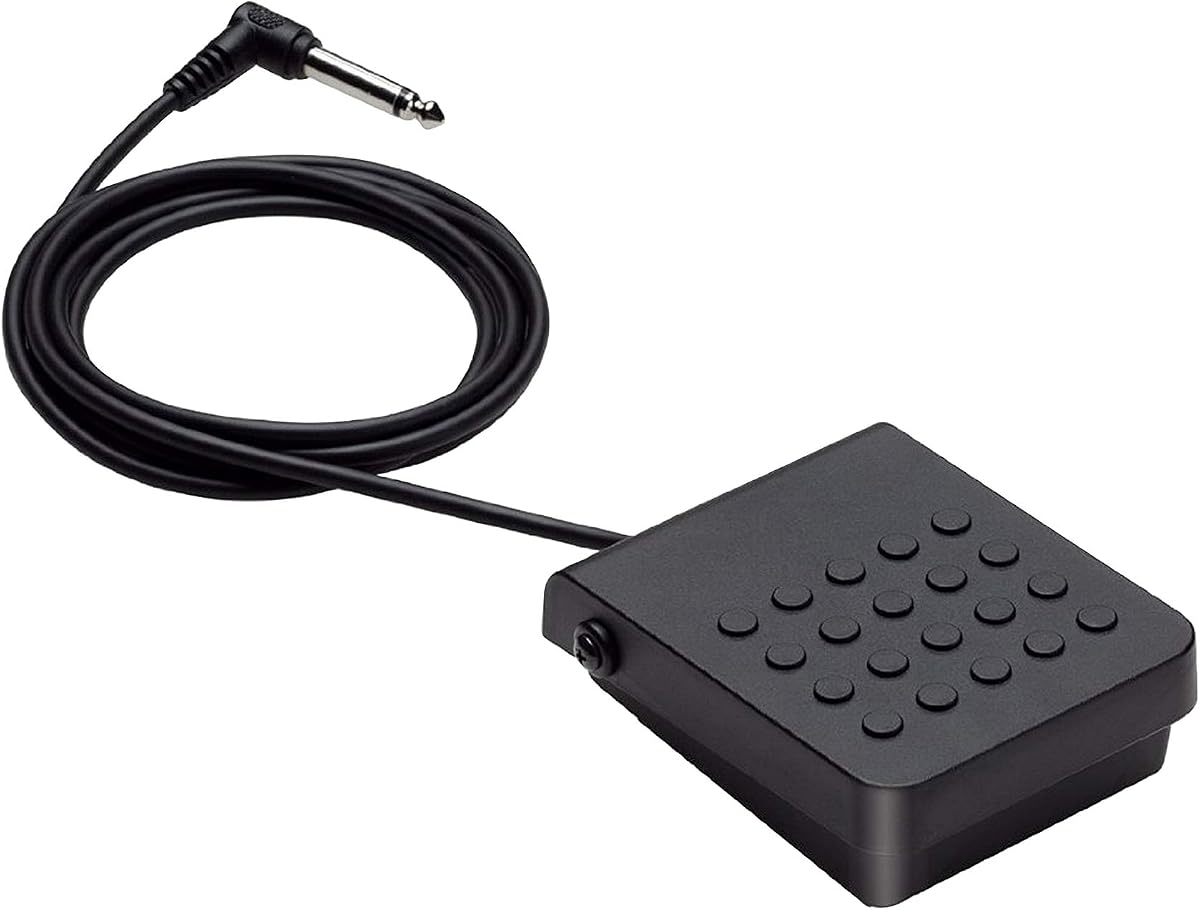

The M-AUDIO SP-2 Universal Sustain Pedal earns a 4.7 rating and stands out as the most complete general-purpose recommendation in this guide. Its polished chrome foot pedal, heavy-duty mechanism, and universal polarity switch combine the features most keyboard players need without tying the product to one instrument brand. It is particularly appealing to performers who want a conventional piano-style control for a broad range of electronic instruments.
We may earn a commission when you buy through this link, at no additional cost to you.
The pedal's natural-feeling action is one of its defining qualities. The chassis is described as lightweight and compact, yet the internal mechanism is built for dependable operation rather than minimalist convenience. A conveniently positioned polarity switch allows users to match normally open or normally closed behavior, while the supplied six-foot 1/4-inch cable provides enough reach for typical keyboard stands. Rubber pads on the underside help prevent creeping during vigorous passages.
There are a few practical qualifications. The six-foot lead is useful but not especially generous for large stages or unusual furniture arrangements, and the universal designation should still be understood as compatibility with conventional 1/4-inch sustain inputs rather than every specialized connection. Some newer or high-end instruments may use proprietary pedal ports or different switch conventions. Buyers should compare the input on their own keyboard before ordering.
This is the strongest choice for someone who wants a durable, recognizable, and versatile sustain pedal without moving to an expensive manufacturer-specific model. It suits students, gigging keyboardists, teachers, and home players who need one dependable pedal for several compatible instruments. The combination of sturdy construction, simple polarity adjustment, stable footing, and smooth action makes the SP-2 an especially well-rounded choice.
The robust, heavy-duty mechanism is designed for repeated use, making the SP-2 a practical choice for practice sessions, lessons, and performances. Its compact body also avoids taking up unnecessary space beneath a keyboard or stage piano.
The polarity switch simplifies operation across compatible keyboards, while the six-foot cable and 1/4-inch plug cover many common installation arrangements. This makes the pedal practical for musicians who switch between different setups.
We may earn a commission when you buy through this link, at no additional cost to you.
The Soraco Universal Sustain Pedal has a 4.5 rating and delivers the essential features of a conventional keyboard sustain pedal at a budget-friendly level. Its universal polarity switch, standard 1/4-inch plug, metal pedal, and 65-inch cable give it broader utility than a simple fixed-pole pedal. It is a sensible starting point for students, home players, and musicians adding a sustain control to a compatible keyboard.
We may earn a commission when you buy through this link, at no additional cost to you.
The weighted stainless steel pedal is designed to deliver a natural, piano-like response while resisting everyday wear and corrosion. A high-strength rubberized housing adds protection around the working mechanism, and the slip-resistant base is intended to remain steady during active playing. Its 65-inch lead gives the player reasonable freedom to position the pedal beneath the keyboard, while the universal switch reduces the chance that a normally open or normally closed mismatch will prevent use.
The trade-off is that this is a functional universal accessory rather than a specialized performance accessory. It does not advertise half-pedaling, proprietary digital control, or an acoustic-piano simulation, so it is better suited to conventional on/off sustain behavior. The rubberized enclosure also differs from the all-metal or heavy-duty construction emphasized by some competing models. Compatibility remains tied to a standard 1/4-inch pedal socket.
For a musician who wants dependable sustain control without paying for a brand-specific pedal, the Soraco is a convincing choice. It offers a metal pedal, a useful cable, a polarity switch, and anti-slip stability in a straightforward package. It is especially attractive for students and players who want to experiment with pedal technique across several electronic keyboards, digital pianos, and MIDI instruments.
A weighted stainless steel pedal gives the unit a more substantial feel than many minimal plastic accessories. That solid construction supports a natural response and makes the pedal suitable for daily practice and regular performance use.
The 65-inch cable provides enough reach for most keyboard stands, and the slip-resistant base helps the pedal remain secure. Together, these details make the unit easier to integrate into an existing playing area.
We may earn a commission when you buy through this link, at no additional cost to you.
The VALDI BP-3 carries a 4.6 rating and is a well-rounded universal pedal for keyboards, digital pianos, MIDI keyboards, and synthesizers. Its most distinctive selling point is the combination of a quiet, smooth mechanism with a conversion switch, allowing the pedal to adapt to different instrument conventions. That makes it appealing to players who regularly move between electronic instruments or want one pedal to support a home setup and a rehearsal space.
We may earn a commission when you buy through this link, at no additional cost to you.
Construction details emphasize both stability and longevity. The pedal uses a balanced metal weight over a natural rubber base with a diamond pattern, a combination intended to resist sliding without making the unit conspicuous under the instrument. Impact-resistant materials are used in the body, while the extended 1/4-inch cable provides additional placement flexibility. Its quiet operation is particularly valuable in apartments, studios, classrooms, and small stages where a noisy mechanical pedal could become distracting.
As with most universal pedals, the important limitation is feature scope. The BP-3 is designed around an on/off sustain function and a polarity conversion rather than continuous half-pedaling or manufacturer-specific communication. The supplied information also does not give a precise cable measurement, so buyers wanting a known cable length should verify the current listing. Exact input compatibility should be confirmed with the intended keyboard.
The VALDI BP-3 is a strong match for players who value quiet operation, solid footing, and uncomplicated setup. It is particularly good for shared music rooms and home studios where a loud pedal would be inconvenient. The universal conversion switch, extended cable, and multiple finishes make it versatile, while its 4.6 rating reflects a generally positive balance of construction and function.
The pedal is engineered to reduce mechanical noise and move smoothly, making it useful in practice rooms, studios, and lessons. Quiet operation helps keep attention on the instrument rather than the pedal.
Balanced metal weight and a diamond-pattern rubber base work together to improve stability. This is especially helpful during passages that require frequent pedal changes or forceful movement.
We may earn a commission when you buy through this link, at no additional cost to you.
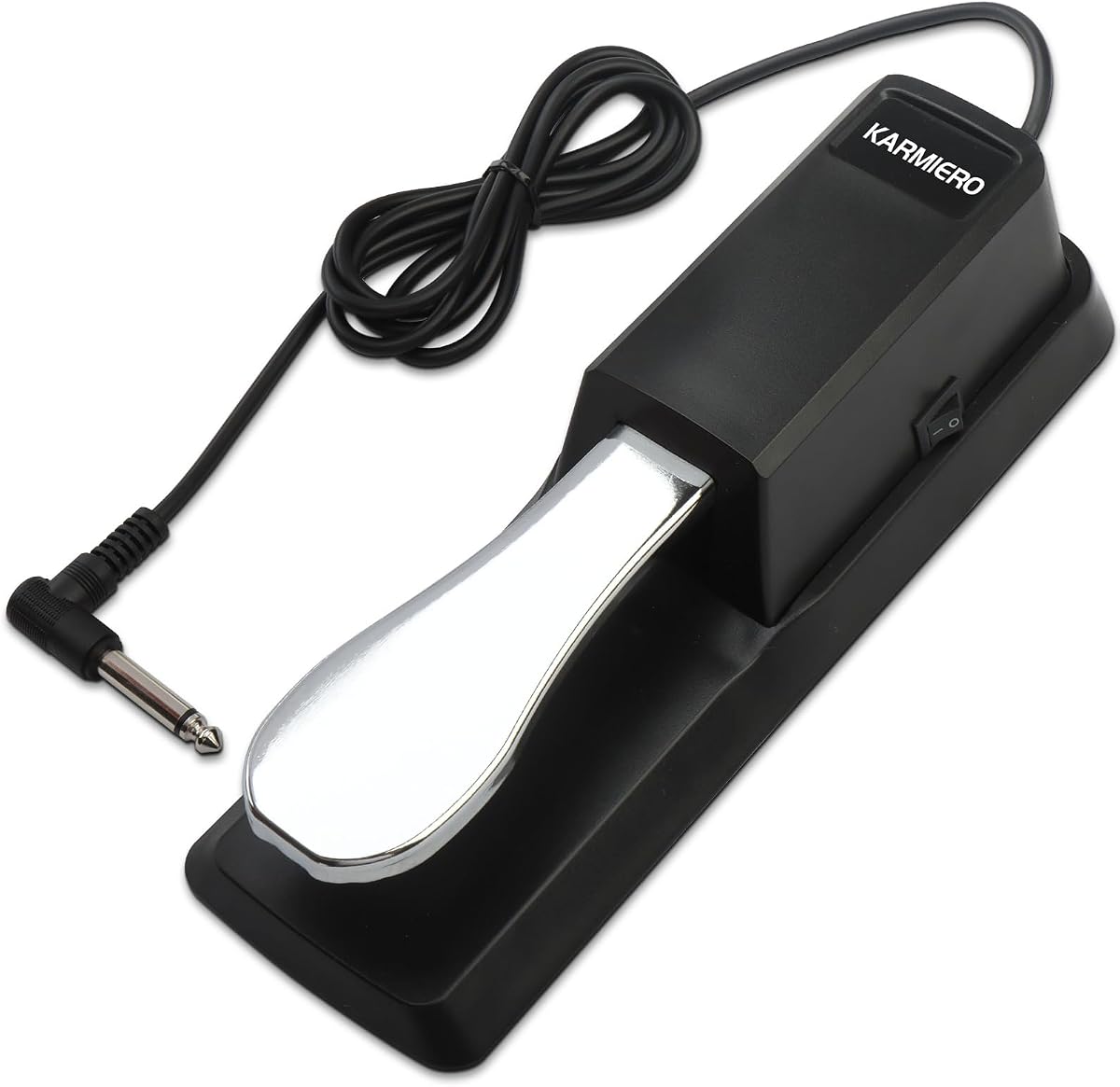
The karmiero Universal Sustain Pedal earns a 4.7 rating and is especially notable for its generous 91-inch cable. The additional reach gives keyboardists freedom to place the pedal in a comfortable position, even when the instrument sits on a broad desk, elevated stand, or compact stage riser. A polarity switch, premium alloy construction, and a rubber bottom round out a practical package for home and performance use.
We may earn a commission when you buy through this link, at no additional cost to you.
The pedal is built from premium alloy and high-strength plastic, creating a rigid structure without relying entirely on metal. Its spring design is intended to provide soft resistance and responsive action, helping players make nuanced pedal changes. The non-slip bottom is designed to prevent the pedal from moving, while the long cable and 1/4-inch plug make it possible to connect without requiring an additional extension.
The principal consideration is that a 91-inch lead is not automatically desirable for everyone. It can be difficult to keep tidy behind a keyboard stand, and excess cable may need to be coiled safely outside the footwell. The product's instructions also indicate that the polarity switch may need to be changed if notes sustain without depressing the pedal or fail to sustain when pressed. That adjustment is straightforward, but users should test the configuration after connecting.
This is a strong recommendation for players who value placement flexibility and expressive resistance. It is less suited to someone who wants the shortest possible cable or a specialized half-pedaling system. Nevertheless, the 4.7 rating, sturdy body, smooth spring action, and long reach make karmiero an attractive universal option for a wide variety of electronic keyboards and digital pianos.
The 91-inch cable is longer than those supplied with many conventional pedals. That extra reach can eliminate awkward leg angles and make the pedal easier to position beneath larger or more complex keyboard arrangements.
A quality spring mechanism provides the pedal with a softer, controlled resistance intended to support expressive movement. This can help players develop subtler sustain techniques rather than relying entirely on a very light touch.
We may earn a commission when you buy through this link, at no additional cost to you.
The LEKATO Universal Sustain Pedal has a 4.7 rating and offers a polished, lightweight approach to conventional keyboard sustain control. Its chrome-plated metal pedal, sturdy ABS housing, and universal polarity switch combine a familiar appearance with useful versatility. It is well suited to keyboard students, performers who move between instruments, and anyone who wants a responsive pedal without a specialized brand-specific connection.
We may earn a commission when you buy through this link, at no additional cost to you.
The pedal reacts smoothly and promptly to foot pressure, allowing notes to sustain cleanly while the player maintains control. Four silicone pads distributed across the underside provide anti-slip stability and can keep the unit from shifting on different floor surfaces. Its 60-inch cable offers enough flexibility for most standard keyboard stands, and the standard 1/4-inch TS plug supports many common sustain inputs.
There are no advertised advanced controls such as half-pedaling, and the unit is designed for straightforward on/off operation. The five-foot cable is less accommodating than the 91-inch lead offered by the karmiero model, so musicians with very wide stages or elevated instruments may need a more deliberate placement plan. As always, users should check whether their keyboard uses a standard sustain jack and whether the polarity setting matches the instrument.
LEKATO is a balanced choice for players seeking quick response, stable footing, and universal setup. The metal pedal supplies a reassuring tactile response, while the ABS housing avoids unnecessary weight. It is particularly attractive for mobile musicians and students who want one pedal to cover Yamaha, Casio, Roland, Korg, Behringer, Moog, and other compatible instruments without carrying multiple accessories.
The combination of a metal pedal and ABS housing provides strength without excessive weight. That makes the unit easier to transport between rehearsals, lessons, and gigs.
Silicone pads at multiple points on the underside help resist movement across varying floor surfaces. The result is a pedal that is better able to remain underfoot during active performances.
We may earn a commission when you buy through this link, at no additional cost to you.
The RockJam 6.35mm Sustain Pedal receives a 4.5 rating and distinguishes itself with an unusually long cable. The product information describes a 5.9-foot cable in the title and a 5.6-meter length in its features, making the lead exceptionally accommodating for large stages, rehearsal rooms, and spacious home setups. A polarity switch and standard 6.35mm connection make it broadly usable with compatible keyboards and digital pianos.
We may earn a commission when you buy through this link, at no additional cost to you.
The pedal is designed to respond accurately to light foot pressure, supporting subtle sustain changes and expressive phrasing. Its robust construction is intended to withstand regular use, while the non-slip rubber base helps maintain a consistent position. The polished appearance allows it to fit visually beneath a stage piano or keyboard without looking like a purely utilitarian floor switch.
The primary drawback is the extraordinary cable length relative to many compact setups. Some users may need to coil and secure unused cable to keep it away from wheels, stands, and foot movement. Because it uses a 6.35mm connection, it is not intended for instruments with proprietary pedal sockets. The stated cable measurements should also be checked in the current listing because the title and feature text use different units.
Despite those considerations, the RockJam is a practical choice for players who prioritize placement freedom, smooth action, and stable operation. It works particularly well in permanent setups where a long run of cable is useful, or for musicians who move their instrument around a large room. Its switchable polarity and anti-slip base cover the fundamental needs of a general-purpose keyboard sustain pedal.
The extended lead provides ample room to connect a pedal to a keyboard placed well away from the player's seated position. It is useful in permanent installations, larger rooms, and stages with unusually long cable runs.
The mechanism is designed to respond accurately to slight foot movement, allowing players to make small sustain adjustments. This sensitivity supports more nuanced phrasing and pedal technique.
We may earn a commission when you buy through this link, at no additional cost to you.
The Casio SP-20 Piano-Style Sustain Pedal earns a 4.7 rating and gives Casio users a purpose-built alternative to generic universal pedals. Its piano-style shape, long cord, and black finish are designed to integrate naturally with compatible Casio keyboards and digital pianos. The simple, dedicated design is a strong fit for a musician who owns Casio equipment and wants a straightforward sustain control.
We may earn a commission when you buy through this link, at no additional cost to you.
The primary advantage is the assurance of a pedal developed around the relevant manufacturer's expected connection and use. It works with Casio keyboards and digital pianos that feature a pedal jack, and the long cord gives the player flexibility when positioning the instrument. Its black finish creates a cohesive appearance under a dark keyboard, while the piano-style form gives the player a familiar control surface.
The trade-off is reduced flexibility. The listed compatibility is focused on Casio products with pedal jacks, and no universal polarity switch is mentioned. Although some Casio instruments may also accept conventional third-party pedals, a buyer should verify the specific model's input before assuming compatibility. The SP-20 is therefore most attractive to someone whose primary instrument is already Casio rather than someone maintaining a multi-brand setup.
For a Casio owner, the SP-20 is a polished and highly rated choice. It offers the essentials without requiring the user to configure a polarity switch, and its long cord reduces setup constraints. It is especially suitable for students, home performers, and stage musicians who want their accessory to look and operate like a natural extension of their Casio instrument.
Using a pedal associated with the instrument manufacturer can simplify compatibility decisions. The SP-20 is intended for Casio keyboards and digital pianos equipped with a pedal jack.
The familiar form provides a visually coordinated and intuitive foot control. It suits players who want an acoustic-style pedal appearance beneath their electronic instrument.
We may earn a commission when you buy through this link, at no additional cost to you.
The Casio SP3 Sustain Pedal has a 4.6 rating and is a straightforward, player-focused choice for Casio keyboards. Its piano-style design gives the sustain control a familiar appearance, while its support for standard 1/4-inch sustain inputs offers some flexibility beyond a single model. It is a good option for a Casio owner seeking an uncomplicated way to add sustain and improve playability.
We may earn a commission when you buy through this link, at no additional cost to you.
Pedal-style access can make sustained passages more comfortable and expressive by allowing the player to control note duration with a foot rather than one hand. The SP3 is built for Casio keyboards and digital pianos with pedal jacks, and its quarter-inch compatibility makes it useful with many conventional electronic instruments as well. The focus on direct playability makes it appealing to learners who are developing coordinated foot technique.
Its main limitation is that it is not presented as a fully universal, feature-rich pedal. The product information does not mention a polarity switch, and no half-pedaling function is specified. Players with newer digital pianos, synthesizers, or workstations should confirm the input and switch requirements before purchase. Those who need a proprietary connection or advanced pedal response may need a more specialized unit.
The Casio SP3 is a sensible recommendation for anyone who primarily plays compatible Casio equipment and values a simple piano-style control. It delivers the core sustain function without unnecessary complexity, and its compatibility with most keyboards featuring a 1/4-inch input broadens its usefulness. It is especially well suited to practice, lessons, and casual performance where reliable expression matters more than digital pedal features.
A sustain pedal allows both hands to remain on the keys while longer notes are controlled by the foot. This can improve comfort, phrasing, and overall ease of performance.
Although designed with Casio instruments in mind, the quarter-inch connection may work with many other keyboards. Checking the instrument's input remains essential for a confident setup.
We may earn a commission when you buy through this link, at no additional cost to you.
The Nord Sustain Pedal has a 4.4 rating and is a purpose-made choice for musicians who use Nord instruments. Manufactured by StudioLogic, it is the same high-quality pedal supplied with the Stage 88 and Stage 76 keyboards and can also be used with other compatible Nord keyboards. For a Nord owner, matching the original accessory is a compelling way to preserve the intended feel and appearance.
We may earn a commission when you buy through this link, at no additional cost to you.
The product's strongest selling point is its direct relationship with the Nord ecosystem. Nord stage keyboards are often used in demanding live environments, and an included manufacturer pedal provides a natural extension of the instrument's design. The embedded Clavia logo also gives the pedal a recognizable stage appearance that coordinates with Nord hardware. For players who already know its action, that continuity is valuable.
The limitation is obvious from the product scope. It is intended primarily for Nord keyboards, so it offers little advantage over a universal pedal for someone with a mixed collection of instruments. The supplied information does not provide a precise connector type, cable measurement, switch arrangement, or half-pedaling capability, so owners of unusual models should check the instrument documentation. It is also worth noting that the pedal is already included with certain Stage models, making it unnecessary for those users unless a second pedal is wanted.
The Nord Sustain Pedal is best recommended to current Nord Stage 76 or Stage 88 owners who need a replacement or an additional matching control. Its 4.4 rating, manufacturer provenance, and original inclusion make it a trusted specialist accessory. It is less compelling as a general purchase, but for the right instrument, the matched design can outweigh the limitations of universal alternatives.
Because the pedal is supplied with the Stage 88 and Stage 76, it represents a proven part of those keyboards' playing experience. Nord users can choose it with greater confidence when consistent hardware behavior matters.
The embedded Clavia branding and matched piano-style form help the accessory look appropriate beneath a professional stage keyboard. It fits well into setups where visual coordination matters.
We may earn a commission when you buy through this link, at no additional cost to you.
The Yamaha Piano Style Sustain Foot Pedal FC3A earns a 4.7 rating and is the most specialized premium recommendation in the guide. Its defining feature is compatibility with half-pedaling functions, allowing selected Yamaha instruments to respond to partial pedal pressure rather than only a simple fully depressed state. It also reproduces the feel of acoustic-piano pedals, making it especially relevant to players who want nuanced sustain control.
We may earn a commission when you buy through this link, at no additional cost to you.
The pedal includes a five-foot cable and a 0.25-inch FC3A plug, providing a straightforward connection to compatible equipment. Its supported list is extensive within the Yamaha ecosystem, including selected Tyros, PSR, MONTAGE, MOTIF XF, MX, CP, P-Series, DGX, Piagerro, and REFACE CP products. That breadth makes the FC3A a logical choice for a Yamaha arranger workstation owner, producer, or stage performer who may move between several compatible instruments.
Compatibility is the decisive constraint. The FC3A is not a universal pedal and should not be assumed to work with Casio, Roland, Korg, Nord, or other brands unless the specific instrument accepts the same connection and behavior. Half-pedaling also requires support in the keyboard's firmware or settings, not merely the presence of a jack. Players should consult their instrument's manual to verify both the port and pedal-function requirements.
Within its intended ecosystem, the FC3A delivers a clear advantage: more expressive control than a basic on/off accessory. It is a premium choice for Yamaha musicians whose instruments support half-pedaling, especially those who perform expressive piano parts, accompany singers, or use long orchestral textures. For everyone else, one of the universal pedals will be a more practical and less restrictive choice.
Partial pressure can communicate subtle sustain changes when the connected instrument supports half-pedaling. This offers finer control over resonance, note release, and the transition between dry and sustained sound.
The FC3A is designed to reproduce the feel of acoustic piano pedals. For supported Yamaha instruments, that familiar response can help players apply techniques learned on an acoustic or weighted digital piano.
We may earn a commission when you buy through this link, at no additional cost to you.
The most useful sustain pedal is not automatically the one with the broadest feature list. Start with your keyboard's connection and required behavior, then consider response, stability, construction, cable reach, portability, and the kind of performance practice you expect to maintain.
Begin by identifying the exact sustain input on your keyboard or digital piano. Most models in this roundup use a 6.35 mm, or 1/4-inch, connection, while the Yamaha FC3A uses a manufacturer-specific plug. A pedal can have the right physical connector and still operate inversely if its electrical configuration does not match the instrument. A polarity or conversion switch solves this problem by allowing the pedal to work with both normally open and normally closed systems. If the product does not include a switch, check the pedal type required by the instrument before ordering.
Most universal sustain pedals provide straightforward on/off operation: the note continues when the pedal is pressed and stops when it is released. Half-pedaling is more nuanced, allowing a partially depressed pedal to control how much sustain remains. That behavior requires compatible hardware, firmware, and often a pedal specifically designed for the instrument. The Yamaha FC3A is the clear half-pedaling option here, but it is limited to select Yamaha models. Most keyboardists do not need half-pedaling for standard songs or practice, so a universal on/off model may be entirely sufficient.
A responsive pedal should move smoothly, start sustain cleanly, and return without catching. The M-AUDIO SP-2, Soraco, RockJam, and LEKATO models all describe natural, smooth, or responsive action, while the karmiero pedal specifically highlights softer spring resistance. If you are learning pedal technique, moderate resistance can help develop control, although a very light pedal may be easier for beginners. A pedal that is too stiff can encourage tense foot movement, while one that is too loose may make it difficult to sustain notes consistently. Instrument-specific experience and the player's own technique remain the best guides.
A sustain pedal should remain where you place it. Every model in the list includes some form of anti-slip treatment: rubber pads for the M-AUDIO, a slip-resistant base for the Soraco, a diamond-pattern rubber base for the VALDI, a rubber bottom for the karmiero, four silicone pads for the LEKATO, and a rubber base for the RockJam. These features are particularly important on hard floors or smooth stages. A weighted body can also improve stability, but weight alone does not guarantee grip. Consider the floor type, pedal position, and whether you use a keyboard stand with raised legs or a more open platform.
Cable length affects comfort more than pedal function. Short leads are tidy for compact setups, while long cables allow the player to place the pedal naturally on a wide stage or with a large keyboard stand. The VALDI offers an extended lead without a precise published measurement, the karmiero provides 91 inches, the RockJam lists an exceptionally long 5.6-meter lead, and the Yamaha includes five feet. Before buying, trace a likely cable route from the input to the pedal. Make sure excess length can be secured without creating a trip hazard or interfering with stand legs.
Metal pedal assemblies can provide a durable, substantial feel, while high-strength plastic or ABS housings can reduce weight for transport. The Soraco uses a stainless steel pedal with rubberized housing, the LEKATO combines a chrome-plated metal pedal with ABS, and the M-AUDIO emphasizes a robust, heavy-duty mechanism. The right balance depends on where the pedal will live. A permanent studio or home installation benefits from stability and robust construction, while a traveling musician may favor a lighter housing and easier packing. Always consider how the pedal will be stored between performances.
Universal pedals offer broader usefulness across brands and are ideal for students, teachers, and musicians with several instruments. They commonly include a polarity switch and a standard quarter-inch plug. Brand-specific models can provide clearer expectations, specialized functions, and a coordinated appearance. The Casio SP-20 and SP3 suit compatible Casio users, the Nord pedal serves the Nord ecosystem, and the Yamaha FC3A supports selected Yamaha instruments. If you own only one instrument from a particular brand and it has specialized requirements, a matching pedal can reduce uncertainty. If you switch brands, a universal model is usually easier to manage.
A home practice pedal needs reliable response, stable footing, and a cable that fits your available space. A classroom pedal may benefit from quiet operation, making the VALDI a useful consideration. Stage players need stability, durability, quick response, and enough cable reach to avoid awkward leg positions. Studio musicians may prioritize quiet operation, while performers who move frequently need a pedal that is easy to pack. The supplied information does not provide a uniform weight specification for every model, so check current dimensions and construction details before deciding how a pedal will fit your particular setup.
Place the pedal on a flat, dry section of floor where it will not catch against a rug edge, stand leg, power cable, or pedalboard accessory. Sit or stand in a natural playing position and choose a location that lets you rest your heel while moving only the front of your foot. Connect the plug fully to the correct sustain input, turn on the instrument, and test the polarity before beginning a piece.
If notes sustain when the pedal is not pressed, or fail to sustain when it is pressed, look for the polarity or conversion switch. Move it to the alternate setting and test again. For a Yamaha FC3A, confirm that the keyboard supports half-pedaling and that the FC3A port is the intended connection. Begin with simple exercises: press the pedal as a note sounds, release it at defined points, and practice smooth transitions between sustained and damped passages. Keep the motion controlled rather than making abrupt downward movements.
For care, disconnect the cable when moving the instrument or pedal and avoid pulling it by the lead. Wipe the pedal and underside with a dry or lightly damp cloth, but do not flood the mechanism or push moisture into the switch. Keep the floor free of grit, and inspect the rubber pads or base for hardening or debris. If action becomes stiff or inconsistent, check the connection and instrument settings before assuming the mechanism has failed, and follow the manufacturer's guidance for any internal adjustment.
Most electronic keyboards and digital pianos use a standard 1/4-inch, or 6.35 mm, sustain pedal jack. Some specialized instruments use proprietary connections, such as the Yamaha FC3A, so check the socket and the instrument manual before buying. You should also determine whether the keyboard requires a normally open or normally closed pedal.
A polarity switch changes the electrical behavior of the pedal to match the convention used by your keyboard. It allows one universal pedal to work with instruments that react differently when the circuit is open or closed. If the pedal feels reversed, test it and move the switch to the alternate setting. Always confirm the instrument's required pedal type in its documentation.
Usually, yes, provided the digital piano has a compatible 6.35 mm sustain input and accepts a conventional on/off pedal. A universal model with a polarity switch offers the greatest flexibility. Instruments with proprietary jacks or half-pedaling requirements may need a manufacturer-specific pedal, so check the specifications rather than relying on the words universal alone.
Half-pedaling is most useful for expressive acoustic-piano emulation, sustained orchestral textures, and subtle control of note decay. Many standard arrangements and practice routines work well with a conventional on/off pedal. The feature also adds cost and compatibility constraints, so it is best prioritized by players whose instrument explicitly supports it and whose musical style benefits from partial sustain control.
The right length depends on the size of your setup and the distance from the keyboard's input to the pedal. A roughly five- to six-foot cable is common for standard stands, while a longer lead can help on large stages. Make sure excess cable can be secured safely and does not interfere with your foot, stand legs, or other equipment.
A reversed pedal usually indicates a mismatch between the pedal's polarity and the keyboard's expected input behavior. Check whether the pedal has a polarity or conversion switch and move it to the other setting. If the switch is already correct, verify that the cable and plug are fully seated and that the keyboard is set to use the connected pedal. The instrument manual can clarify its default configuration.
A smooth, level floor is helpful, but anti-slip construction is what prevents most movement. Models with rubber pads, silicone feet, or patterned rubber bases are designed to grip hard flooring. Avoid placing the pedal on loose fabric or a rug edge that can shift or bunch. If your venue has a particularly smooth stage, test stability before the performance and consider adding a non-slip mat beneath the pedal.
A manufacturer-specific pedal is a strong choice when your instrument supports specialized behavior, proprietary connections, or half-pedaling. A universal pedal is often more convenient when you own several brands or need a straightforward standard connection. Your instrument's manual, supported functions, and the playing environment should determine the choice rather than brand name alone.
The M-AUDIO SP-2 is the strongest all-around choice because it combines a 4.7 rating, universal polarity adjustment, heavy-duty construction, stable rubber grip, and a practical six-foot cable. The Soraco Universal Pedal is the budget-focused alternative for players who need a metal pedal, anti-slip base, and broad compatibility without specialized digital features. The Yamaha FC3A takes the premium position for compatible Yamaha users who specifically want half-pedaling and an acoustic-style response.
For most musicians, prioritize the connection type, correct polarity, smooth action, and stable footing before cable length or finish. Universal models are the safest choice for a mixed collection of instruments, while brand-specific pedals make sense when advanced functions or guaranteed manufacturer integration matter. Whichever route you choose, test the pedal with your actual keyboard and spend time developing controlled foot technique.
Product details, available configurations, and prices can change over time, so check the current listing before ordering. Confirm that the pedal input, polarity, and any advanced functions match your instrument, and review the included cable and base against your available space. That final compatibility check can prevent most disappointments and ensure the new pedal integrates smoothly into your playing setup.