
SteelSeries Prime Edition
4.3Editor score
69-gram competition-focused design
18K TrueMove Pro sensor
Magnetic optical switch system
Five programmable buttons
Supports multiple right-hand grips
The best mice for aim in esports and FPS gaming compared for sensor accuracy, weight, switches, grip, connectivity, battery life, and features for players.
A competitive gaming mouse must translate quick flicks, micro-adjustments, and repeated clicks with minimal hesitation. Sensor consistency, switch response, weight, grip compatibility, and low-latency connectivity matter more to competitive aim than decorative extras, although useful customization can make fine-tuning easier.
This guide compares ten esports and FPS gaming mice using the supplied specifications, including sensor performance, weight, polling, switch design, connectivity, battery life, programmable controls, and intended grip styles. The list covers wired, wireless, compact, ergonomic, and software-assisted options without claiming any model was personally tested.
Each review explains the strongest qualities, practical trade-offs, and the kind of player most likely to benefit. The top selections reflect the balance of competitive features represented in the available product data, while availability and prices change frequently, so readers should confirm current details before purchasing.
4.3Editor score

4.3Editor score

4.6Editor score
The comparison covers ten competitive-focused mice across sensor capability, shell weight, connection method, switch design, and control features, making it easier to identify the right balance for FPS play.



The SteelSeries Prime Edition combines a 69-gram chassis, an 18K TrueMove Pro sensor, and magnetic optical switches in a straightforward FPS-oriented design. Its 4.3 rating reflects a well-balanced competitive package, but the strongest attraction is how many proven esports features are concentrated in a relatively approachable model.
We may earn a commission when you buy through this link, at no additional cost to you.
The sensor is specified for true 1-to-1 tracking, 18,000 CPI, 450 IPS, and 50G, providing ample sensitivity headroom for both slow correction and rapid flicks. At the same time, the lightweight shell is intended to make direction changes easier without sacrificing the stable foundation required for competitive shooting. The right-handed shape accommodates finger, palm, and claw grip styles according to the supplied specifications.
The magnetic optical switches are rated for 100 million clicks and are positioned to deliver crisp, fast activation. Five programmable buttons offer enough flexibility for common secondary actions without turning the mouse into a control-heavy MMO device. RGB lighting adds personalization, although the restrained button count remains more appropriate to competitive shooters than sprawling simulations.
The main limitation is its reliance on a wired connection. That can simplify a tournament setup, remove wireless charging concerns, and guarantee a consistent path for movement data, but it also restricts cable-free play. For a player who wants competitive specifications, low weight, and dependable input without paying for premium wireless features, the Prime Edition is a particularly convincing all-around recommendation.
At 69 grams, the Prime Edition sits in the lightweight range favored by many competitive shooters. Its streamlined right-handed shape and support for finger, palm, and claw grips give players several ways to stabilize rapid corrections without locking into one narrow approach.
The 18K TrueMove Pro sensor provides fine control settings, while the 450 IPS and 50G figures suit demanding movement. Optical magnetic switches add fast activation and a stated 100-million-click lifespan, covering both targeting accuracy and repeated fire inputs.
We may earn a commission when you buy through this link, at no additional cost to you.
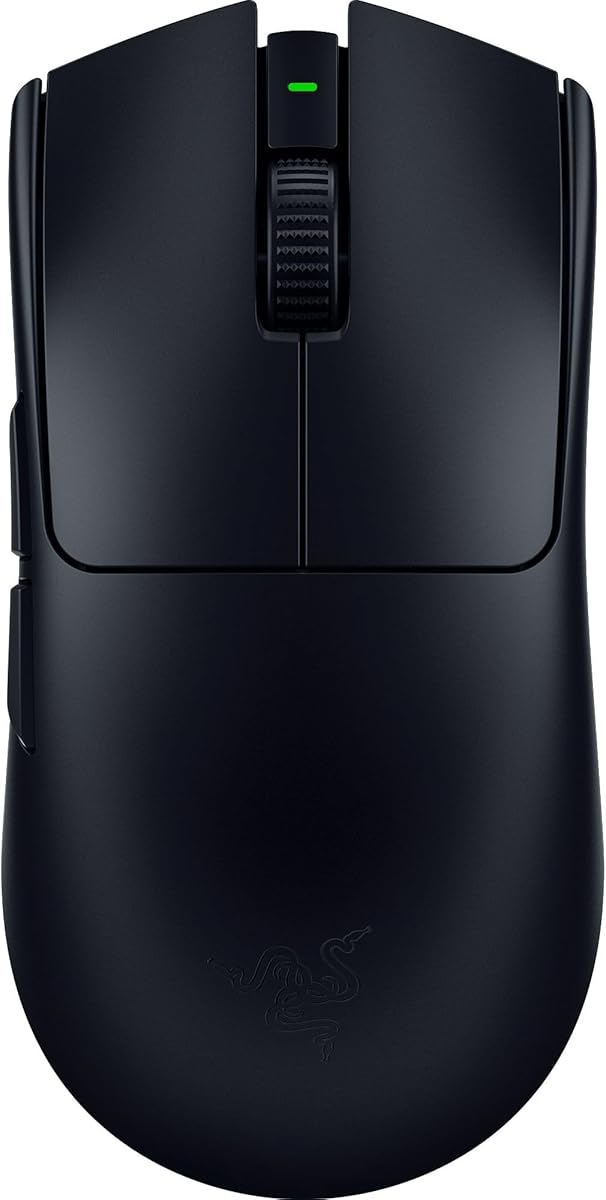
The Razer Viper V3 HyperSpeed is a wireless FPS mouse that emphasizes dependable connectivity, generous battery life, and a sensor designed for varied surfaces. It carries a 4.4 rating and uses an 82-gram mass-centralized design, making it a strong alternative for players who prioritize consistency over minimum weight.
We may earn a commission when you buy through this link, at no additional cost to you.
Its Focus Pro optical sensor supports up to 30,000 CPI, and its forward placement is intended to improve tracking accuracy. The supplied information also notes flawless tracking on a wider variety of surfaces, including glass, while HyperSpeed wireless is designed to remain stable in noisy wireless environments. Five DPI stages can be accessed from a top-mounted button or remapped to another command.
Battery endurance is the standout practical feature. A single AA battery is rated for up to 280 hours of high-performance gaming, which can reduce charging interruptions during practice, ranked sessions, or tournament weekends. The mouse also supports multi-device connectivity, and its Gen-2 mechanical switches are rated for 60 million clicks with gold-plated contacts.
At 82 grams, it is not as light as the 54-gram ASUS ROG Harpe Ace, 49-gram Razer Viper V4 Pro, or other ultralight models. Some players may also prefer the claimed response characteristics of optical switches. Even so, the Viper V3 HyperSpeed suits competitive users who want flexible wireless operation, broad surface support, and exceptional stated endurance without accepting a very heavy shell.
The 280-hour stated runtime is especially relevant for players who dislike replacing batteries or pausing practice to recharge. It makes the mouse practical for multi-day tournaments, long bootcamp sessions, and regular use without a desk-side charging routine.
The on-mouse DPI button allows fast sensitivity changes without entering a software menu. Multi-device support adds flexibility for players who alternate between gaming and everyday computing, while the forward sensor placement supports precise tracking across compatible surfaces.
We may earn a commission when you buy through this link, at no additional cost to you.
The ASUS ROG Harpe Ace Aim Lab is one of the most purpose-built wireless esports mice in this group. It combines a 54-gram semi-symmetrical shell with a 36,000-DPI AimPoint sensor, specialized setting tools, and tri-mode connectivity. Its 4.3 rating and pro-player design input make it a compelling option for competitive FPS users who want guidance during configuration.
We may earn a commission when you buy through this link, at no additional cost to you.
The Aim Labs Settings Optimizer is the distinctive feature. It analyzes the player's strengths, habits, and play style, then suggests mouse DPI, angle tuning, and lift-off-distance settings. This does not replace hands-on testing, but it can give newcomers a useful starting point and help experienced players identify values worth comparing against their current configuration.
The AimPoint optical sensor is rated for 36,000 DPI with less than 1% CPI deviation, while NVIDIA Reflex verification provides additional visibility into system latency. Connectivity includes wired USB, low-latency 2.4GHz RF, and Bluetooth, and the ROG Omni Receiver can link multiple supported devices. The 54-gram body favors fast flicks, while the semi-symmetrical shape is described as optimized for right-handed claw grip.
The orientation is a meaningful constraint for players who use a pronounced palm grip or left-handed claw technique. The suggested settings also need careful validation because an automated recommendation cannot fully represent individual preferences, monitor characteristics, or play style. Even with those caveats, this model is a strong all-around pick for right-handed competitive players who value an ultralight shell, a high-resolution sensor, and intelligent setup assistance.
The Aim Labs optimizer can recommend DPI, angle tuning, and lift-off values based on the player. Those suggestions are most useful as a starting framework, allowing the user to test deliberate changes rather than guessing through an unlimited list of settings.
Wired USB, 2.4GHz RF, and Bluetooth cover tournament play, low-latency wireless use, and everyday compatibility. A single ROG Omni Receiver can also support multiple devices, reducing the need to change receivers when moving between setups.
We may earn a commission when you buy through this link, at no additional cost to you.
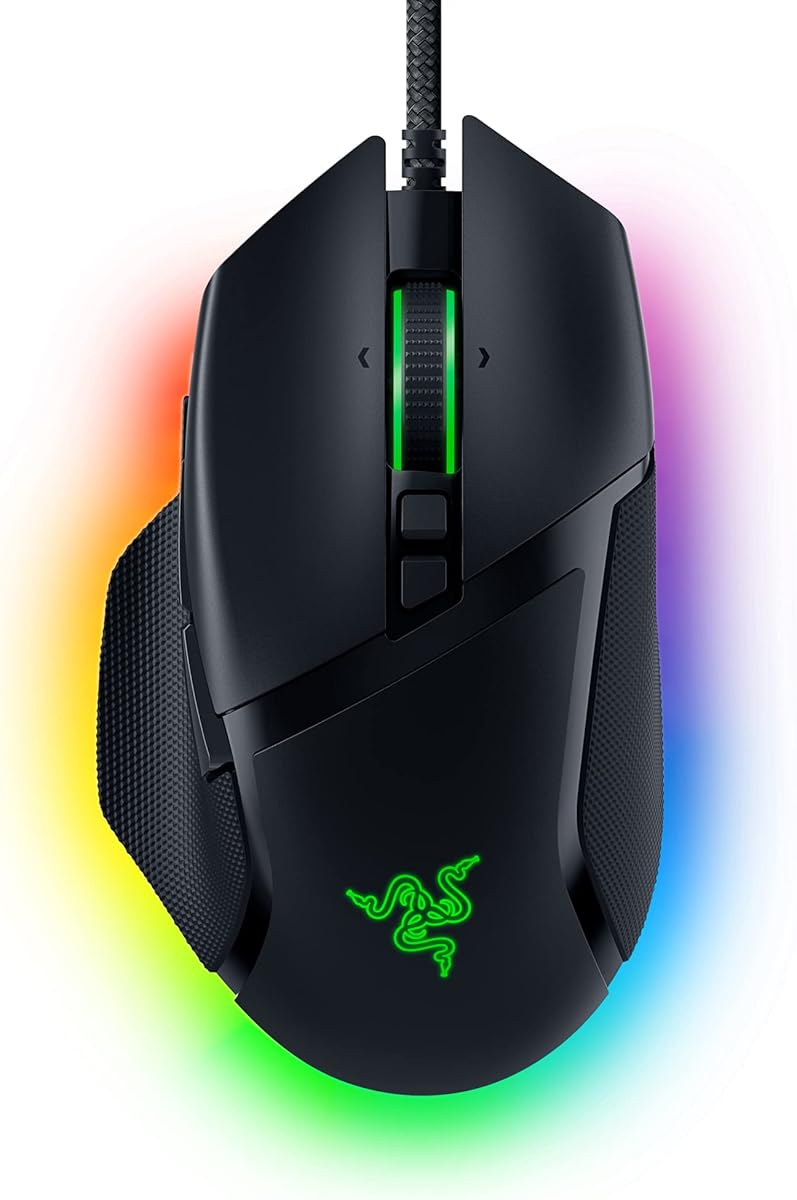
The Razer Basilisk V3 is built for players who value hand support, abundant controls, and a mouse that can handle more than conventional FPS bindings. It has a 4.6 rating and pairs a right-handed ergonomic shape with a thumb rest, eleven programmable buttons, an advanced tilt wheel, and a 26K Focus Plus optical sensor.
We may earn a commission when you buy through this link, at no additional cost to you.
The thumb rest supports the palm while keeping the primary buttons within easy reach, making this a natural fit for players who prefer a larger, more anchored mouse during extended sessions. Eleven programmable buttons can be assigned to actions such as push-to-talk, pings, macros, or secondary commands. That flexibility is particularly useful in team shooters, tactical games, and hybrid competitive sessions.
The HyperScroll tilt wheel can move freely for long scrolling or switch to tactile mode for deliberate in-game adjustments, including weapon or skill selection. Optical mouse switches are specified for crisp 0.2ms actuation and a lifespan of up to 70 million clicks. Meanwhile, 11 separate Chroma lighting zones provide extensive visual customization across compatible games.
Its main trade-off is size. A palm-supporting ergonomic chassis is less attractive to players chasing the absolute lightest mouse for fast micro-flicks. It also remains wired rather than wireless. For a player who wants stable palm support, a strong sensor, numerous bindings, and responsive optical switches, though, the Basilisk V3 provides a more accommodating and versatile package than a minimal esports shell.
The contoured body and dedicated thumb rest reduce the need to claw aggressively around a small shell. This can help players maintain a relaxed hand position, particularly during long ranked sessions where constant tension and fatigue become more noticeable.
Eleven programmable buttons offer substantially more control than a typical five-button esports mouse. The additional inputs can support communication commands, utilities, and secondary actions, while the HyperScroll wheel handles faster or more granular selection needs.
We may earn a commission when you buy through this link, at no additional cost to you.
The white ROG Harpe Ace Aim Lab offers the same core competitive platform as the black edition, including a 54-gram semi-symmetrical body, 36,000-DPI AimPoint sensor, and 90-hour stated battery life. Its 4.3 rating reflects the appeal of a highly specified wireless mouse with a distinctive light-colored exterior.
We may earn a commission when you buy through this link, at no additional cost to you.
Aim Labs integration remains a major advantage for newer competitors because it can propose DPI, angle tuning, and lift-off-distance values based on personal habits. The sensor's less-than-1% CPI deviation and high maximum resolution offer broad room for calibrated sensitivity settings, while NVIDIA Reflex verification helps users evaluate the responsiveness of the broader gaming setup.
Players can connect through wired USB, 2.4GHz RF, or Bluetooth, and the ROG Omni Receiver supports multiple compatible devices. The semi-symmetrical shell is described as optimal for right-handed claw grip, offering a balance between fingertip control and a more firmly supported shape. Up to 90 hours of battery life is sufficient for extended play without routine charging.
As with the black version, the grip orientation narrows the audience, and the software suggestions remain starting points that should be tested. A white chassis may also require more care if visible marks are important to the player. Nevertheless, this version gives competitive users the same lightweight precision platform in a distinctive finish that stands apart from conventional dark gaming peripherals.
The 54-gram construction reduces the effort required to move through abrupt aim changes. Its semi-symmetrical form gives right-handed claw-grip players a compromise between fingertip agility and the stability of a more conventional ergonomic shape.
A 36,000-DPI sensor and less-than-1% CPI deviation support fine sensitivity control. Official NVIDIA Reflex verification adds confidence for players who monitor latency and want to understand how the mouse behaves within a responsive system.
We may earn a commission when you buy through this link, at no additional cost to you.
The SteelSeries Prime Mini combines a compact 74-gram body with wireless connectivity and an 18K TrueMove Air sensor. It holds a 4.2 rating and brings the familiar SteelSeries esports design language to players who want a smaller shell without giving up high sensor resolution or optical magnetic switches.
We may earn a commission when you buy through this link, at no additional cost to you.
The TrueMove Air sensor is specified for true 1-to-1 tracking, 18,000 CPI, 400 IPS, and 40G. Those figures provide ample resolution for competitive sensitivity adjustments, while Quantum 2.0 wireless technology is designed for lag-free transmission and a stated battery life of up to 100 hours. Fast charging is another practical benefit for players who keep the mouse in active use.
The five-button configuration keeps the control surface focused on common competitive actions. Optical magnetic switches are rated for fast click response and a 100-million-click lifespan, which is a strong match for the repeated firing and clicking associated with FPS titles. The compact footprint may particularly suit players who find a full-size mouse difficult to move quickly.
Compactness can also create fit concerns. Players who rely on a broad palm or need more surface area for claw grip may find the smaller shape less comfortable over many hours. Its 74-gram weight is light by general standards, though it does not match the more aggressive reductions of ultralight competitors. For a player who prioritizes a smaller wireless shell, long battery life, and a proven competitive sensor, the Prime Mini remains a focused option.
The mini shell reduces the distance the hand must travel during rapid repositioning. That can be useful on competitive maps where the player must clear angles quickly and keep the mouse centered rather than reaching toward the edge of a broad surface.
A stated 100-hour battery life and fast charging reduce the likelihood that wireless operation will interrupt a session. The 18K sensor and 100-million-click switch rating preserve the competitive specifications that matter most to FPS players.
We may earn a commission when you buy through this link, at no additional cost to you.
The Logitech G PRO X2 SUPERSTRIKE stands apart through its Haptic Inductive Trigger System, which provides adjustable click feedback and actuation control rather than a single fixed trigger response. It carries a 4.6 rating and combines that feature with a 44,000-DPI HERO 2 sensor, 8 kHz LIGHTSPEED wireless, and broad customization options in Logitech G HUB.
We may earn a commission when you buy through this link, at no additional cost to you.
Ten actuation levels allow the user to select how early or late the primary click registers. Five rapid-trigger reset levels further refine the behavior after a shot, offering a more granular setup than conventional mechanical switches. The supplied data also states that clicks register 30 milliseconds faster than the previous generation, making the system particularly relevant to fast click-dependent games.
The HERO 2 sensor tracks at more than 888 IPS, supports up to 88G, and reaches 44,000 DPI. A lightweight shell uses 0.7mm thin walls and extra-large UHMWPE glide feet, while 8 kHz polling and a stated 60-to-90-hour battery support focused wireless play. Advanced functions depend on G HUB, so software familiarity is part of the ownership experience.
The optional POWERPLAY 2 system is sold separately, meaning uninterrupted indefinite wireless use is not included by default. Haptic feedback may also be unnecessary for players who never notice trigger differences, and the 8 kHz mode consumes battery faster than lower polling settings. Even so, the SUPERSTRIKE is a premium choice for players who actively tune click timing and want tactile feedback as a competitive tool rather than decoration.
Ten actuation points make it possible to choose when a press becomes a shot, while five rapid-trigger reset levels control how the mouse returns after firing. These settings can help players standardize an input that feels more immediate and repeatable.
The HERO 2 sensor reaches up to 44,000 DPI, more than 888 IPS, and 88G. Paired with true 8 kHz wireless polling, it targets fast movement and responsive input when paired with a suitable system, surface, and competitive settings.
We may earn a commission when you buy through this link, at no additional cost to you.
The Razer Viper V4 Pro is built for players who want an extremely light wireless mouse without giving up high polling, a high-resolution sensor, or long battery endurance. Its 4.5 rating and 49-gram design place it among the most aggressive competitive shells in this comparison.
We may earn a commission when you buy through this link, at no additional cost to you.
HyperSpeed Wireless Gen-2 supports true 8,000Hz polling, and the supplied specifications state that the wireless system is 55% lower in latency than the previous generation. The Focus Pro 50K optical sensor tracks up to 930 IPS and 90G, while Frame Sync aligns sensor data with the PC to improve response consistency. The optical scroll wheel offers durable, precise control without a mechanical wheel mechanism.
Battery life can reach 180 hours at 1,000Hz, which is excellent for sustained play, or 45 hours at 8,000Hz when maximum polling is prioritized. Gen-4 optical switches are rated for a 100-million-click lifespan and a tactile click feel. Synapse 4 supports sensitivity, mouse rotation, one-DPI-step adjustments, and other customization on PC and Mac.
There is a direct trade-off between maximum polling and endurance, so players cannot expect the longest runtime while operating at 8 kHz. The model also depends on software for advanced configuration. Its advantages are otherwise substantial for a performance-first audience: low weight, very fast wireless input, a high-resolution sensor, and flexible battery modes make the Viper V4 Pro an excellent choice for competitive players who tune their setups carefully.
At 49 grams, the Viper V4 Pro offers one of the lowest stated weights in the group. That reduction can make quick mouse repositioning and large flicks feel less effortful for players accustomed to a lightweight esports shell.
The mouse supports up to 180 hours at 1,000Hz and 45 hours at 8,000Hz. Players can therefore favor maximum polling during a match or switch toward a lower setting when longer intervals between charges are more valuable.
We may earn a commission when you buy through this link, at no additional cost to you.
The SteelSeries Prime+ Edition differentiates itself with a built-in OLED screen that displays the current CPI and other settings. It also uses an 18K TrueMove Pro+ sensor, magnetic optical switches, and a 71-gram shell. Its 4.0 rating is the lowest in the group, making it important to judge the model on its specialized features rather than assuming identical results from every buyer.
We may earn a commission when you buy through this link, at no additional cost to you.
The display allows a player to check sensitivity and other relevant values directly on the mouse. Settings can be changed with a button press and without additional software, which is convenient during practice when switching profiles or confirming a configuration. The TrueMove Pro+ sensor supports true 1-to-1 tracking at 18,000 CPI, 400 IPS, and 40G, with bonus lift-off capability as a listed feature.
The optical magnetic switches are specified for rapid response and a 100-million-click lifespan. Five programmable buttons keep the layout compact, and the 71-gram body offers a relatively light alternative to larger ergonomic gaming mice. RGB lighting provides further visual personalization without changing the fundamental, utility-focused control layout.
The wired connection may be viewed as either a limitation or a simplifying advantage. It removes wireless latency and battery management from the equation, but it also prevents cable-free movement. The OLED is the most compelling reason to choose this model over the standard Prime, particularly for players who value immediate setting visibility without opening configuration software.
The OLED screen shows the current CPI and other settings directly on the chassis. That visibility can prevent accidental sensitivity changes from going unnoticed and makes it easier to confirm a profile after moving the mouse between setups.
The TrueMove Pro+ sensor delivers true 1-to-1 tracking, 18,000 CPI, 400 IPS, and 40G. It also includes a bonus lift-off capability, which can be useful for players who lift the mouse during rapid repositioning.
We may earn a commission when you buy through this link, at no additional cost to you.
The Razer Viper V3 Pro combines a balanced 54-gram design with a 35,000-DPI sensor, 8,000Hz HyperPolling, and 0.2ms optical switch actuation. It has a 4.6 rating and was designed with input from esports professionals, making it a well-rounded choice for competitive players who want wireless freedom without an oversized shell.
We may earn a commission when you buy through this link, at no additional cost to you.
Its 54-gram weight is intended to support swift, precise flicks while retaining a balanced feel. The Focus Pro 35K sensor operates at up to 35,000 DPI and tracks across a wider variety of surfaces, including glass according to the supplied information. One-DPI-step adjustments provide more granular control than broad preset jumps, which is useful for fine sensitivity tuning.
HyperPolling combined with HyperSpeed supports a true polling rate of up to 8,000Hz. Gen-3 optical switches are rated for 0.2ms actuation, no debounce delay, and a 90-million-click lifecycle. The mouse can run for up to 95 hours, and the optimized dongle is designed to maintain a stable connection in noisy tournament environments.
The 54-gram weight is competitive but no longer the lightest option available, and players already considering the Viper V4 Pro may favor its lower mass and higher-resolution sensor. Wireless operation also introduces a need to manage battery life. Nevertheless, the Viper V3 Pro offers an effective combination of balanced handling, high sensor resolution, extremely fast polling, and responsive switches for serious FPS play.
HyperPolling supports a true 8,000Hz rate when paired with HyperSpeed wireless. The optimized dongle design focuses on stable communication, an important quality in crowded arenas where other wireless devices may create interference.
The 35K Focus Pro sensor includes one-DPI-step adjustments, giving users a more precise way to tune sensitivity. Its stated support for wider surfaces, including glass, also makes it adaptable to more than a single traditional fabric mat.
We may earn a commission when you buy through this link, at no additional cost to you.
Aim performance depends on the interaction between sensor tracking, physical control, switch response, and a connection that remains stable under pressure. The right mouse is the one whose shape, weight, software, and response characteristics suit your grip, game, and practice habits.
Begin with a sensor that offers consistent tracking and enough resolution for meaningful sensitivity adjustments. Maximum CPI is not the same as real-world accuracy, so look for true 1-to-1 tracking, low deviation, useful tracking-speed figures, and support for the surfaces you actually use. The Razer Viper V4 Pro reaches 50,000 DPI, while the ASUS ROG Harpe Ace models use a 36,000-DPI AimPoint sensor specified at less than 1% CPI deviation. Lower-end options can still be appropriate because practical competitive sensitivity does not always require the highest published number.
A lighter mouse can reduce the effort required to move quickly across a pad, particularly during repeated flicks and large repositioning movements. The list includes 49-gram, 54-gram, 69-gram, 71-gram, 74-gram, 82-gram, and ergonomic alternatives. However, the lightest option is not automatically the most comfortable. Hand size, grip style, and the tendency to anchor the palm can make a medium or larger shell feel more controlled than an ultralight body.
Aim control starts with a shape that supports the way you move your hand. The SteelSeries Prime Edition supports finger, palm, and claw grip for right-handed players, while the ASUS ROG Harpe Ace is described as semi-symmetrical and optimized for right-handed claw grip. The Razer Basilisk V3 uses a larger ergonomic form and thumb rest for players who prefer a supported palm. Incorrect fit can create tension, restrict movement, and make a technically excellent sensor feel inconsistent.
Competitive shooters benefit from switches that register quickly and remain dependable through millions of clicks. Magnetic optical switches are used by the SteelSeries Prime models and are rated for 100 million clicks. Razer combines 60-million-click mechanical switches in the Viper V3 HyperSpeed, 70-million-click optical switches in the Basilisk V3, 90-million-click optical switches in the Viper V3 Pro, and 100-million-click Gen-4 optical switches in the Viper V4 Pro. The Logitech model goes further by making actuation timing adjustable.
Wireless mice have become viable competitive options, but polling rate and connection stability should be considered separately. The Razer Viper V3 Pro and Viper V4 Pro support 8,000Hz polling, as does the Logitech G PRO X2 SUPERSTRIKE through LIGHTSPEED Wireless. The SteelSeries Prime Mini uses 2.4GHz Quantum 2.0, while the ASUS ROG Harpe Ace uses ROG SpeedNova. A good receiver and a low-interference environment remain important even when a high polling figure is advertised.
Battery endurance matters most for players who travel, compete in long events, or dislike charging interruptions. The Razer Viper V3 HyperSpeed is rated for up to 280 hours, the Viper V4 Pro for 180 hours at 1,000Hz, the Prime Mini for 100 hours, the ROG Harpe Ace for 90 hours, and the Viper V3 Pro for 95 hours. Faster polling can reduce runtime, so compare stated figures at comparable settings rather than treating them as identical measurements.
Configuration software can simplify sensitivity, lift-off behavior, button assignments, lighting, and device management. The ASUS ROG Harpe Ace adds an Aim Labs optimizer that suggests DPI, angle tuning, and lift-off values. SteelSeries Prime+ offers a built-in OLED for viewing settings without software. Razer Synapse and Logitech G HUB provide broader customization, while advanced features may require compatible hardware and operating-system support. A useful program should be clear enough to adjust, not so complex that it distracts from practice.
Most FPS players need fewer than the controls offered by a full ergonomic gaming mouse, but additional buttons can help in tactical shooters, MMO-lite sessions, and mixed gaming libraries. The SteelSeries Prime models and Razer Viper line favor compact control layouts, while the Basilisk V3 provides eleven programmable buttons and a versatile HyperScroll wheel. Decide whether extra controls will genuinely improve your chosen games before prioritizing them over weight, shape, or sensor quality.
Start by creating a clean baseline. Use the mouse on a suitable surface, connect it through the intended wired or wireless method, install the relevant configuration software, and set a sensitivity that feels smooth without requiring large arm movements. Many competitors make one change at a time and practice with it before deciding whether to retain it. This makes it easier to identify whether a perceived improvement comes from the setting or simply from familiarity.
For wireless models, update the firmware and software, keep the receiver unobstructed, and use the highest polling or wireless mode that remains stable in the surrounding environment. Turn off unnecessary lighting or unused features if longer battery life is a priority. For models with adjustable switches or haptics, begin with the recommended settings and make small adjustments, because a setting that sounds impressive may not match a player's established click rhythm.
Clean the mouse regularly by disconnecting it or switching it off, using a soft dry or lightly damp cloth, and gently clearing debris from the sensor and glide feet. Avoid spraying liquid directly onto the mouse or allowing moisture to enter buttons, scroll wheels, ports, or the battery compartment. Replace worn feet, keep the cable or receiver protected during transport, and revisit weight, grip, sensitivity, and button placement if persistent discomfort changes your aim.
There is no single ideal weight because hand size, grip, and control style matter as much as the number. Ultra-light options around 49 to 54 grams can suit players who value rapid repositioning, while 60- to 80-gram shells may feel more stable. Try several weights if possible, or choose the lightest mouse that still feels controlled during long practice sessions.
A higher maximum CPI provides more adjustment headroom, but it does not automatically make a mouse more accurate. Consistent 1-to-1 tracking, low CPI deviation, smooth sensor behavior, and a suitable surface are more important. Competitive players often choose moderate sensitivity values, so the highest available CPI may remain unused.
Modern wireless esports mice can be suitable when their receiver, firmware, and software are properly configured. The Viper V3 Pro, Viper V4 Pro, Prime Mini, and ROG Harpe Ace all provide low-latency wireless options, and some support very high polling. Test the connection in the same environment where you compete, since interference and nearby wireless equipment can affect consistency.
Wired mice simplify connectivity and remove battery concerns, which can be valuable at tournaments. Wireless mice now offer greater freedom, long battery life, and high polling, but they require charging or battery management and a dependable receiver connection. The best choice depends on whether you prioritize setup simplicity or cable-free flexibility.
Claw grip raises the heel of the hand and supports more fingertip-driven movement, while palm grip keeps more of the hand in contact with the mouse. The ASUS ROG Harpe Ace is specifically described as optimized for right-handed claw grip, whereas the Razer Basilisk V3 supports a more palm-oriented ergonomic posture. Your own comfort should take priority over labels.
High polling can reduce the interval between motion reports and complement a responsive system, but the practical benefit depends on the complete setup. The Razer Viper V3 Pro, Viper V4 Pro, and Logitech G PRO X2 SUPERSTRIKE support 8,000Hz operation. Higher polling can also reduce battery life, so use a stable mode and judge results through consistent practice rather than the number alone.
They can be useful for communication commands, pings, weapon utilities, and secondary actions, particularly in tactical games. A minimal button layout is often preferable for pure competitive shooters because it reduces accidental inputs and keeps the shell compact. Players should only bind commands they use consistently and can execute without looking away from the game.
Begin with a moderate, repeatable setting and use it long enough to evaluate movement, target acquisition, and micro-corrections. The ASUS ROG Harpe Ace can suggest DPI, angle tuning, and lift-off values through Aim Labs, while the SteelSeries Prime+ can display its current CPI directly. Treat automated suggestions as a starting point, then refine the settings through controlled practice.
The SteelSeries Prime Edition stands out as the strongest all-around value, combining a 69-gram shell, 18K sensor, magnetic optical switches, and broad grip support. The ASUS ROG Harpe Ace Aim Lab takes the lead for players who want a 54-gram wireless body, a 36K sensor, and guided settings, while the Logitech G PRO X2 SUPERSTRIKE offers the most distinctive premium experience through adjustable actuation and haptic feedback.
Before choosing, prioritize the factors you can feel during play: a shape that suits your grip, a weight you can control, reliable tracking, and a stable connection. Sensor specifications, switch life, and polling rate matter, but they cannot compensate for discomfort or a poorly fitting shell. Use software recommendations as a starting point, then make small, deliberate adjustments and allow enough practice time to judge them fairly.
Finally, confirm the current product details, included accessories, software compatibility, and price before purchasing. Competitive mice are updated frequently, and promotions, new versions, or revised bundles can change the practical value of a model. Checking current listings ensures that the configuration you receive still matches the features that made it appealing in this comparison.