
JOYO Mini Amp JA-05G
4.2Editor score
Five-watt portable practice amp
Four built-in effects
Bluetooth backing-track playback
Rechargeable USB-C power
A lunchbox guitar amp is a compact amplifier designed for practice without the footprint of a full combo. The best models balance usable tone, intuitive controls, practical outputs, and enough portability to move easily between a bedroom, dorm room, rehearsal space, or travel setting.
We compared ten current products using the information supplied for each one, focusing on amplifier type, wattage, effects, connectivity, power options, recording features, and physical design. The list covers ultra-portable practice amps, conventional mini combos, smart modeling systems, and a protective road case for mini amp heads.
Each pick reveals what type of player it is likely to suit, from beginners seeking simple controls to advanced guitarists wanting presets, backing tracks, or direct recording. Product configurations and availability can change, and current prices should always be checked before buying.
4.2Editor score

4.6Editor score

4.6Editor score
As an Amazon Associate we earn from qualifying purchases.
This side-by-side comparison shows how the ten options differ in power, tone shaping, effects, connectivity, portability, and recording capability, helping you identify the right compact amplifier for your practice routine.



The LEKATO JA-05G is a five-watt portable amplifier aimed at electric-guitar players who want a straightforward practice rig that can travel in a backpack or suitcase. It carries a 4.3 rating and stands out for combining clean, distortion, overdrive, and reverb effects in a small enclosure. The included 6.35 mm plug also removes the need for a separate instrument cable for many setups.
We may earn a commission when you buy through this link, at no additional cost to you.
Its strongest benefit is the combination of portability and useful onboard sounds. The rechargeable battery can provide about six hours of use after a full charge, making the amp practical for practice away from a wall outlet. Bluetooth audio adds another layer by allowing music from a phone or another compatible device to play through the amplifier, which is useful for learning arrangements or practicing with backing tracks. The product description notes that this Bluetooth function is for audio playback rather than headphone or speaker transmission.
The main limitation is output level. Five watts is intended for bedroom practice rather than filling a room, and the LEKATO does not advertise a headphone output for completely silent use. Its effects are also accessed through a compact format rather than a large control panel, so players who require precise tone sculpting may find the options less granular than those of a modeling amp.
This is a strong choice for a guitarist who values battery life, simple operation, and four familiar effects more than room-filling volume. It works particularly well for travel, dorm practice, and short daily sessions. Players needing silent practice, direct recording, or extensive preset control should look toward the Fender Mustang Micro Plus or a smart amp instead.
The rechargeable design separates this model from a basic practice combo. With roughly six hours of operation, it can cover an extended session without a nearby outlet, provided the specified charging guidance is followed.
Clean, distortion, overdrive, and reverb cover common practice needs without requiring external effects units. That makes the amp especially convenient for beginners who want to switch styles with minimal setup.
We may earn a commission when you buy through this link, at no additional cost to you.
The Fender Frontman 10G is the most balanced traditional choice in this guide. It is a conventional ten-watt combo with a six-inch Fender Special Design speaker, physical gain, volume, treble, and bass controls, plus an overdrive switch. Its 4.6 rating reflects a well-established approach: uncomplicated setup, recognizable speaker character, and enough power for home practice.
We may earn a commission when you buy through this link, at no additional cost to you.
The Frontman 10G avoids the complexity of app-driven modeling amps while still offering a broad tonal range. Players can move from clean sounds to brighter overdriven textures without navigating menus, and the closed-back cabinet is designed to produce a heavier bass response than an open-back design. Those features make it a good fit for a first amp or for a guitarist who wants a predictable instrument that responds directly to the controls.
Its trade-offs are portability and modern connectivity. At 7.5 by 11.5 by 13.7 inches and 11.7 pounds, it is compact by combo standards but considerably heavier and larger than battery-powered mini amps. It also lacks Bluetooth playback, a built-in tuner, effects modeling, and recording output in the specifications provided. Practice near a power outlet is required.
The Frontman 10G is the strongest general recommendation for someone seeking a simple Fender practice amp with real speaker output and straightforward tone shaping. It is less appropriate for travel without access to power or for players whose main goal is mobile recording. Those priorities align more closely with the LEKATO, JOYO, or Positive Grid options in this roundup.
Gain, volume, treble, bass, and the overdrive switch make tone changes immediate. There is no app, preset menu, or account setup between turning on the amp and playing.
The six-inch Fender Special Design speaker and closed-back cabinet provide a conventional practice sound. This is a practical choice for players who want familiar amplified-guitar response rather than a modeled headphone-style signal.
We may earn a commission when you buy through this link, at no additional cost to you.
The JOYO JA-05G is a five-watt portable practice amplifier built around convenience. It has a 4.2 rating and supplies clean, overdrive, distortion, and reverb effects, along with Bluetooth playback for songs or backing tracks. Its rechargeable 3.7-volt, 1500mAh battery supports about five hours of use, depending on volume, effects, and Bluetooth activity.
We may earn a commission when you buy through this link, at no additional cost to you.
The included plug extender is a thoughtful detail that broadens compatibility with guitars using standard 1/4-inch output jacks, including Strat-style, recessed, and angled arrangements. Players can connect more easily without searching for another adapter, and the USB-C charging cable is included. The amp is also suitable for bedroom practice, dorm rooms, travel, warm-ups, and casual daily use.
Like the other very small amps here, the JA-05G is not designed to compete with a larger combo in volume or low-end authority. It also has no headphone jack, so the speaker is the main output. Bluetooth is specifically for audio playback; it does not send the guitar signal to wireless headphones or transmit the instrument audio to another device. Players seeking direct recording capabilities need a more specialized unit.
For buyers establishing a first practice setup on a limited budget, the JA-05G provides an unusually useful feature set. Its rechargeable design, four effects, and Bluetooth playback offer more flexibility than a basic fixed-tone mini amp. The compromises are reasonable for bedroom use, making it a strong choice for students, travelers, and casual players.
The effect button switches among clean, overdrive, and distortion, while a long press toggles reverb. The arrangement keeps sound changes accessible without making the amp feel like a full-size control surface.
The built-in battery removes the need for disposable cells or a wall outlet during typical sessions. A five-volt charger should be used to protect the included power system.
We may earn a commission when you buy through this link, at no additional cost to you.
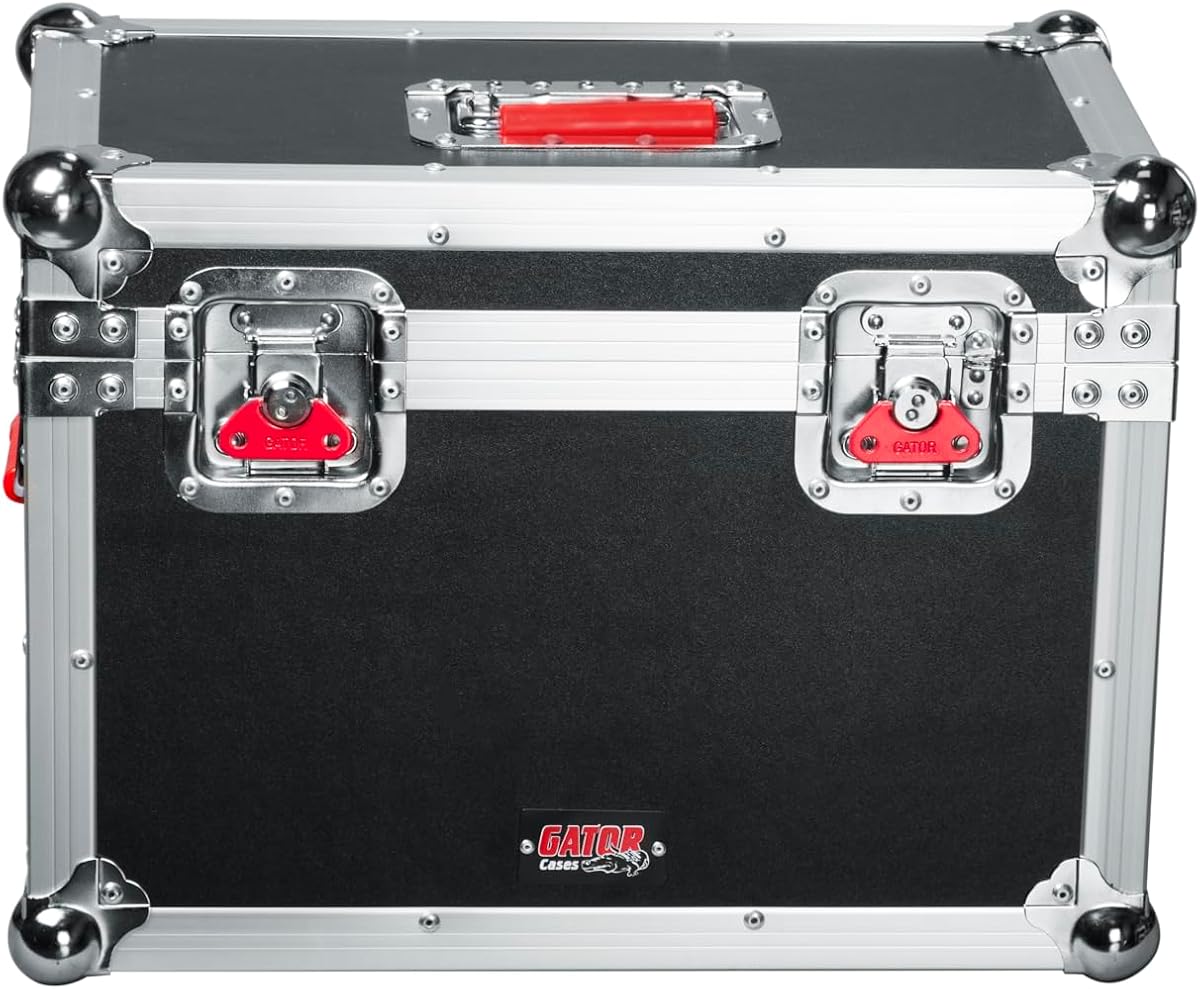
The Gator Cases G-TOURMINIHEAD2 is an ATA-style road case rather than a guitar amplifier, so it occupies a different role within this guide. It is included because compact amp-head owners frequently need a dedicated case for rehearsals, tours, lessons, or storage. Its 4.9 rating is the highest among the listed products, reflecting the appeal of a well-made protective enclosure.
We may earn a commission when you buy through this link, at no additional cost to you.
The interior uses adjustable foam to accommodate many mini amplifier heads, including the type of head named in the product title. Heavy-duty recessed red latches and spring-loaded handles support repeated handling, while the lift-off lid allows faster access than a case that requires unzipping or removing fasteners. The stated plywood construction is three-eighths of an inch, and the interior dimensions are 17.5 by 10 by 10 inches.
The crucial caveat is that buyers need to verify the dimensions and fit of their own amp head before ordering. The adjustable foam improves versatility, but it does not guarantee that every mini head will sit securely. This case also cannot generate sound, provide effects, or solve the need for a portable speaker, so it is not a direct alternative to the amplifiers elsewhere in the list.
Choose the Gator case when you already own or intend to buy a mini amp head and need dependable transport protection. It is especially relevant to gigging musicians, students with valuable equipment, and anyone who regularly moves an amp. If the goal is portable sound, begin with one of the actual amplifier options instead.
The foam interior can be shaped to cushion a compatible mini amp head. Measuring the head and checking the case dimensions remains essential before purchase.
Recessed latches, spring-loaded handles, and a lift-off lid support fast, organized transport. The case is designed for equipment protection rather than compact storage alone.
We may earn a commission when you buy through this link, at no additional cost to you.
The Orange Crush Mini is a three-watt combo that emphasizes simplicity, traditional amplifier controls, and quiet practice. Its 4.2 rating aligns with a compact design intended for short sessions and close listening. Volume, shape, and gain provide all the primary tone adjustments without turning the amp into a menu-driven system.
We may earn a commission when you buy through this link, at no additional cost to you.
One of its most useful distinctions is the headphone output, which disengages the speaker for silent practice. This makes the Crush Mini more suitable for late-night use than many similarly sized portable practice amps. The built-in tuner adds another straightforward tool, while the Aux input allows players to perform along with music. The product also includes a speaker output that can feed a cabinet, extending its options beyond standard mini-combo use.
Its three watts of power is the defining limitation. It can serve bedroom practice and close-range use, but it will not project like a larger combo. The supplied information does not mention rechargeable battery operation, so portability is primarily about size rather than freedom from power outlets. Players who require a balanced stereo signal, advanced effects, or direct recording should choose a more specialized model.
The Orange Crush Mini is a compelling choice for players who value an uncomplicated layout, a tuner, and true headphone silence. It is particularly useful in apartments, dorm rooms, and offices where speaker volume would be inappropriate. Among lunchbox-style amplifiers, it offers one of the clearest reasons to favor physical simplicity over digital versatility.
The headphone output disengages the internal speaker, allowing the same practice rig to be used at low volume or late at night. This is a meaningful advantage over speakers-only mini amplifiers.
Volume, shape, and gain make the Crush Mini easy to learn. A player can move between clean and overdriven sounds without navigating presets or complicated signal chains.
We may earn a commission when you buy through this link, at no additional cost to you.
The Positive Grid Spark MINI is the most feature-rich premium option in the roundup. This ten-watt portable smart amplifier and Bluetooth speaker has a 4.6 rating and combines traditional amplifier output with app-based tone creation, adaptive jamming, and recording functions. It can serve electric guitar, acoustic guitar, or bass, making it unusually versatile for a device this compact.
We may earn a commission when you buy through this link, at no additional cost to you.
Its headline feature is Smart Jam Live, which uses machine learning to construct bass and drum backing tracks based on a player's playing. The accompanying iOS or Android app includes Auto Chords, video creation, access to more than 50,000 tones, 30 amp models, and 40 effects. Players can build custom sounds, save presets, and use the amp as a USB audio interface for home recording.
The rechargeable battery delivers up to eight hours of listening or play time, offering a substantial runtime for travel or unplugged practice. That convenience is balanced by greater complexity: the app expands the amp's capabilities but also requires setup, navigation, and occasional software dependence. The Smart MINI offers more than a beginner needs, and players seeking simple knobs may find the feature set excessive.
The Spark MINI is best for a guitarist who wants practice, inspiration, backing tracks, and recording in one portable device. It suits students, songwriters, traveling players, and home-studio users who will take the time to configure the included app. For a simpler experience, consider the Fender Frontman 10G; for a smaller premium footprint, the Spark GO offers a similar concept in a five-watt format.
Smart Jam Live creates bass and drum accompaniment based on the player's playing style. The result is a more interactive rehearsal experience without requiring a full band or manually arranged backing track.
The USB audio interface function allows the Spark MINI to capture performances at home. This turns a portable practice amplifier into a useful early-stage songwriting and demo tool.
We may earn a commission when you buy through this link, at no additional cost to you.
The Positive Grid Spark GO takes the smart-amplifier concept in an especially portable form. It is a five-watt amp and speaker with a 4.6 rating, designed for players who want extensive tone selection, practice assistance, and battery-powered freedom in a compact package. Computational audio is used to create a larger, detailed sound than might be expected from the amp's size.
We may earn a commission when you buy through this link, at no additional cost to you.
The internal library contains 33 amp models and 43 effects, while ToneCloud access expands the available tone choices to more than 50,000. Users can save custom presets, analyze songs with Auto Chords, and use the AI-powered Smart Jam bandmate to create accompaniment that responds to their playing. These features make the Spark GO more useful for learning and songwriting than a conventional fixed-control mini combo.
Its five-watt amplifier and USB-C rechargeable battery provide up to eight hours of use, making it a practical travel companion. The trade-off is that some of the most compelling functionality lives in the companion software rather than on the unit itself. Players who dislike app menus, updates, or digital workflows may get less value from it than someone who enjoys experimenting with presets. As with the Spark MINI, the model prioritizes creative tools over a straightforward signal path.
The Spark GO is well suited to a guitarist who wants studio-style features in a highly portable package. It is especially attractive for learning songs, exploring sounds, and practicing in different locations. Players who need more raw volume should consider the ten-watt Spark MINI, while those who prefer physical tone control should look to the Boss Katana Mini.
Thirty-three amp models and forty-three effects provide a broad starting point, and ToneCloud access makes the library more extensive. This allows one compact device to cover styles that normally require several separate practice amps.
The AI-powered bandmate listens and adapts to create a virtual backing response. That makes solo practice more interactive, particularly when a drummer or bassist is unavailable.
We may earn a commission when you buy through this link, at no additional cost to you.
The Fender Mustang Micro Plus is a compact headphone amplifier designed around private practice, streaming, and recording. It has a 4.5 rating and measures 6.8 inches deep, 6.3 inches wide, and 2.2 inches high. Its rotating input plug supports most guitars and basses, while wired earbuds and wireless headphones can be used for listening.
We may earn a commission when you buy through this link, at no additional cost to you.
The amp provides 25 amp models, 25 effect models, and 100 editable preset slots. A global EQ, integrated tuner, display, and parameter controls allow players to modify sounds and move from clean to high gain. Fender Tone app compatibility extends preset management, while Bluetooth supports audio streaming with video synchronization for practicing along with songs and videos.
Its bi-directional USB recording function captures performances directly to a computer or mobile device, making the Mustang Micro Plus more than a practice speaker. The rechargeable battery provides more than four hours of play time, which is sufficient for many sessions but shorter than the advertised runtime of the larger Positive Grid options. Because it focuses on headphones, it is less suited to filling a room with conventional speaker sound.
This model is an excellent fit for apartment practice, silent rehearsals, commuting inspiration, and mobile recording. It gives a player broad tone access without needing a full-size modeling amp or a computer-based software setup for every task. Those wanting louder speaker output and more substantial low end should consider the Spark MINI or Fender Frontman 10G instead.
Twenty-five amp models and 25 effect models cover clean, crunch, and high-gain territory. Editable presets let players save useful sounds without repeatedly rebuilding them.
Bi-directional USB capture can send performance audio to a computer or mobile device. This gives songwriters a convenient way to turn a practice session into a recording session.
We may earn a commission when you buy through this link, at no additional cost to you.
The Boss Katana Mini delivers a seven-watt portable combo that emphasizes traditional analog character. It has a 4.5 rating, a multi-stage analog gain circuit, and a three-band analog tone stack. Three amp types—Brown, Crunch, and Clean—give the player recognizable starting points without requiring a phone or complex preset menu.
We may earn a commission when you buy through this link, at no additional cost to you.
A built-in tape-style delay adds ambience and depth, while the auxiliary input supports playing along with music from a smartphone or another external audio device. The phones or recording output includes cabinet voicing, allowing a direct signal to be captured with a more amp-like character. Battery-powered operation adds practical portability for practices, lessons, and small performances where an outlet is unavailable.
Compared with the Positive Grid products, the Katana Mini has a much smaller digital feature set. It is better suited to players who want hands-on control and recognizable amp modes than to those interested in massive tone libraries, adaptive backing tracks, or extensive recording software. Its seven watts also make it most appropriate for bedroom and small-space volume.
The Boss Katana Mini is an excellent middle ground for a guitarist who values authentic analog response, useful recording output, and battery freedom. It can serve as a first portable practice amp or a secondary rig for lessons and travel. Players who want more effects and presets should look to the Spark models, while traditional control seekers may prefer the Frontman 10G.
The multi-stage gain circuit and analog tone stack provide a direct feel, while Brown, Crunch, and Clean modes cover common playing styles. It offers digital convenience without making every control dependent on software.
The cabinet-voiced recording output is useful for home captures, and the auxiliary input allows accompaniment from a phone. Together, they make the amp practical for rehearsal and songwriting away from a studio.
We may earn a commission when you buy through this link, at no additional cost to you.
The Fender Mustang LT25 is the largest and highest-rated amplifier in this roundup. Its 4.8 rating, 25-watt power, and eight-inch Fender Special Design speaker make it a strong choice for beginners who want a conventional combo with modern preset convenience. The simple interface and 1.8-inch color display help new players reach useful sounds without memorizing the functions of a physical signal chain.
We may earn a commission when you buy through this link, at no additional cost to you.
Thirty preloaded presets cover a broad range of musical styles. This is particularly helpful for a guitarist learning how different amps and tones affect songs. The eight-inch speaker offers more physical output and low-end potential than the smaller combos, while the 25-watt amplification provides ample practice volume for a bedroom, rehearsal room, or small teaching space.
The LT25 is less portable than a lunchbox-style battery amp, and the supplied information does not list Bluetooth audio, battery operation, or a direct USB recording function. It therefore offers fewer options for travel, mobile recording, or accompaniment than the Spark MINI, Mustang Micro Plus, and Katana Mini. It is designed more as a dedicated home practice amplifier than a compact smart device.
For a first electric guitar, the LT25 balances approachable controls, strong speaker output, and a broad preset collection. Experienced players may prefer the smaller smart amps for their recording and jamming features, while those seeking pure analog simplicity can consider the Frontman 10G. The LT25 remains a compelling all-around beginner combo with a particularly strong rating.
Thirty preloaded sounds give beginners useful reference points across different styles. The color display makes the available options easy to see and select.
The 25-watt output and eight-inch speaker provide a fuller physical sound than ultra-compact practice amps. That makes the LT25 better suited to consistent room-based practice.
We may earn a commission when you buy through this link, at no additional cost to you.
The right compact amplifier depends on how and where you play. Sound, power, connectivity, outputs, controls, and portability should be matched to your experience and practice environment rather than to size alone.
A conventional speaker combo produces sound through a built-in speaker and is ideal when natural amplified volume matters. A headphone amplifier is quieter, often lighter, and well suited to late-night practice. A smart amp adds presets, companion apps, accompaniment, or recording tools. Finally, a case is an accessory rather than a sound-producing device. Recognizing the format prevents you from buying a battery mini amp when you really want a conventional combo, or mistaking a protective road case for an amplifier.
In short, match the format to your listening environment and preferred workflow before comparing individual features.
Three- and five-watt amps are primarily close-range bedroom tools, while seven- and ten-watt units can project somewhat more forcefully. A 25-watt combo is better for regular practice in a larger room or small rehearsal area. Output alone does not determine quality, because speaker size, cabinet design, and signal processing also shape the result. A louder amplifier can still be unsuitable for a shared apartment, while a compact one can sound excellent at modest levels.
Choose a wattage that fills your normal practice space without frustrating neighbors, then consider the headphone option if volume is a concern.
Simple physical controls are approachable and dependable. Volume, gain, treble, and bass provide a clear route from clean to overdriven sounds. Modeling amps add many amp and effect choices but introduce menus, presets, and sometimes an app. Auto Chords and smart jamming can help a player learn songs, yet they are unnecessary if your priority is straightforward tone. Consider how much discovery you actually want to do rather than choosing the largest feature count.
Beginner-friendly physical controls favor quick learning, while extensive digital libraries reward players who enjoy preset experimentation.
Rechargeable operation is valuable for travel, outdoor playing, and locations without nearby outlets. Advertised runtime can vary with volume, effects, and Bluetooth activity, so compare the stated maximum with your likely session length. Some portable amps include USB-C charging, while others use batteries or require a standard power connection. Follow the supplied voltage and charger guidance exactly, especially for compact rechargeable units, because incompatible power supplies may damage the product.
Select a runtime that comfortably covers your longest typical session and use only the specified charging method.
A headphone output allows silent practice, while a recording output can feed a computer, interface, or recorder. Bluetooth audio playback lets you play along with songs, but it does not automatically transmit the guitar signal or provide a headphone connection. USB recording is a different feature and should be verified separately. Auxiliary input is useful for backing tracks. Reading the exact connection description prevents confusion over whether a wireless feature handles audio playback, signal output, or both.
Match each output to your actual goal: quiet practice, backing tracks, direct recording, or simple external-speaker use.
A small amplifier can still be awkward if it requires a separate cable, power supply, pedalboard, or fragile case. Look for included instrument plugs, charging cables, and adapters when those details are provided. The Gator G-TOUR road case illustrates the other side of portability: a high rating and compact protective shell can make repeated transport safer. Measure the device, check its weight, and decide whether battery independence is worth the extra setup.
A genuinely portable lunchbox guitar amp should be easy to carry, connect, power, and protect according to your normal routine.
Most electric guitars use a quarter-inch output, but recessed, angled, and some unusual jack layouts may require an extender. The JOYO includes an extension adapter specifically to broaden compatibility, while the Fender Mustang Micro Plus uses a rotating input plug. Some products accept bass or acoustic instruments, while others are described specifically for electric guitar. Check the input, included adapters, and intended instrument before ordering, especially if you play more than one guitar.
Verify the input format and included adapter against your guitar's jack layout to avoid an inconvenient compatibility mismatch.
Every extra feature can add value, but it may also add menus, charging requirements, firmware dependencies, or a higher purchase commitment. A physical-control amp is fast to operate, while a smart amp can be more inspiring for songwriters. Recording functions are useful only if you understand the required software workflow. The best choice is the one whose main functions you will use regularly, not necessarily the one with the most specifications. Strong warranty coverage can also add reassurance for a first electronic instrument purchase.
Prioritize the functions you will use often, then accept a simpler or more complex design only when it serves your normal practice routine.
Before connecting a guitar, place the amplifier on a stable, level surface with the speaker unobstructed and allow ventilation around the unit. Connect the instrument before powering on, use the correct quarter-inch input, and keep the volume low during the initial setup. On modeling or smart amps, begin with a basic preset and adjust gain and effects gradually so you understand how each control changes the sound.
For wireless accompaniment, pair the phone or audio source before selecting a Bluetooth track, and keep in mind that Bluetooth playback is separate from the guitar signal. When recording, use the output explicitly described for that model: a phones output, cabinet-voiced recording jack, or USB audio interface may behave differently. Follow the manufacturer's volume and gain recommendations to reduce feedback and maintain clean signal levels.
Protect the amp by using the specified charger and voltage, especially for rechargeable mini models. Do not leave a battery-powered unit in extreme heat, damp conditions, or a closed bag while it is charging. Clean the cabinet with a soft, dry cloth, keep liquid away from controls and openings, and coil cables loosely. For a mini amp head that travels frequently, use a properly fitted padded road case and confirm that the internal foam supports the equipment before moving it.
The term generally describes a compact practice amplifier that is noticeably smaller than a conventional combo. Models in this guide range from three to 25 watts, so the label covers everything from a tiny five-watt travel rig to a dedicated home-practice combo. Consider output, speaker size, weight, and power requirements more important than the marketing term itself.
It can be sufficient for bedroom practice, lessons, travel, and small gatherings when volume needs are modest. A full-size amp is generally more effective for larger rooms because of greater output, larger speakers, and broader headroom. Some compact smart amps also add recording and accompaniment features that a traditional combo may not offer.
Bluetooth playback normally sends music from a phone or other source through the amp while the guitar remains connected by cable. It does not automatically carry the instrument signal to Bluetooth headphones or speakers. Products such as the LEKATO and JOYO explicitly describe their Bluetooth as audio playback, so players needing a wireless guitar signal should look for a specifically stated output function.
No. A basic amplifier with gain, volume, and EQ controls can provide a satisfying clean or overdriven sound. Built-in effects are convenient for rehearsing different tones without external pedals, while modeling systems add broader style choices. Beginners should prioritize comfortable volume, reliable input, and simple controls before paying for extensive effects.
Only if the model includes a suitable output. The Boss Katana Mini has a phones or recording output with cabinet voicing, the Positive Grid Spark MINI can function as a USB audio interface, and the Fender Mustang Micro Plus supports bi-directional USB recording. Other amps may provide only a headphone output, so confirm the exact recording capability before planning to capture audio.
It can be, because battery operation removes the need to find a power outlet. The LEKATO, JOYO, Spark MINI, Spark GO, and Mustang Micro Plus all list rechargeable battery operation. Runtime, charging method, weight, and cable requirements still matter, and a compact amp may need a protective case if it travels regularly.
Smart amps are better for players who want presets, tone libraries, accompaniment, chord assistance, or mobile recording. Traditional mini combos are often better for players who prefer immediate physical controls, straightforward signal flow, and minimal setup. The Fender Frontman 10G and Boss Katana Mini represent the traditional side, while the Positive Grid products focus on app-assisted features.
Most electric guitars use a standard quarter-inch plug, but recessed or angled sockets can sit too deep for a straight plug. The JOYO includes a quarter-inch extender, while the Fender Mustang Micro Plus uses a rotating input designed for broad guitar and bass compatibility. Check the input type and included accessories, and avoid forcing a plug into an incompatible socket.
The Fender Frontman 10G stands out as the most balanced overall choice because it combines a real speaker, simple physical controls, useful gain and EQ, and a strong warranty without requiring an app. The JOYO Mini Amp JA-05G is the best budget selection for affordable portable practice, while the Positive Grid Spark MINI earns the premium recommendation for players who value smart jamming, extensive tones, and direct USB recording.
Prioritize the use case that matters most. Choose a conventional combo for natural room sound, a headphone amp for silent practice, a rechargeable mini model for travel, and a smart system for presets, accompaniment, or recording. A protective case is worthwhile for owners who already travel with a mini amp head, but it cannot replace an amplifier in the signal chain.
Before making a final decision, verify current specifications, instrument compatibility, included cables, charging requirements, and the latest product availability. Prices and configurations can change over time, so checking the current listing helps ensure that the selected lunchbox guitar amp still meets your needs and budget.