
Pacific Handy Cutter S4R
4.7Editor score
Bladeless reinforced tape splitter
Three adjustable blade depths
Stores five replacement blades
A duct tape cutter should make opening packages and cutting through layered materials feel controlled, clean, and efficient. The most useful tools combine a secure blade or guarded cutting edge with enough leverage for tough tape, while specialized splitters can remove packaging without exposing a sharp blade.
This guide compares ten options based on their supplied cutting capabilities, safety features, blade or edge design, material compatibility, and practical versatility. It covers safety box cutters, heavy-duty utility tools, film cutters, craft knives, HVAC shears, electric scissors, and cutters built for flexible ductwork.
Each review explains where a product stands out, what limitations to consider, and the kind of user it suits best. Ratings reflect the available customer feedback, while product availability and pricing can change, so confirm current details before making a final purchase.
4.7Editor score

4.8Editor score

4.3Editor score
As an Amazon Associate we earn from qualifying purchases.
The comparison highlights the different cutting mechanisms, intended materials, safety provisions, and physical formats represented in this guide, helping readers distinguish general-purpose tape cutters from specialty tools for crafts, packaging, and HVAC work.
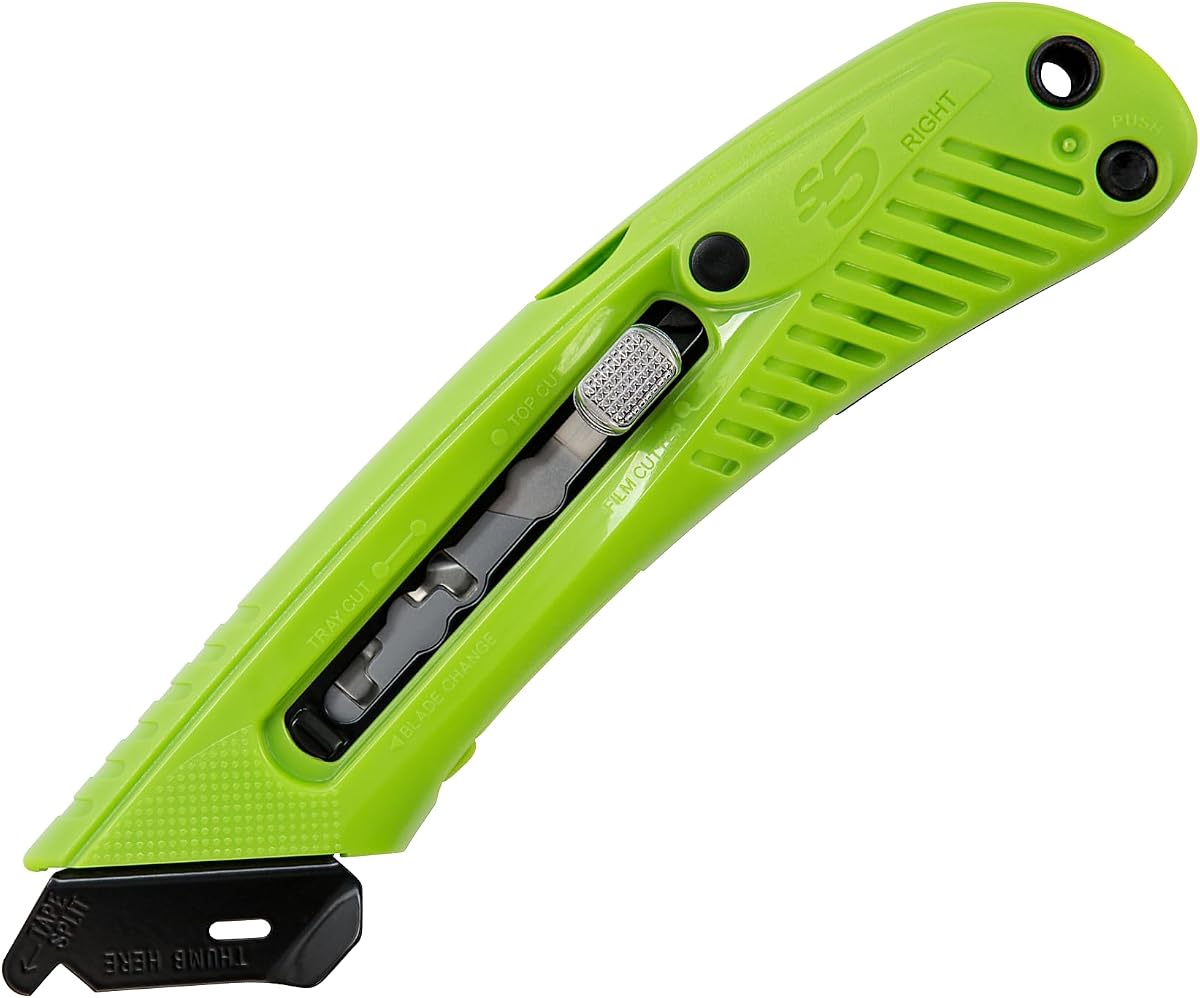




The Pacific Handy Cutter S5R is a three-in-one packing tool with a 4.7 customer rating. It combines a retractable utility blade, a bladeless splitter for reinforced tape, and a recessed fold-out cutter for film, straps, and twine. This makes it one of the more complete options for warehouses, shipping rooms, stores, and regular home deliveries.
We may earn a commission when you buy through this link, at no additional cost to you.
Its metal protective guard does more than cover the blade. It provides a rigid path for the cutting point, helping users make controlled top cuts without the blade wandering toward box contents. Three adjustable depth settings support shallow window and tray cuts as well as deeper opening cuts. The separate bladeless tape splitter is especially useful when a package has fiber-reinforced tape that would otherwise drag across an exposed blade.
The fold-out film cutter is recessed into the handle, keeping it available without presenting a large open edge. It is intended for shrink wrap, plastic straps, twine, and similar packaging materials, and the blade is replaceable if it becomes dull. The trade-off is that combining several mechanisms makes the handle busier than that of a single-purpose safety cutter. The S5R is also specifically listed for right-handed users, which may rule it out for some shoppers.
This is a strong all-around choice for anyone who opens many different types of packages. It handles ordinary cartons, wrapped products, straps, and reinforced tape without requiring several separate tools. People who work primarily with cardboard and need a slim, inexpensive opener may prefer a simpler design, but those who value adjustable cutting control and multiple packaging functions will find the S5R particularly practical.
The rigid steel guard guides the blade along a predictable path, and the three depth settings let users limit penetration. These details are particularly helpful when opening filled boxes where a deep, poorly controlled cut could damage the contents.
The built-in tape splitter and recessed film cutter make the tool useful for strapping, twine, shrink wrap, and reinforced tape. That versatility reduces tool switching during fulfillment and shipping tasks.
We may earn a commission when you buy through this link, at no additional cost to you.
The Multi-Cut Industrial Cutter has a 4.6 rating and uses a blade-to-anvil design rather than a conventional scissor or knife mechanism. Its offset pivot and industrial-grade replaceable blade provide strong cutting force for plastic, rubber, vinyl, rope, leather, soft trim, and light wood. It is aimed at contractors, hobbyists, and DIY users who need more material range than a conventional box cutter offers.
We may earn a commission when you buy through this link, at no additional cost to you.
The cutting system is designed to handle thick, dense materials efficiently. Three extra blades are stored in the handle, helping prevent interruptions when the working edge becomes dull. Inch markings on the tool add a useful reference for controlled cuts, while the ergonomic grip is shaped to reduce fatigue during repeated work. A built-in lock keeps the cutter closed when it is not being used.
Although the tool feels more substantial than a lightweight safety cutter, that construction supports the power and durability of the blade-to-anvil action. It is not a universal solution: the supplied information specifically excludes thick metal, hard PVC, and very hard materials from supported cuts. Users should also follow directional guidance when positioning dense stock so the blade and anvil engage cleanly.
Choose this cutter when your projects extend beyond taped boxes into hoses, PEX tubing, rope, leather, vinyl, garden branches, or craft materials. It is less appropriate for someone seeking a small tape-only opener, but it offers a broader cutting capability with replaceable consumables. For general maintenance, crafts, and light fabrication, it is a practical heavy-duty alternative.
The offset pivot creates leverage that helps the blade press into dense materials before meeting the anvil. This is a useful distinction when a standard utility knife would need repeated pressure and several passes.
Stored replacement blades, an ergonomic handle, and a safety lock address common jobsite concerns. The tool is better suited to extended work than a disposable cutter with no way to replace its edge.
We may earn a commission when you buy through this link, at no additional cost to you.
The Malco FDC1 is a purpose-built cutter for flexible ductwork and carries a 4.3 rating. Its defining feature is the integrated wire cutter, which addresses one of the most disruptive obstacles encountered when trimming flexible ducts: reinforcement embedded beneath the outer layer. A double-edged, fine-honed blade completes the tool's focused design.
We may earn a commission when you buy through this link, at no additional cost to you.
The blade can pierce the outer skin and insulation before the integrated cutter deals with wire. Because the blade is double edged, the tool can cut from either direction, a useful property in tight installation spaces where repositioning a conventional one-sided knife is inconvenient. The specialized construction also keeps the device focused on the type of work involved in HVAC fabrication and service.
This focused design comes with a clear limitation. The FDC1 is not a general-purpose tape cutter, box opener, or craft knife, and it will not offer the same value for a homeowner who only needs to open parcels. It is most relevant to installers and service technicians who regularly trim flexible ducts and encounter wire reinforcement.
For a professional who works with flexible duct often, the Malco FDC1 can be a better fit than a general utility knife because it combines the initial penetration and wire-cutting functions in one compact tool. Consumers whose needs are mostly parcel opening, tape splitting, and general household cutting should favor a more broadly applicable option from the guide.
The integrated wire cutter is the decisive feature for flexible duct containing reinforcement. It helps separate the wire during trimming so the primary blade can work through the remaining material.
The double-edged blade cuts from either direction, reducing the need to turn the tool awkwardly. This can improve control when the duct is already installed or the working area is restricted.
We may earn a commission when you buy through this link, at no additional cost to you.
The Fiskars Pro 8-Inch PowerArc Shop Shears earn a 4.8 rating, the highest among the products in this guide. They are designed to cut tough materials such as insulation, duct tape, cardboard, rope, and tar paper. Their scissor format feels immediately familiar, while the PowerArc geometry adds the leverage needed for demanding workshop, garage, and jobsite tasks.
We may earn a commission when you buy through this link, at no additional cost to you.
Fiskars states that the PowerArc design provides 30 percent more cutting force than a conventional pairing of shears. Serrated stainless steel blades grip the material rather than allowing it to slip, producing a controlled cut through duct tape and layered packaging. The curved blades and offset handle also distribute effort more comfortably, reducing strain when a user opens repeated boxes or trims several insulation pieces.
The main limitation is that a scissor cannot perform the same job as a guarded tape splitter. Reinforced tape can be difficult to separate cleanly because the shears must cut through the entire material, whereas a bladeless splitter can push apart tape without contacting the package. The 8-inch size is also more substantial than a pocket-sized film cutter or compact box knife.
This is the strongest general-purpose pick for readers who want one pair of shears that can handle duct tape, cardboard, rope, insulation, and similar materials. It is especially attractive for high-frequency package opening because the long handles provide leverage and a visible cutting action. It does not replace a dedicated safety splitter, but it offers exceptional everyday versatility.
The PowerArc mechanism increases leverage while preserving the familiar appearance and handling of traditional shop shears. That balance makes the tool approachable for occasional users while remaining useful for demanding material.
The serrations resist slipping when tape or insulation is pressed between the blades. A secure grip supports cleaner, more accurate cuts and reduces the need for multiple attempts.
We may earn a commission when you buy through this link, at no additional cost to you.
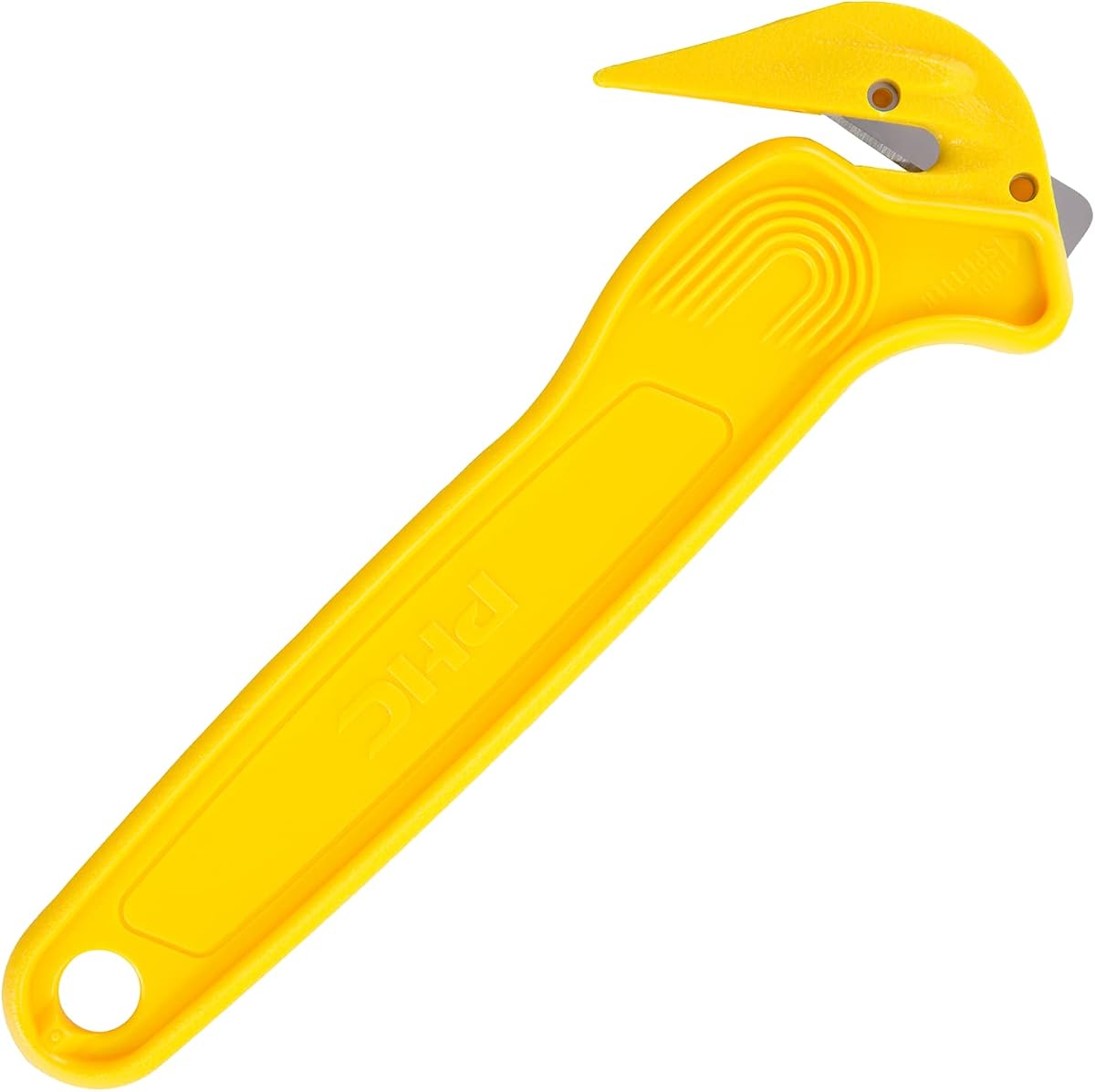
Thornton's Disposable Film Cutter is a simple, high-visibility option rated 4.5 by customers. The package includes three cutters, each built around a sharp steel blade for shrink wrap, stretch wrap, tape, and plastic straps. The recessed mechanism reduces direct exposure to the edge while making repetitive packaging work straightforward.
We may earn a commission when you buy through this link, at no additional cost to you.
The bright yellow body is easy to identify in a warehouse, store, shipping area, or crowded toolbox. Its lightweight shape and simple handling reduce the learning curve, which can be useful for temporary staff or anyone who opens wrapped packages regularly. Because there are three units, several work stations can be equipped at once or a replacement can remain close at hand.
As a disposable-style product, it is not designed to offer the same adjustment, replaceable-blade system, or multi-function design as the heavier safety cutters. It also does not have a separate bladeless tape splitter, so users needing to separate reinforced tape without cutting through it should look elsewhere. The advantage is simplicity: fewer mechanisms make the tool direct and uncluttered.
This option works well for organizations that cut film and plastic strapping frequently but prefer an inexpensive, readily available tool over a permanent multi-function cutter. It is also suitable for occasional home use involving shrink wrap or stretch wrap. For heavy tape splitting, adjustable blade depth, or long-term professional use, one of the guarded safety cutters will offer a more capable solution.
The yellow finish improves visibility in warehouses and stockrooms, where a small dark cutter could easily be misplaced. This practical detail supports smoother workflows and faster access to a safe cutting edge.
The concealed blade and light body suit repetitive work with stretch wrap, shrink wrap, and plastic straps. Three included cutters make the set convenient for multiple stations or shared workspaces.
We may earn a commission when you buy through this link, at no additional cost to you.
The Pacific Handy Cutter S4R has a 4.7 rating and focuses on safe, repeatable cutting in warehouses and stores. It pairs a retractable utility blade with a rigid steel guard, a bladeless tape splitter, and three adjustable blade depths. This combination makes it particularly effective for teams that open packages frequently and value consistent results over specialized versatility.
We may earn a commission when you buy through this link, at no additional cost to you.
The steel guard guides the blade while helping protect the user and box contents. Users can select different depths for a controlled top cut, a shallow window cut, or a tray cut. For reinforced fiber tape, the built-in metal splitter separates the tape without presenting an exposed blade, helping avoid both accidental contact and damage to the underlying package.
Blade maintenance is unusually convenient. A tool-free design allows quick changes, and an accessible compartment holds up to five spare Safety Point blades. The ergonomic handle is intended to minimize fatigue during high-frequency use. These details create a tool that is more serviceable than a disposable film cutter, although it lacks the separate fold-out film edge found on the Pacific S5R.
The S4R is a compelling choice for warehouse staff, store employees, delivery handlers, and serious home users who want a dependable general package cutter. It is less appealing for craft work or specialized film cutting, but its guarded blade, adjustable depth, and bladeless splitter make it excellent for routine cartons and reinforced tape.
The rounded metal splitter pushes through fiber tape without requiring the working blade to slice the entire layer. This can reduce both injury risk and accidental scoring of the package below.
The tool-free replacement system and internal storage keep a fresh blade close at hand. That is valuable in fulfillment environments where stopping to find another cutter can slow the workflow.
We may earn a commission when you buy through this link, at no additional cost to you.
The Klein Tools 89554 is a professional HVAC cutter with a 4.3 customer rating. It combines an all-steel double-edge blade for fiberboard, fiberglass-lined ductwork, and flexible ducts with an integrated wire cutter. Its compound leverage and contoured grips are designed to deliver useful force without requiring constant muscular effort.
We may earn a commission when you buy through this link, at no additional cost to you.
The tool addresses several common HVAC installation challenges in one mechanism. The blade cuts through fiberboard and flexible duct material, while the wire-cutting section helps deal with reinforcement encountered in the material. High-leverage construction supports controlled work, and the non-slip grips provide comfort and control during extended jobs.
Durability is another important part of the design. Hardened steel handles and nickel-chrome plated hardware are specified to resist wear and corrosion. The trade-off is that this is a specialized, substantial tool rather than a slim box opener. It is heavier and more specialized than the compact safety cutters, and it offers little advantage to someone whose only need is opening taped parcels.
Choose the 89554 when ductwork, fiberglass, fiberboard, and wire are regular parts of your work. It is a strong fit for HVAC professionals, installers, and service technicians who want one purpose-built tool instead of separate blades and wire cutters. Home users should weigh that professional focus against the convenience of a general-purpose safety cutter.
The combination of double-edge blade and wire cutter addresses both the duct's outer material and its reinforcement. That focus makes the tool more relevant to actual installation work than a generic box knife.
Compound leverage increases cutting force, while the contoured non-slip grips help manage fatigue and control. These details matter during a demanding installation rather than a single quick package opening.
We may earn a commission when you buy through this link, at no additional cost to you.
The Pacific Handy Cutter Disposable Film Cutter has a 4.4 rating and is certified by the National Sanitation Foundation for food service and food manufacturing use. Its stainless steel blade is easy to sanitize, while the rounded plastic body and recessed cutting edge protect both the operator and packaged food from accidental contact.
We may earn a commission when you buy through this link, at no additional cost to you.
This tool is designed for cryovac bags, plastic bags, shrink wrap, cling wrap, strapping, and similar packaging. The enclosed blade provides a secure cutting point without a loose exposed razor. Its separate rounded tape splitter can open cellophane and fiber-reinforced tape without contacting the contents, making it useful for food packages as well as ordinary shipping cartons.
The trade-off is its disposable-style format. It does not provide adjustable depth, replaceable stored blades, or the multi-position control offered by the S4R and S5R. Users who process very large volumes may want a more mechanically substantial tool, while occasional users will appreciate the straightforward, cleanable design.
This Pacific model is especially relevant to food businesses, restaurant suppliers, and home users who regularly open sealed food packages. The certification distinguishes it from general film cutters for regulated or hygiene-sensitive environments. It is also a capable everyday box opener because the bladeless splitter adds a function that many disposable cutters omit.
National Sanitation Foundation certification and an easy-to-sanitize stainless blade make the cutter suitable for food service and manufacturing contexts. Buyers in those settings should also follow their facility's sanitation procedures.
The recessed blade and rounded splitter help keep the cutting path away from the user's fingers and the package's contents. This makes the tool useful where product protection is as important as operator safety.
We may earn a commission when you buy through this link, at no additional cost to you.
The Excel Blades Adjustable Dual Blade Strip Cutter is a precision tool with a 4.4 rating. It uses two parallel #59 blades with a shearing action to create clean, even strips. The cutting width can be adjusted from 0.12 to 0.63 inches, making the tool useful whenever consistent strip dimensions matter more than simply opening a carton.
We may earn a commission when you buy through this link, at no additional cost to you.
Its applications include paper, leather, vinyl, foam core, plastic, cork, fondant, gum paste, wood, fabric, polymer clay, and vehicle vinyl wrap. The angled #59 blades are well suited to intricate art, model making, scrapbooking, and professional graphic work. An adjustment screw allows users to customize the strip width for different materials and project requirements.
This is not a duct tape cutter in the packaging sense. It lacks a tape splitter, package guard, or protected blade system, and its exposed precision blades require careful handling. It is also more specialized than general shears. Its strength is repeatable, adjustable parallel cutting rather than rapid parcel opening.
Choose the Excel Blades tool for crafts, model work, vinyl wrapping, graphic design, or kitchen decoration projects that benefit from uniform strips. It is a poor fit for warehouse work and a less natural choice for ordinary cardboard opening, but it offers a level of precision that general-purpose cutters cannot. Users should keep the blades clean, cut only compatible materials, and store the tool responsibly.
The two parallel blades shear the material at the same time, producing a more consistent strip than a single-edge knife. Adjusting the screw lets users match the strip width to the project.
The angled #59 profile is useful for detailed paper art, model making, vinyl, leather, and decorative materials. It rewards careful handling but provides control that ordinary box cutters do not.
We may earn a commission when you buy through this link, at no additional cost to you.
The SnapFresh Cordless Electric Scissors provide a powered alternative to manual tape and package cutters, with a 4.3 rating. A rechargeable 4V rotary unit cuts cardboard, leather, plastic, canvas, carpet, wallpaper, and other materials up to one-quarter inch thick. The cordless format eliminates the need to route a power cable through a work area.
We may earn a commission when you buy through this link, at no additional cost to you.
The package includes the cutter, an extra tungsten steel rotary blade, a charger, a user manual, and a blade-removal pin. Its design is useful for users who want smooth, low-noise cutting without the repeated squeezing required by conventional shears. At 0.87 pounds, the tool is designed to remain manageable during extended projects, with an ergonomic shape intended to reduce hand fatigue.
Activation requires the user to press and hold the safety switch before pressing the trigger. Once the tool is running, the safety switch can be released, and this sequence helps reduce accidental activation. The principal compromises are charging dependence and weight compared with manual cutters. Electric rotary motion is also less suitable for very fine detail work than a precision craft knife.
This is a compelling option for home decorators, tailors, packaging workers, and DIY users who repeatedly cut thick or awkward materials and prefer powered assistance. It is less convenient for occasional light-duty tape cutting because the battery and charger add components that a safety knife does not need. For frequent multi-material projects, however, the cordless convenience and material capacity are meaningful advantages.
The rotary motor supports material up to one-quarter inch thick, including carpet, canvas, and cardboard. This capacity makes the tool useful for projects that exceed the practical range of ordinary household scissors.
Users must hold the safety switch before engaging the trigger, adding a deliberate step to startup. That sequence helps prevent the cutter from running unexpectedly in a busy household or work area.
We may earn a commission when you buy through this link, at no additional cost to you.
The right duct tape cutter depends on what you cut, how often you cut it, and how much protection the material and user require. Consider the tool's cutting mechanism, edge accessibility, material capacity, maintenance system, and intended workspace before choosing.
A guarded or recessed blade is valuable whenever the cutter will be used around people, stock, food, or fragile products. The Pacific S4R and S5R use a metal guide to control the cutting path, while the food-safe Pacific film cutter encloses its stainless blade and uses a rounded splitter. A standard utility knife may cut effectively but presents a greater risk of accidental contact, so its intended setting deserves careful consideration.
A recessed cutting edge is generally more appropriate for warehouse counters, kitchens, shipping benches, and other shared spaces. Look for a design that separates the user from the sharp edge without preventing a clean cut.
A bladeless tape splitter separates reinforced tape by pushing through the adhesive layer instead of slicing every fiber with a blade. This can reduce damage to a package and avoids placing an active edge directly against the tape. A shears or rotary cutter takes a different approach: it cuts completely through the tape and surrounding material, which can be more appropriate for scraps or narrower workpieces.
Choose a splitter for opening sealed cartons cleanly. Choose shears or rotary cutting when you intend to cut the tape away as waste.
The material list should be as important as the product description. The Fiskars shears are designed for duct tape, cardboard, rope, insulation, and tar paper, while the Multi-Cut handles dense plastic, rubber, vinyl, leather, and other supported materials. The SnapFresh rotary cutter accepts materials up to one-quarter inch thick, and the Klein tool focuses on fiberboard, fiberglass, and flexible duct.
Match the tool to the densest material you expect to cut regularly. Also note stated exclusions, such as the Multi-Cut's warning against thick metal, hard PVC, and very hard materials.
Adjustable blade depth is important when the tool must cut through a box lid without scoring its contents. The Pacific S4R and S5R provide three positions for top, shallow-window, and tray-style cuts. This feature gives users more control than a fixed-depth blade and is especially useful in fulfillment or retail settings where package contents may vary.
A deeper, more exposed blade can be useful for cutting thick material, but it requires more caution. Controlled depth settings are generally more valuable for package opening than unrestricted blade extension.
A replaceable blade extends the useful life of a durable tool and prevents workers from struggling with a dull edge. The S4R stores up to five blades and changes them without tools, while the Multi-Cut stores three extras in its handle. The S5R also provides an easy blade change, and the SnapFresh set includes an extra tungsten steel blade and removal pin.
For frequent work, look for accessible replacement parts and a simple change process. For occasional tasks, a simple design may be sufficient, but it should still be easy to clean and store safely.
Long packing sessions are easier with a handle that reduces hand strain and maintains a secure grip. The Fiskars shears use curved blades and PowerArc geometry, the Multi-Cut has an ergonomic grip, and the Klein tool uses compound leverage with non-slip grips. The bright, lightweight Thornton's cutter favors portability and quick handling instead.
Consider grip size, tool weight, balance, and the length of the working session. A comfortable tool that remains precise is more valuable than a lightweight design that quickly causes fatigue or slips.
Some cutters are designed to solve a precise problem rather than serve as general utility tools. The Malco FDC1 uses a double-edged, fine-honed blade and integrated wire cutter for flexible duct. The Excel dual-blade cutter makes parallel, adjustable strips for crafts and vinyl work. These designs can outperform general tools within their specialty but add complexity elsewhere.
Specialization is beneficial when your regular work clearly matches the tool's stated purpose. It is unnecessary when you need a simple, dependable cutter for parcel tape and film.
Food service, medical supply, retail, warehouse, home décor, and HVAC environments place different expectations on a cutter. The NSF-certified Pacific model addresses hygiene-sensitive food packaging, while the Klein and Malco tools suit professional ductwork. Cordless electric tools are convenient away from outlets but require battery awareness and careful charging.
Evaluate the setting before focusing on cutting power. Safety, sanitation, portability, and serviceability may matter more than maximum material capacity.
Begin by inspecting the tool before every task. Confirm that the blade is sharp, securely installed, and free of bends or damage. For guarded safety cutters, check that the blade depth and guard move correctly; for electric scissors, inspect the rotary blade and make sure the charger and battery are in good condition. Clear the work surface and secure the material before cutting.
Place the cutter on the intended cut line, keep fingers clear of the cutting path, and use a controlled stroke rather than forcing the tool. Use the built-in tape splitter when separating reinforced tape from a package, and select an appropriate blade depth for window or tray cuts. For shears and electric rotary tools, feed the material steadily into the blades and avoid twisting the tool during the cut.
After use, brush away adhesive and debris, wipe the blade with an appropriate cleaner, and let it dry completely. Do not immerse electrical components. Retract or cover exposed blades, store sharp tools securely, and replace worn blades before they slip or tear material. Follow the manufacturer's instructions for blade removal, blade types, cleaning agents, and battery care.
Use a cutter with a bladeless tape splitter and, when available, an adjustable blade depth. The splitter separates reinforced tape without requiring the working blade to cut every fiber, while the depth setting helps keep a utility blade from penetrating into the box. Move the tool slowly along a marked line and keep the opposite hand clear of the cutting path.
Yes. A general utility knife exposes a replaceable blade and can cut many shapes and depths, while a dedicated duct tape cutter often emphasizes a guarded edge, tape splitter, or film-cutting function. Some products combine both approaches. Choose based on whether you need precise material shaping or fast, safe separation of tape from a package.
A standard utility knife can physically cut reinforced tape, but doing so may place the blade directly against the package and can dull it quickly. A bladeless splitter is safer and often cleaner because it pushes through the tape layers without making direct blade contact. The Pacific S4R, S5R, and food-safe film cutter all include this type of splitter.
The Fiskars Pro 8-Inch PowerArc Shop Shears are designed for cardboard, duct tape, insulation, rope, and tar paper, while their serrated blades help keep material from slipping. For maximum package-opening speed, a guarded safety cutter with a tape splitter and multiple blade depths may be easier to deploy quickly.
A dedicated flexible-duct cutter is useful when the material contains wire reinforcement. The Malco FDC1 combines a double-edged blade with an integrated wire cutter, while the Klein Tools 89554 also addresses wire, fiberglass, fiberboard, and flexible duct. These specialty designs can make installation work more controlled than a general utility knife.
The Pacific Handy Cutter Disposable Film Cutter is certified by the National Sanitation Foundation and uses a stainless steel blade that is easy to sanitize. Its enclosed cutting edge and rounded tape splitter also help protect both the user and food package. Always follow applicable food-service sanitation and handling procedures.
They can be worthwhile for repetitive cutting of thick or awkward materials such as carpet, canvas, cardboard, and wallpaper. The SnapFresh cordless scissors add convenience and can reduce hand fatigue, but they require charging and are heavier than manual tools. Occasional tape cutting can usually be handled more simply with guarded shears or a safety cutter.
Replace it when it begins tearing, snagging, bending, or producing noticeably uneven cuts rather than relying on a fixed calendar. A dull blade can require more force and increase slipping or injury risk. Replaceable systems such as the Pacific S4R and Multi-Cut make it easier to maintain a sharp working edge during frequent use.
The Fiskars Pro 8-Inch PowerArc Shop Shears are the most versatile general-purpose choice in this guide, handling duct tape, cardboard, rope, insulation, and other tough materials with strong leverage. The Pacific Handy Cutter S4R is the best practical selection for routine package opening because it combines a guarded blade, adjustable depth, a reinforced-tape splitter, and convenient blade storage. For professional HVAC work, the Klein Tools 89554 offers specialized cutting performance for duct, fiberglass, fiberboard, and wire.
Prioritize the material and workflow that will appear most often. A bladeless splitter is valuable for opening sealed packages, serrated shears suit repeated cutting of duct tape and fiber, a rotary cutter helps with thicker awkward stock, and specialized duct tools are strongest when wire reinforcement is involved. Safety features matter just as much: choose a recessed or guarded edge when the cutter will be used around people or valuable contents.
Product specifications, ratings, and availability can change, and current prices should be checked before ordering. Comparing the intended material against each tool's supported uses, then considering blade maintenance, ergonomics, and workspace requirements, will lead to the most dependable duct tape cutter for your needs.